Vancouver's Patience Play: Why the Canucks Are Building Defence Around Youth, Not Through It
By Ty Whitney ·
The Canucks' offseason moves signal a deliberate shift toward managed development—Cootes stays in the minors, veteran defensemen anchor young talent—with real implications for lineup stability and depth scoring through 2026-27.
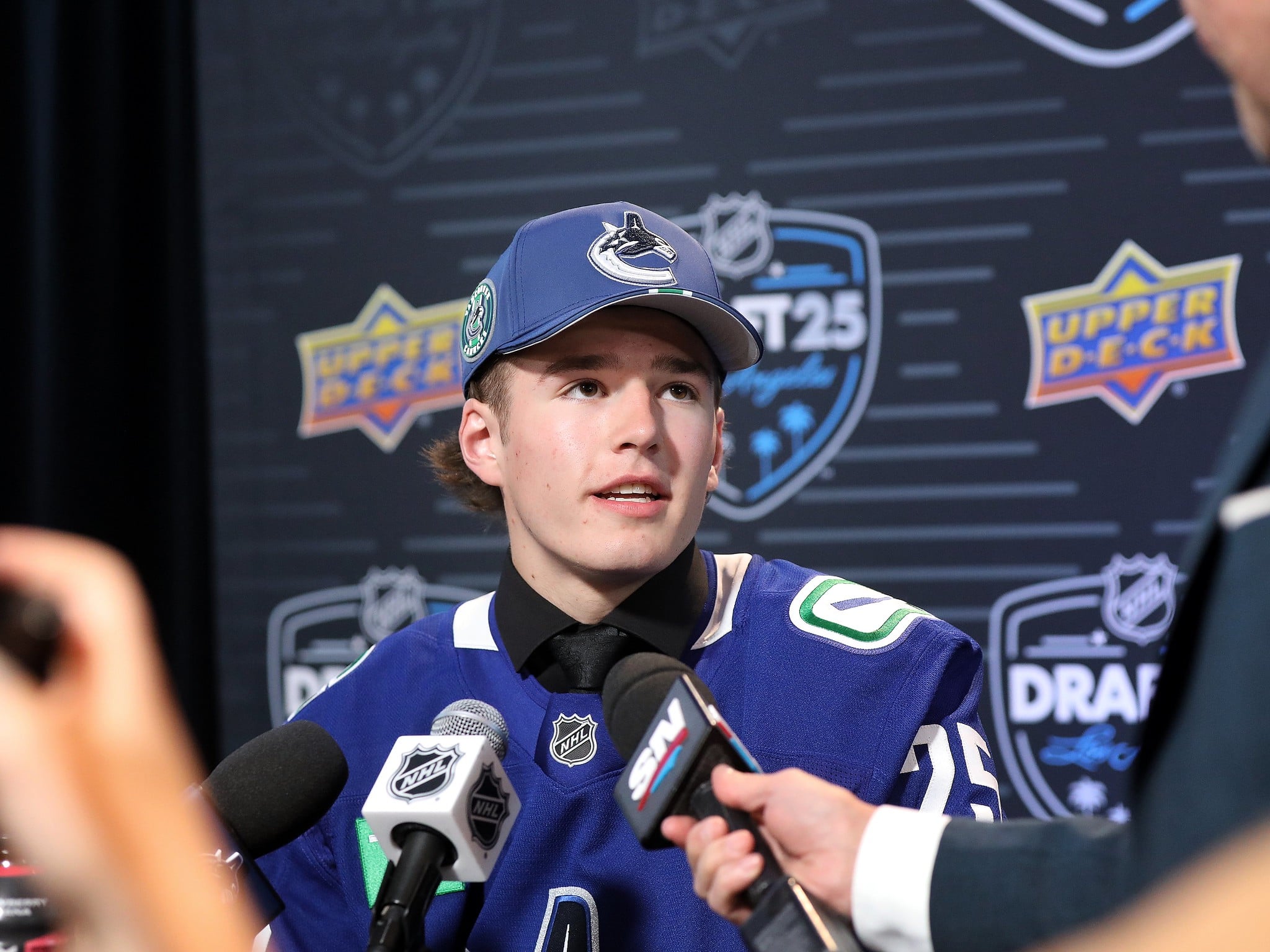
Vancouver's front office is making a statement with restraint this summer. Rather than accelerating Braeden Cootes into the NHL lineup after his three-game audition last season, the Canucks are routing the first-round pick through Abbotsford for a full development season. General manager Jim Rutherford framed the addition of veterans Jamie Oleksiak and Luke Schenn not as stopgap fixes to a broken blue line, but as structural anchors—players tasked with shepherding the next wave of young defensemen through their NHL transition, not replacing them.
This approach matters because it compresses competitive urgency into specific windows. A 19-year-old getting 25 games in the AHL learns faster than a 19-year-old getting 5 games in the NHL followed by a demotion. The physics of player development favor repetition and role clarity over exposure. Cootes absorbed the NHL's pace and physicality in a small sample last season; now he needs continuity in a controlled environment. That decision—to not rush him—is actually more aggressive in the long view. It signals the Canucks believe the window stays open long enough to let prospects mature properly.
The secondary piece is the pairing strategy Rutherford has wired into the blue line. Early expectations have veteran presence on each defensive pairing: Oleksiak and Schenn paired with young wings like Zeev Buium and whoever else emerges from the prospect pool. This isn't just management. It's a teaching structure baked into nightly lineup construction. A 23-year-old Buium learning the positional details from a 35-year-old Oleksiak absorbs information faster than isolation. The Canucks aren't gambling on youth; they're creating a transmission mechanism.
For bettors tracking Vancouver, this framework has a direct impact on two prop angles heading into 2026-27. First: young defensemen's assist and point totals will remain suppressed in the early season as they adjust to role limitations and mentor-pairing constraints. Buium and Willander over-unders should account for the fact that they'll be sheltered minutes-wise, not featured in power-play setups yet. The assists-per-game rate of a 22-year-old paired with a veteran who touches the puck first is structurally lower than the stat-sheet optimist's projection. Second: total team defense should improve steadily through the season as these young players actually progress beyond the training-camp excitement phase. The Canucks' goal-against rate will likely see downward movement (lower GAA is better) in Q3 and Q4 of the season as Buium and Willander finish their first-year adjustment. That's not regression; that's the design working.
The bet is not "Canucks improve defense in year-two under this pairing structure"—that's guesswork. The bet is more specific: Vancouver's early-season defensive props (team GAG, young defensemen assists) will be priced for peak upside rather than the controlled-development baseline. The market knows Buium is talented. It hasn't fully priced the fact that he'll be learning from Oleksiak in the first quarter of the season, not carrying primary responsibility. That gap closes by November.