Jarvis Powers Game 2 Comeback as Stanley Cup Final Shifts to Vegas Tied 1-1
By Erik Schwartz ·
Carolina's power-play overtime heroics erase a two-goal deficit and force the narrative back to neutral—but the defensive vulnerabilities exposed in the third period remain a structural problem.
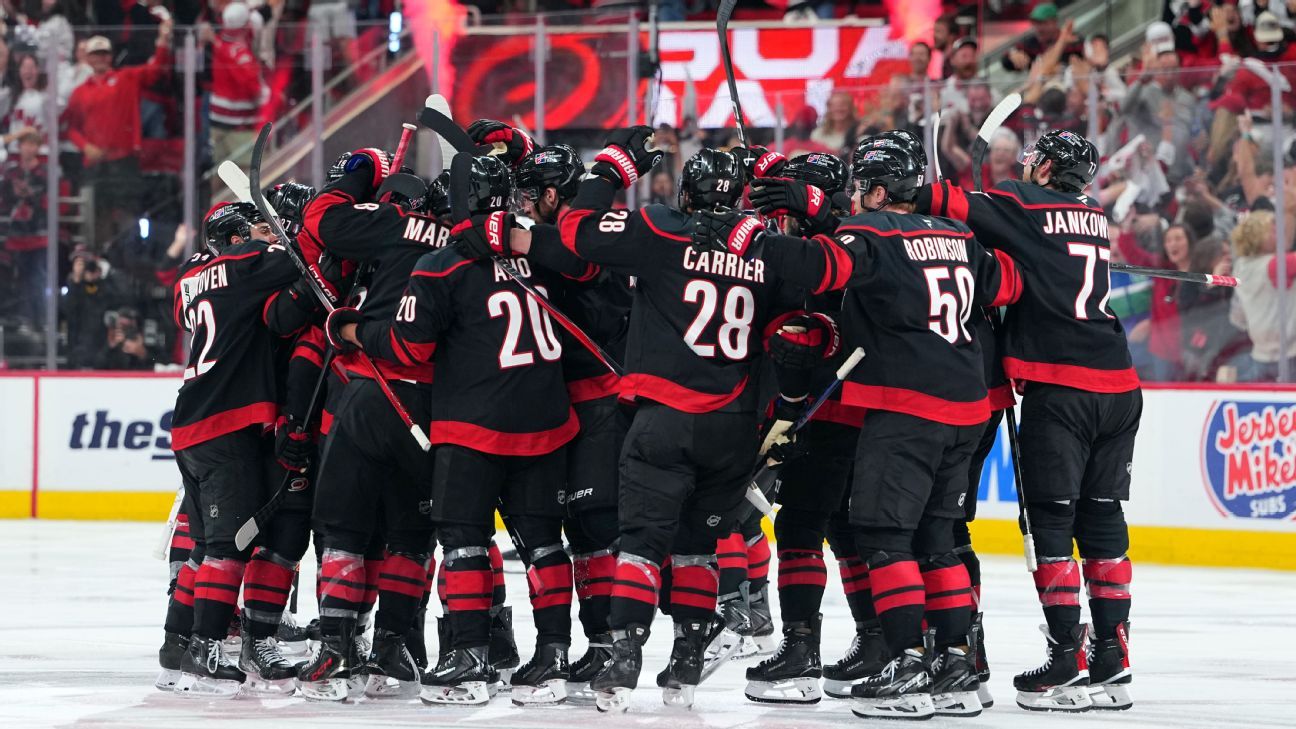
Seth Jarvis converted a power-play chance 3:56 into overtime to lift the Hurricanes past Vegas 4-3 in Game 2 of the Stanley Cup Final on Thursday night, evening the series at 1-1 heading into Saturday's Game 3 in Las Vegas. The goal capped one of the most volatile third periods in recent Cup Final history: four regulation goals scored, one waved off for goaltender interference after Tortorella challenged, and a complete inversion of Game 1's script, where Vegas had erased a multigoal deficit to steal the opener. The Hurricanes controlled nothing through the first 45 minutes, surrendering two goals and surrendering the possession game to a Golden Knights side playing stifling defense. Then, in a span of 160 seconds midway through the third, Logan Stankoven forced a turnover and banked a backhander in off Jeremy Lauzon, and Mark Jankowski fired a wrister past Carter Hart to equalize. The sequence unlocked the arena and Carolina's offense in one motion.
What matters now is the defensive architecture both teams will lean on for the remaining games. Vegas exposed Carolina's vulnerability to transition and high-danger chances in the first period; Tortorella's Vegas squad showed they can lock down the perimeter but lack the goaltending margin for error if they surrender Grade-A opportunities. Frederik Andersen made a critical paddle save on Ivan Barbashev late in regulation—the play Tortorella challenged and lost—that kept Carolina's comeback alive. Carter Hart faced a different problem: he was tested early and often and had no answer for Jankowski's wrister. The goaltending matchup tilts toward Andersen's experience under pressure, but Vegas' ability to suppress shots and force Carolina into low-percentage looks remains their most reliable path.
The power play surfaced as a decisive variable. Jarvis' goal came with the Hurricanes on the man advantage in overtime, extending Carolina's postseason power-play efficiency to one of the best in playoff history. Vegas' penalty kill has been vulnerable in this series—they surrendered on Game 2 after already bleeding chances in Game 1. If Carolina can generate five-on-four opportunities in Games 3 and beyond, they'll have a reliable scoring channel. Vegas, conversely, will need to stay out of the box and win the special-teams war through discipline rather than recovery.
From a prop-betting lens, the game-to-game volatility here is the signal. Both teams entered with structured, repeatable offensive systems; both teams have now shown they can collapse defensively for stretches when execution breaks down or personnel gaps are exposed. Andersen's save percentage in this series will likely stabilize above .920 if Carolina limits high-danger chances, but Hart's .895 after Game 2 suggests Vegas is generating cleaner looks. The power-play advantage tilts Carolina—they've cashed the advantage twice already—but it's only actionable if Vegas takes penalties. Lean on unders in Games 3 and 4 if both teams' defenses tighten following this wake-up call; lean on power-play props if the teams stay undisciplined. The series is closer to 1-1 in actual quality than the scoreline suggests, and the next two games in Vegas will be decided by which team adjusts their defensive structure faster.