Dobson's Eight-Year Deal Already Paying Dividends for Montreal—and What It Means for His Prop Value
By Erik Schwartz ·
One year after locking in Noah Dobson at $9.5M annually, the market has reset around him, turning an aggressive extension into a roster asset that quietly reshapes Montreal's offensive ceiling from the blue line.
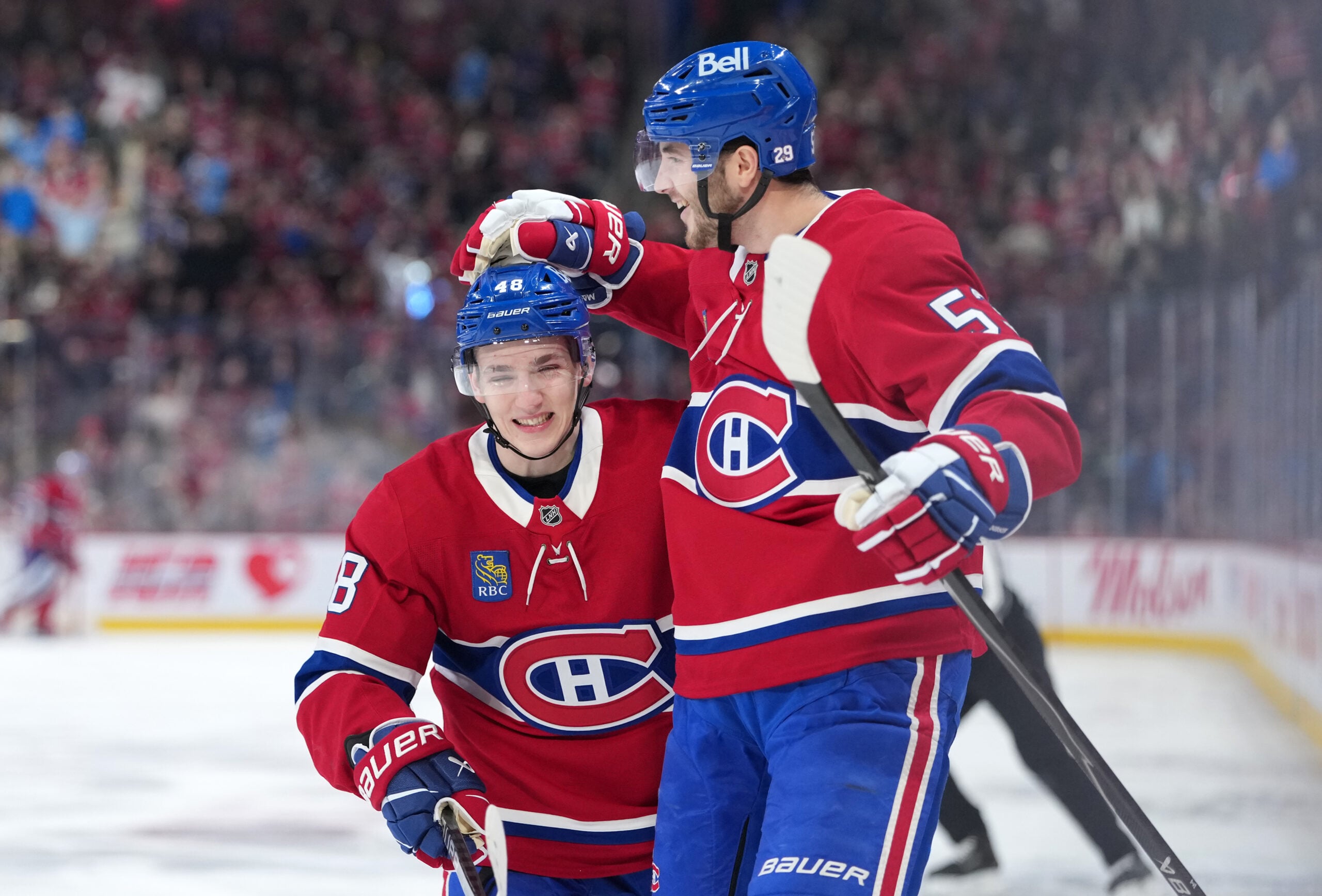
The Montreal Canadiens signed Noah Dobson to an eight-year, $9.5 million cap-hit extension roughly one year ago—about July 2025—after acquiring him from the Islanders. At the time, the move looked like organizational optimism masquerading as recklessness: a significant trade package (Emil Heineman plus two first-rounders) plus a long-term commitment to a player who hadn't yet taken a shift in a Canadiens uniform. Kent Hughes was betting on trajectory, not on proven production in Montreal colors. That bet has already aged well.
The market for elite young defensemen has spiked in the intervening twelve months. Bowen Byram reset the conversation when Chicago signed him to six years at $12.5M per season. Jacob Trouba followed at $8.25M annually with San Jose, despite being in his thirties with declining offensive upside. Rasmus Andersson locked in at $8.5M per season over seven years with Vegas—a reliable top-four contributor, but one without Dobson's offensive ceiling or long-term arc. The comps have moved the goal posts, and Dobson's deal now reads as structural value. Montreal essentially hedged the defenseman salary cap inflation by acting decisively before the market fully repriced elite right-shot blueliners.
From a roster-construction standpoint, this matters because Dobson's offensive role in Montreal has grown concrete. He's not a complementary piece; he's entering his prime years as a franchise cornerstone expected to drive play creation from the backend, generate assists on Montreal's rush, and absorb heavy minutes in all situations. The Canadiens committed capital and term to that production expectation. The contract durability—eight years at a price now visibly lower than emerging market comps—gives Montreal room to fill out a competitive core without sacrificing cap flexibility at the margin. Hughes has repeatedly shown willingness to lock up young talent before the market jumps; Nick Suzuki benefited from the same patience-into-decisiveness approach.
For prop bettors, Dobson's locked-in role translates to reliability on assists and points. A defenseman with his offensive touch, playing top-pair minutes and quarterbacking a power play, typically sustains 40+ assists and 50+ points over a full season. Montreal's offensive system—increasingly built around skill-forward deployment—should funnel opportunities through the backend when Dobson has the puck. His assist volume has room to climb if the team's forward depth materializes as expected. The edge isn't in short-term variance; it's in consistent deployment. Unlike a forward whose ice time can swing based on matchup or penalty kill demand, Dobson's role is now contractually cemented. His assists line, particularly in the second half of the season when teams are fully healthy, should outperform mid-range market opens that don't fully account for his offensive ceiling in a system designed to leverage it.
The real test arrives when Montreal makes its playoff push—if it happens this season. A defenseman signed to this kind of term and cap hit plays in every meaningful situation, including power play time that expands in April and May. Linemakers may initially price Dobson's assists as a steady contributor, which they are. But they may also discount the reality that Montreal's investment in him means he's not getting benched in Game 7, and he's not rotating out of the power play. That role certainty is where the edge lives.