Bruins Bet on Borgen's Playoff Resilience; Rangers Play Short-Term Cap
By PropBetEdge Editorial Team ·
Boston pays a 2027 second-rounder for a veteran blue-liner with deep contract security, signaling confidence in their postseason window even as the immediate asset cost rises.
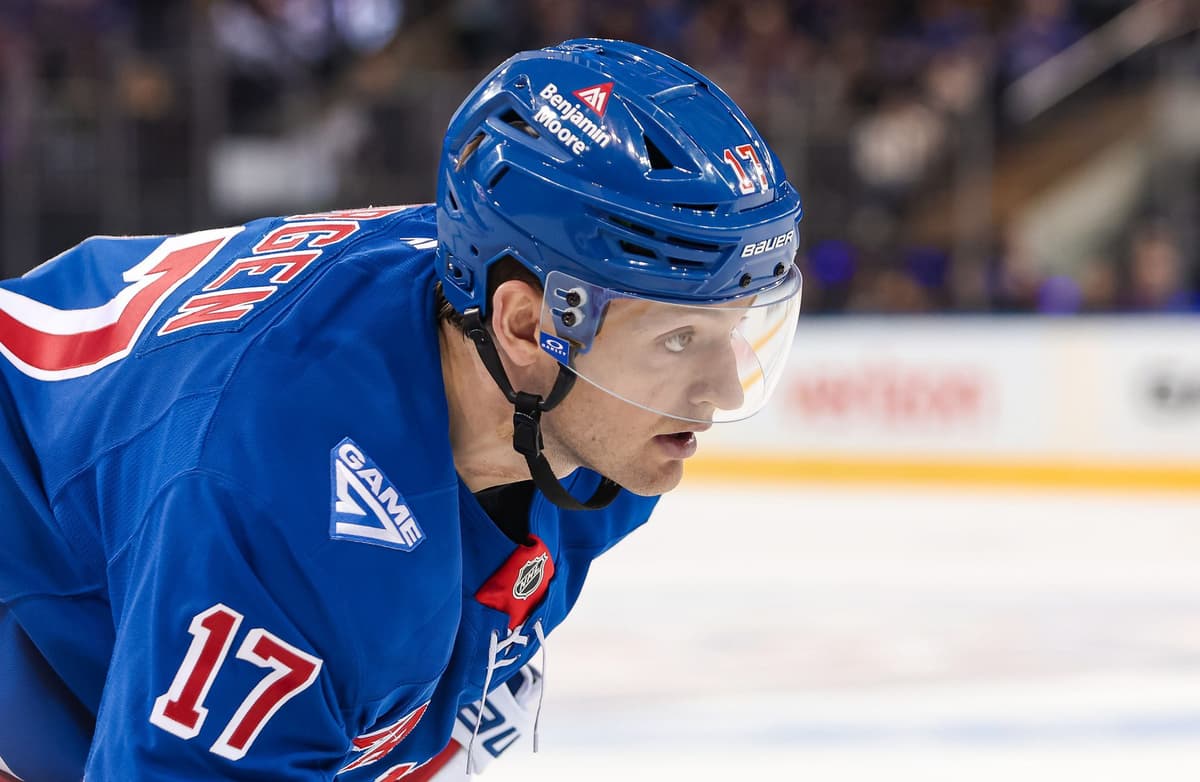
The Boston Bruins acquired defenseman Will Borgen from the New York Rangers on Wednesday, sending a 2027 second-round pick and a conditional 2028 third-rounder to secure four years of right-side depth at $4.1 million annually. The conditional escalates to a 2028 second if Boston reaches the Eastern Conference Final in either 2027 or 2028 with Borgen playing at least 50 percent of their playoff games—a threshold that rewards the Bruins only if both the trade succeeds and their season extends deep.
Borgen logged 75 games for New York this past season, averaging 18:03 of ice time with 15 points (5 goals). His workload places him squarely in the 17-20 minute band where teams expect steady two-way play, not offensive outburst. The 29-year-old's contract ($4.1M through 2029–30) anchors his value; at that price point, he's neither an overpay nor a discount, but a neutral-to-slight-positive fit for a team seeking stability on the right flank without eating cap space for a star-tier return.
For the Rangers, the deal clears $4.1 million and a roster spot heading into free agency, a tactical move that squares with their cap posture. New York swapped future picks—a 2027 second and a conditional third—for immediate flexibility. The conditional's structure (tied to Borgen's playoff availability) also inserts a safety net: if Boston's postseason run is short or Borgen's role shrinks, New York keeps that 2028 second-rounder. That's disciplined asset management, not a panic sale.
From a betting lens, Borgen's workload and consistency matter most. His 18+ minutes on a depth-heavy Bruins blue line suggests a defined role in Boston's defensive system; the trade likely signals that the Bruins expect him to hold 17-20 minutes in their playoff rotation. His shooting volume in New York—5 goals in 75 games—tracks to roughly 4-6 goals over a full 82-game season, placing his shot-generation in the 2.0-2.5 shots-per-game band. In the context of Boston's defensive deployment, Borgen's assist upside depends heavily on offensive-zone time; his 15-point pace (0.20 per game) is conservative, but in the postseason, playoff defensemen often see compressed production. Monitor Borgen's ice time floor in Boston's first 5-10 games; if it dips below 16 minutes, his assists and shots-on-goal props should fade. If the Bruins maintain him at 18+, his playoff-eligible overs on assists (likely 3.5-4.5 range per postseason series) carry modest edge because consistent, veteran right-side defensemen typically sustain role even under playoff pressure.
The conditional escalation also embeds a subtle signal: Boston's front office is betting on their Cup window remaining open through 2027–28, not just this season. That confidence (or optimism) may already be priced into Bruins playoff futures, but it tells you the organization views this roster as capable of multiple deep runs. For prop purposes, that translates to stable lineup usage rather than rotational chaos—a structural advantage for projection reliability.