Columbus's Arbitration Trap: How Greaves and Sillinger's Unsigned Deals Reshape the Blue Jackets' Scoring Profile
By PropBetEdge Editorial Team ·
With two core contributors headed to salary arbitration within two weeks, Columbus faces a cash crunch that will reorder how its offense and net are deployed for the rest of the season.
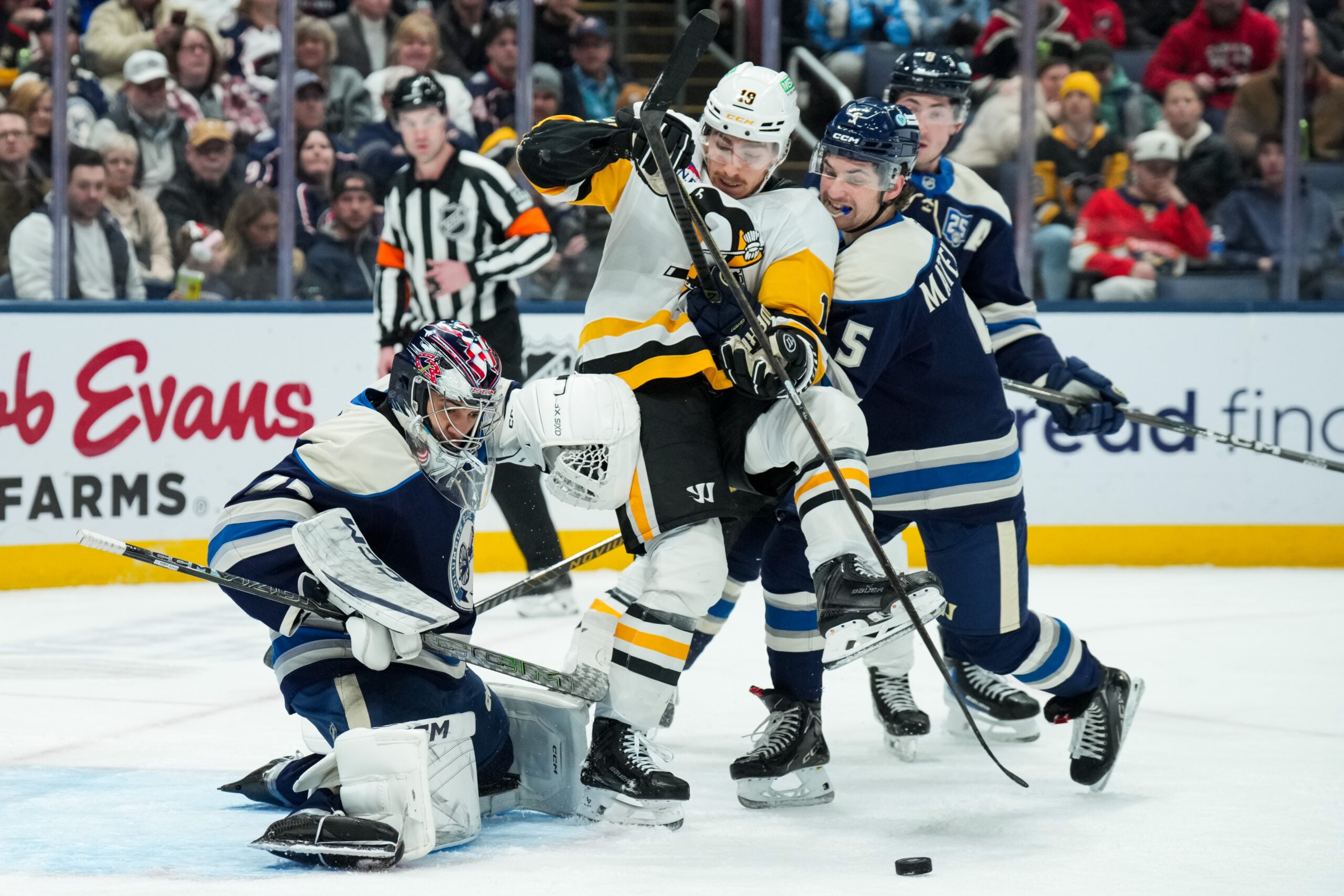
The Columbus Blue Jackets have exhausted their negotiating window. Cole Sillinger and Jet Greaves filed for arbitration as of July 7, 2026, leaving the franchise roughly two weeks to strike long-term deals before an arbitrator sets their salaries unilaterally. Adam Fantilli remains unsigned as well, though his lack of NHL service disqualifies him from arbitration protection—a technicality that opens the door to offer sheets but also removes him from immediate deadline pressure. This is the first time in franchise history the Blue Jackets face actual arbitration hearings rather than last-minute settlements.
The salary math explains the delay. Sillinger, a 22-year-old center driving play in the middle six, should command $6 million annually in a bridge deal or close to it after comparable signings reset the market earlier this offseason. But arbitration projections peg him lower—around $4 million for one season, per AFP Analytics. The gap between what Columbus wants to pay (long-term security at $6M AAV for five or six years) and what a neutral arbiter might award (short-term relief at a discount) creates a perverse incentive: take the short-term hit now to avoid locking in inflated long-term cap commitment. Greaves compounds the problem. The 24-year-old goaltender outplayed expectations last season, establishing himself as the team's clear no. 1 ahead of Elvis Merzlikins. If arbitration favors him—and goal-tenders historically do well in hearings—Columbus faces a two-year deal that walks both Sillinger and Greaves into unrestricted free agency next summer. That scenario forces the team to choose: overpay now for long-term control, or risk losing both assets for nothing.
The downstream effect on shot volume and save pressure is material. Greaves posted a .913 save percentage last season as Columbus's primary net, meaning roughly 87 saves per 2,000 team shots. If arbitration awards him a two-year deal and the Blue Jackets tighten their defensive commitment to preserve cap space for other RFAs—Zach Werenski and Kirill Marchenko loom after this cycle—the team's shot profile could compress. Fewer defensive assignments, tighter gap control, and reduced shots against. Conversely, if Sillinger walks into an arbitration-imposed two-year contract at a lower AAV, Columbus may accelerate his deployment in high-scoring situations to maximize his on-ice production and justify retaining him long-term. The arbitration outcome directly determines lineup leverage.
For bettors tracking Columbus's game totals and individual-skater props through the remainder of 2026-27, arbitration resolution is the hinge pin. If Sillinger gets locked into a short-term deal, expect elevated ice time in power-play and scoring-line contexts—his assist and point totals become more volatile upward. If Greaves receives a two-year award and the Blue Jackets fold their goaltending strategy into cost control, team shot volume could drift downward 2-3% relative to their seasonal baseline as the roster tightens defensively. Neither outcome is certain until the arbiter rules within two weeks, but the binary nature of the decision—long-term security or short-term relief—will reshape Columbus's shot and save distribution for the entire 2026-27 campaign.
The irony: by failing to sign Sillinger and Greaves to extensions now, the Blue Jackets have ceded control of their own cap structure to an outsider. The arbitration award will determine not just salary, but lineup identity.