Mateychuk's Physical Upgrade Opens Assist and Power-Play Ceiling for Blue Jackets
By Ty Whitney ·
Columbus's young defenseman enters 2026-27 with tangible defensive refinements and promised special-teams deployment, reshaping his offensive production profile.
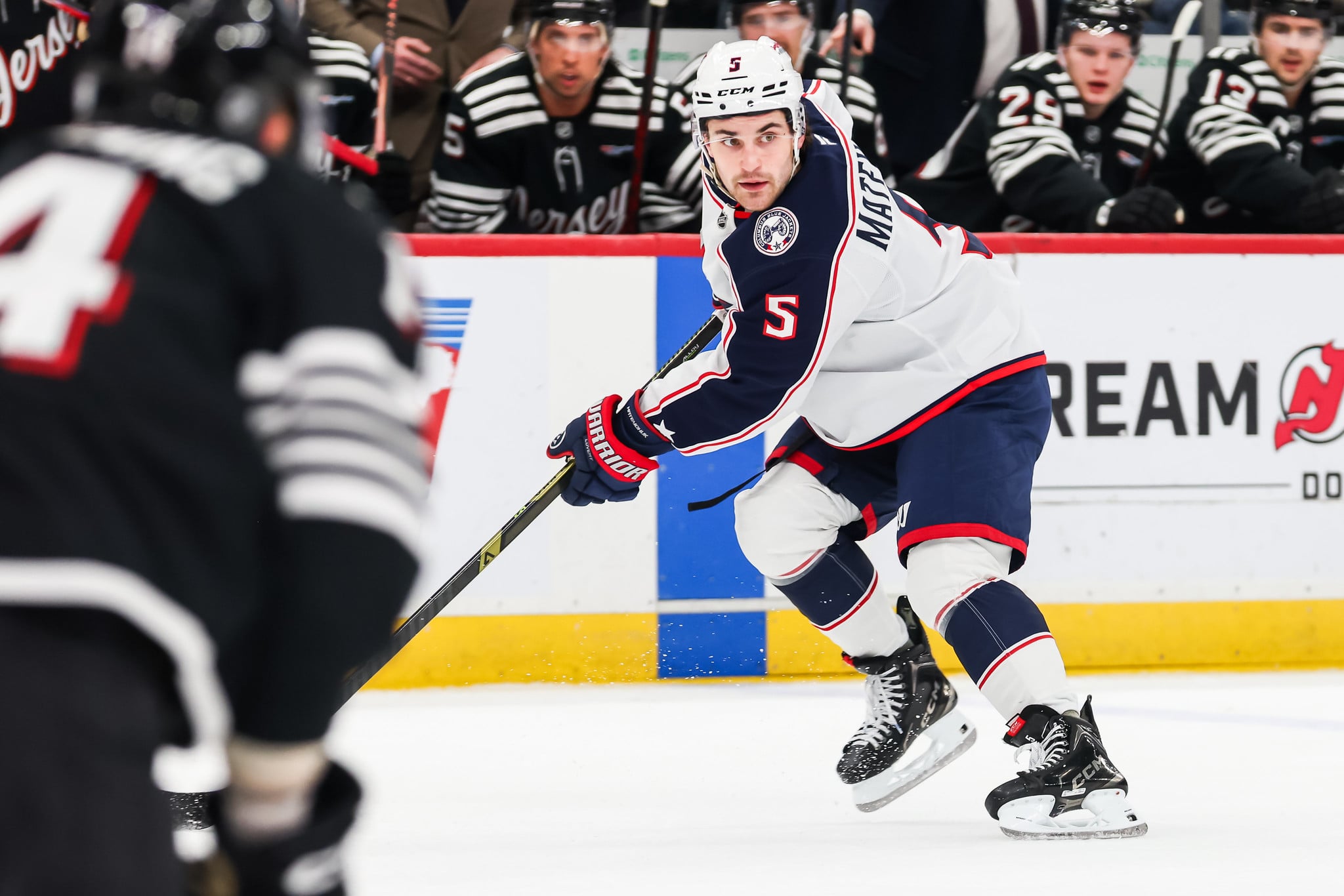
Denton Mateychuk is entering the 2026-27 season with a fundamentally different physical profile than the one that carried him through last year's campaign. Per coach Rick Bowness, the Columbus Blue Jackets defenseman spent the offseason adding muscle and stability on his edges—a directive that tracks with the team's internal evaluation that Mateychuk needed to harden his frame before shouldering expanded responsibilities. That upgrade matters because defensive competence and physicality are prerequisites to the power-play deployment Bowness is now promising. The coach made clear that Mateychuk will finally see penalty-kill and power-play minutes this season after receiving none last year, a recognition that his earned trust alongside Ivan Provorov has cleared the path.
The partnership with Provorov is the structural anchor here. Playing next to a 400-plus-game ironman who has missed virtually no contests due to availability forces Mateychuk into a daily accountability loop—either match Provorov's consistency or hear about it in real time. Mateychuk acknowledged this explicitly: he understands the standard and expects to be held to it. That's not motivational rhetoric; it's a description of role compression. He's no longer a prospect learning the NHL at a measured pace. He's a projected top-pairing defenseman-in-waiting, and the team is accelerating his timeline by pairing him with one of the league's most reliable professionals and giving him situational ice time in high-leverage moments.
On the defensive side, Mateychuk invested offseason video work and repositioning drills, particularly around stick and body placement in penalty-kill scenarios and end-of-game situations. That intentionality—not generic "improvement," but named mechanical work—suggests the Blue Jackets identified specific breakdowns last season and have a corrective path. If the work translates, his defensive index should stabilize, which removes a drag on his ice-time allocation and opens space for offensive output. A defenseman trusted in shutdown situations gets more power-play chances because coaches stop rationing his usage.
The prop angle hinges on power-play deployment and offensive touch-rate. Mateychuk posted 10 assists last season across limited special-teams exposure. With Bowness explicitly promising power-play time this year, his assists per 60 minutes at even strength should improve simply because he'll accumulate more high-danger touches. The floor for a young defenseman with offensive skill who sees PP1 time is typically 35-40 assists across a full season, assuming 20+ minutes per game. Mateychuk is not yet at that ice-time ceiling, but if Bowness's statements reflect genuine deployment plans—not aspirational coaching speak—his assist projection edges toward 28-32, a meaningful bump from last year's pace. The market has likely priced his assist line conservatively, anchored to his limited role from 2025-26. Early-season power-play minutes will calibrate that quickly, but for the first week of the season before the line adjusts to actual deployment, the assists-over carries an edge if his line sits at 0.35-0.40 per game.
Physical development also matters for blocked-shots volume. Stronger defensemen who move more confidently in their lower body tend to slide in front of shots at higher rates. Mateychuk's block total could tick up 15-20% simply from improved positioning and willingness to take contact. That's not a high-edge bet—it's a byproduct adjustment—but it's worth monitoring in conjunction with power-play minutes, because both move in the same direction if the team is genuinely integrating him into the offense.