Blackhawks Lock in Commesso with Two-Way Deal, Signaling Depth Over Immediate Starter Competition
By PropBetEdge Editorial Team ·
Chicago's contract structure for its 23-year-old goalie reflects organizational patience with development rather than a path to significant NHL starts this season.
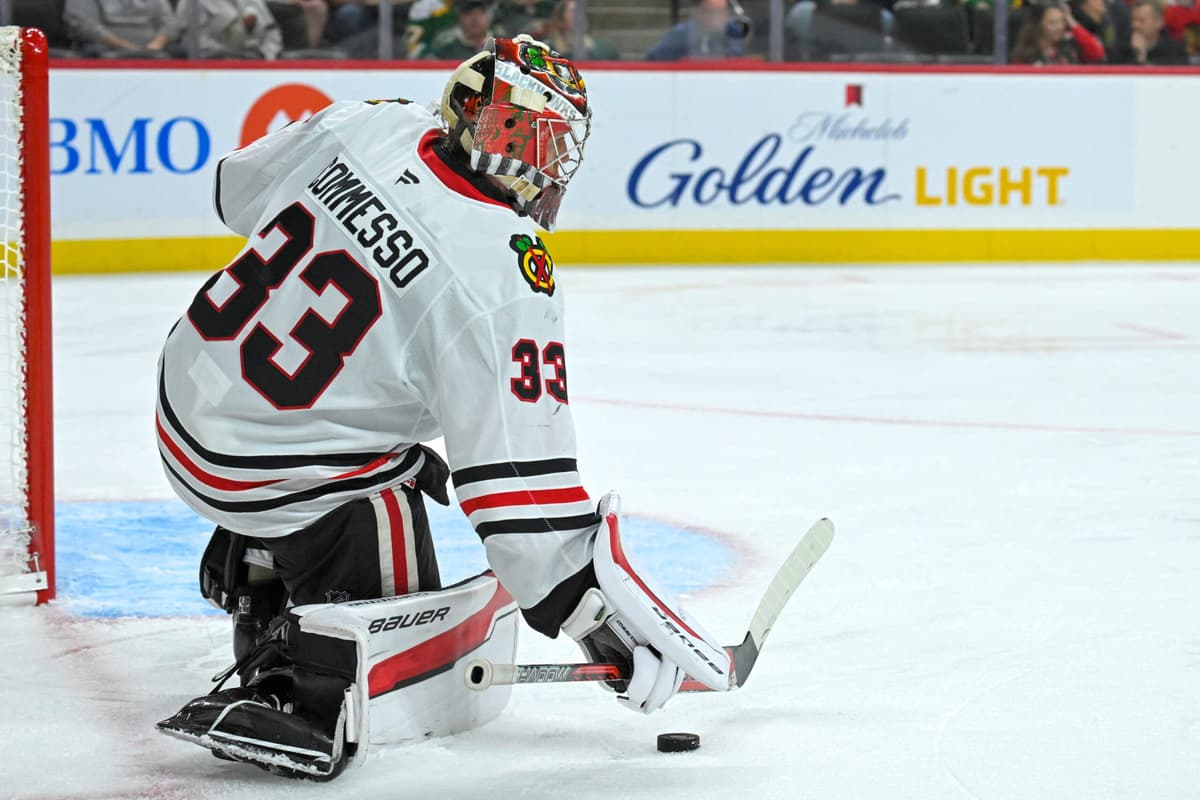
The Chicago Blackhawks signed goaltender Drew Commesso to a two-year, two-way deal on Monday, settling a restricted free agent negotiation with modest financial terms. The structure—$850K NHL salary in Year 1 against a $875K cap hit, plus $200K in minor-league wages and $250K guaranteed—paints a picture of a backup or third-stringer with organization optionality rather than a near-term starter.
Commesso, 23, appeared in three games for Chicago last season. That limited exposure, combined with a two-way contract that allows the club to shuttle him between the NHL and AHL without major salary consequences, signals the team views him as a development project with NHL readiness still forthcoming. The Year 2 bump to $900K on a one-way deal suggests the Blackhawks expect marginal improvement in contract value by 2027–28, but the total financial commitment remains conservative. For context, this is the contract structure teams use to protect cap flexibility while maintaining control of a prospect's arbitration rights upon expiry—not the deal they hand to an ascending starter.
Chicago's goaltending picture remains anchored by Petr Mrazek and Arvid Lindgren as the primary rotation. Commesso's role in that pecking order hasn't shifted materially with this signing. What matters for the Blackhawks' near-term save percentage and goals-against numbers is Mrazek's health and consistency, not Commesso's secondary development. The contract simply removes a contractual loose end while preserving the organization's ability to absorb injury or performance dips without cap strain.
For prop bettors tracking Blackhawks goalie workload, this signing does not change the distribution calculus. Commesso's three games last season came in a relief or blowout context; the market should expect similar limited usage this season. Mrazek's shots-against per start and save percentage will drive Chicago's defensive prop pricing far more than any marginal improvement Commesso might deliver. If the Blackhawks' depth goaltending appears in multiple consecutive games due to injury or poor performance from the starter, that's a signal that Chicago's defense or Mrazek's form has deteriorated—not that Commesso has ascended. The contract is insurance, not a catalyst.
Bettors should monitor Mrazek's injury status and performance trends closely, as those will be the true drivers of Chicago's goaltending props this season. Commesso's deal simply ensures the organization won't face arbitration surprises or cap complications if they need to maintain a third-string option. It's a professional housekeeping move, not a competitive signaling event.