Bedard Gets the C at 21, But a Shoulder Injury Clouds Chicago's Reset
By PropBetEdge Editorial Team ·
The Blackhawks named their franchise centerpiece captain hours before the season, yet his absence until November forces bettors to recalibrate team-total expectations.
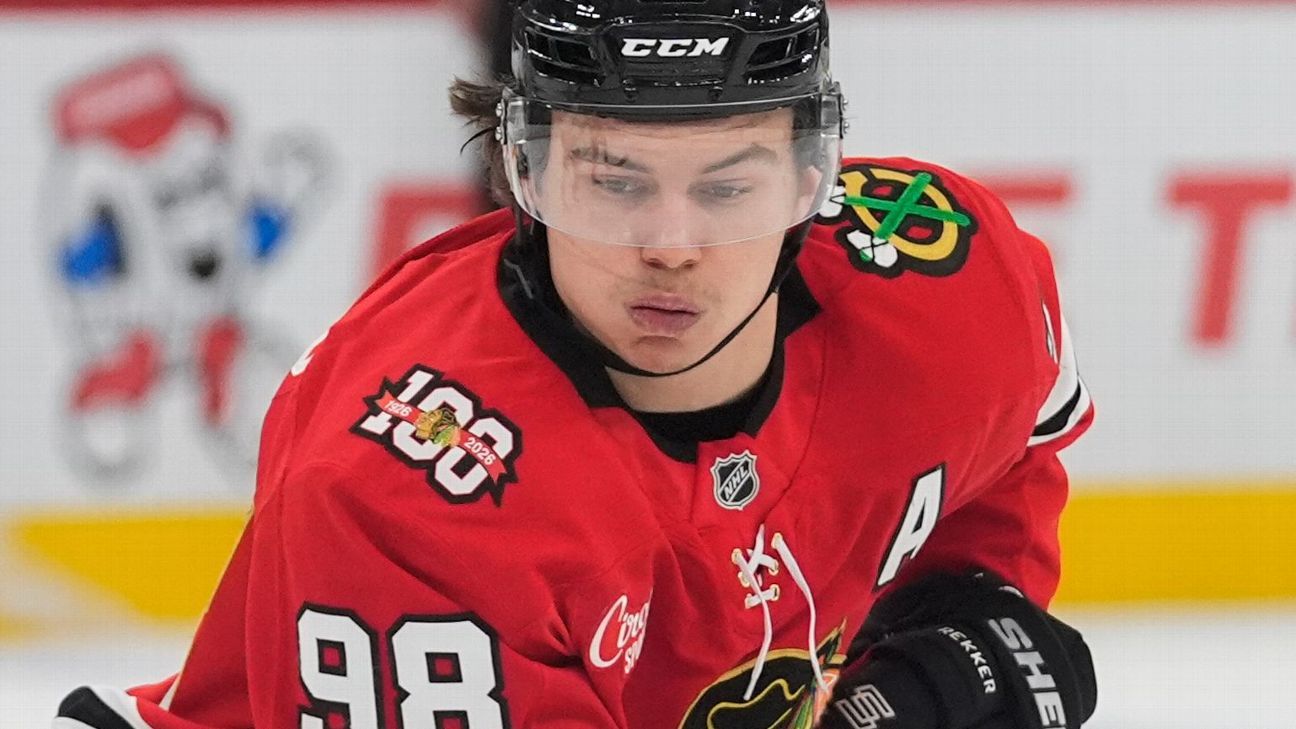
The Chicago Blackhawks named Connor Bedard captain on Tuesday, making the 21-year-old the second-youngest captain in franchise history, behind only Jonathan Toews at 20. It's a ceremonial moment with real structural weight: Bedard has led the Blackhawks in points in each of his three seasons despite the team's organizational dysfunction, and the franchise is betting its rebuild accelerates now that he's locked in on a five-year, $75 million deal ($15M AAV). General manager Kyle Davidson's statement framed Bedard as a standard-setter who elevates teammates—the exact profile Chicago needs if it's going to climb out of the playoff wasteland it's occupied since 2017.
But the timing reveals the organization's fragility. Bedard sustained a shoulder injury during offseason workouts in Vancouver and underwent surgery. He's expected to return around November, meaning the Blackhawks will open their season without their captain and primary offensive engine. In the three-year sample he's played in Chicago, Bedard has averaged 97 points per 82 games—a pace that typically anchors a team's scoring infrastructure. Without him in the lineup, Chicago's offensive ceiling compresses sharply. The Blackhawks brought back Patrick Kane this summer to shore up depth, but Kane returning for a second stint doesn't compensate for Bedard's absence; it masks the problem temporarily.
For bettors, this creates a clean bifurcation: the pre-Bedard season and the post-return window. From now until early November, Chicago's team totals should trade at a discount relative to their season-long projection. A team without its best player and captain doesn't magically sustain the offensive output it generates with him. The Blackhawks' early-season games become a fade candidate for overs on team totals—not because Chicago is without talent, but because their offensive flow is mechanically disrupted. Kane's presence helps, but he's 35 and hasn't played a full season in Chicago in years; his reintegration introduces additional variance. The market will price opening-week games normally or perhaps even optimistically, anchoring to the full-season roster composition rather than acknowledging the surgical absence of their first-line center.
Once Bedard returns, the edge flips. The Blackhawks will have their captain back in the lineup at a point when the season structure favors teams making late-season runs. Bedard's injury forces an artificial September-October discount on Chicago's offensive totals that will correct sharply the moment he's cleared to play. Astute bettors watching the rehab timeline should circle Chicago team totals in the weeks surrounding his return—the market will have adjusted downward based on early-season performance without their centerpiece, then will struggle to properly price the inflection when he comes back.