Kantserov's KHL Pedigree Changes Chicago's Offensive Timeline—And Props Markets Should Adjust
By PropBetEdge Editorial Team ·
The Blackhawks signed a 36-goal KHL scorer at 21 years old; the betting market isn't yet pricing in what that means for team offensive volume and Connor Bedard's role architecture.
Roman Kantserov is now a Blackhawk. The 2023 second-round pick signed a three-year entry-level deal after leading the KHL with 36 goals in 63 games for Metallurg Magnitogorsk—a 0.57 goals-per-game clip that doesn't translate directly to NHL pace, but signals elite finish in a professional league where Artemi Panarin, Kirill Kaprizov, and Vladimir Tarasenko all sharpened their teeth. General manager Kyle Davidson framed the 5-foot-9, 176-pound forward as a multi-role option: skill-heavy enough to play up the lineup, hard-nosed enough to function in various spots. That's the language of a team betting on versatility, not a prospect tour.
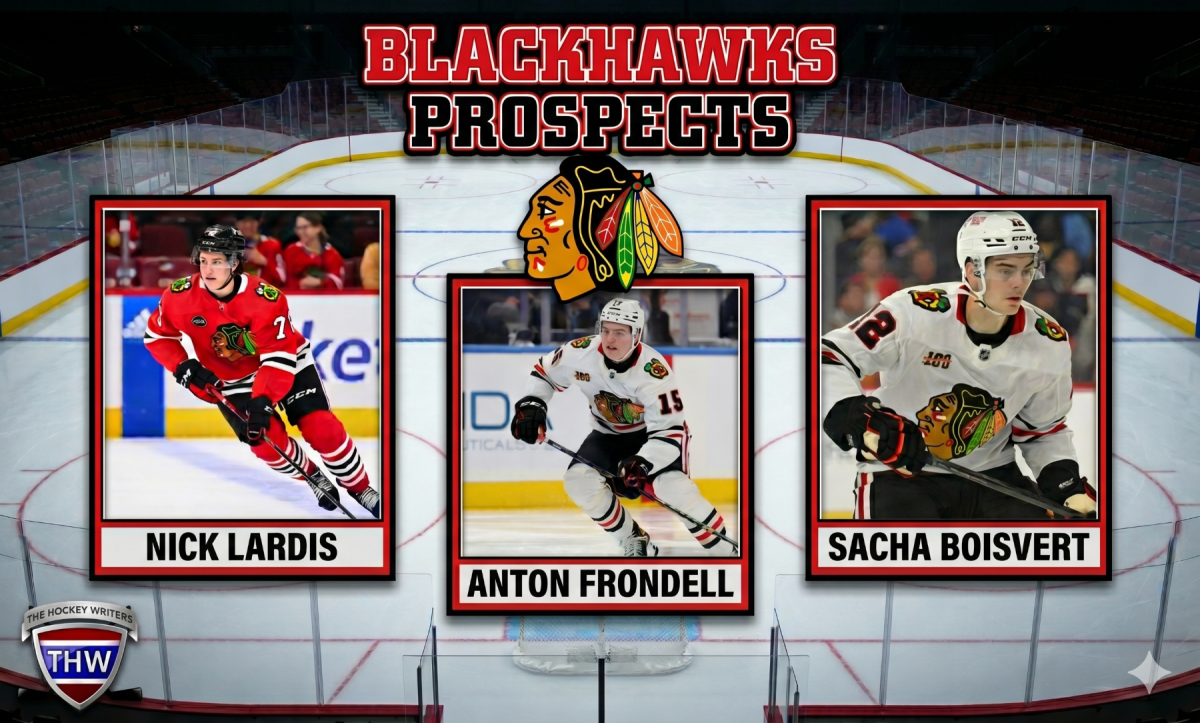
What makes Kantserov's arrival operationally significant is the timing within Chicago's rebuild arc. The Blackhawks have Connor Bedard as their franchise centerpiece, and a forward pipeline (Nick Lardis, Frank Nazar, Anton Frondell) still maturing. Kantserov, entering at age 21 with a full professional season already banked in a top KHL squad, compresses the timeline for offensive depth. He wore an "A" in Russia last season—a leadership marker that scouts associate with maturity and judgment, not just offense. The team's stated need for "more Russians" (per Artyom Levshunov's 2025 comments) also suggests cultural continuity; Mikheyev is the current Anglophone bridge. Kantserov could accelerate chemistry in that cohort.
The betting implication hinges on team totals and goal-volume props for Chicago's 2026-27 season. When a team adds a 36-goal scorer at forward, the market initially processes it as "additional production"—a reasonable assumption. But the model breaks if Kantserov's role is substitutive rather than additive: if he slots into Bedard's linemate position (the draft profile and Davidson's language hint at this), he isn't simply adding 0.57 GPG; he's reorganizing where Bedard's assist and goal totals flow. A tighter, more efficient top-six could actually reduce team shot volume while maintaining or lifting goal volume. Lower shots, same or more goals = goalie save percentage improves, but raw offensive volume metrics stay flat or decline.
Early 2026-27 team-total overs on Chicago should face skepticism if they're priced on the assumption that Kantserov is a pure +36-goal addition. If he's a 0.45 GPG finisher in the NHL (a reasonable expectation for a KHL scorer of his profile), he'll slot 30-35 goals, but if he's cannibalizing linemate opportunity cost from Lardis or Nazar—or pulling touches away from mid-six wingers—the net gain in team goals shrinks. The line will overcorrect initially, pricing Kantserov's arrival as a +40-50 scoring swing. Fade team overs if Chicago's 2026-27 preseason is priced over 245 goals; the edge exists in the difference between "adding a 36-goal scorer" and "integrating a 36-goal scorer into a young, rebuilding offense that's still finding its spine."
Shooting percentage is the wild card. Bedard's linemate—if that's Kantserov's destination—historically sees shot volume increase and conversion rate lift when paired with an elite finisher. That could flip the calculus entirely. Watch early-season trends closely: if Bedard's assist rate spikes and Kantserov's on-ice shot-generation index runs above 55 Corsi%, the team-goal overhaul is real, and you'll want to chase overs at that point. For now, wait for a few weeks of October data before committing capital.