Barkov's Knee Clears, Panthers' Title Window Stays Open
By Erik Schwartz ·
Florida's captain returns healthy to a roster built to contend, reshaping the offensive output calculus for a team favored to win a third Cup in four years.
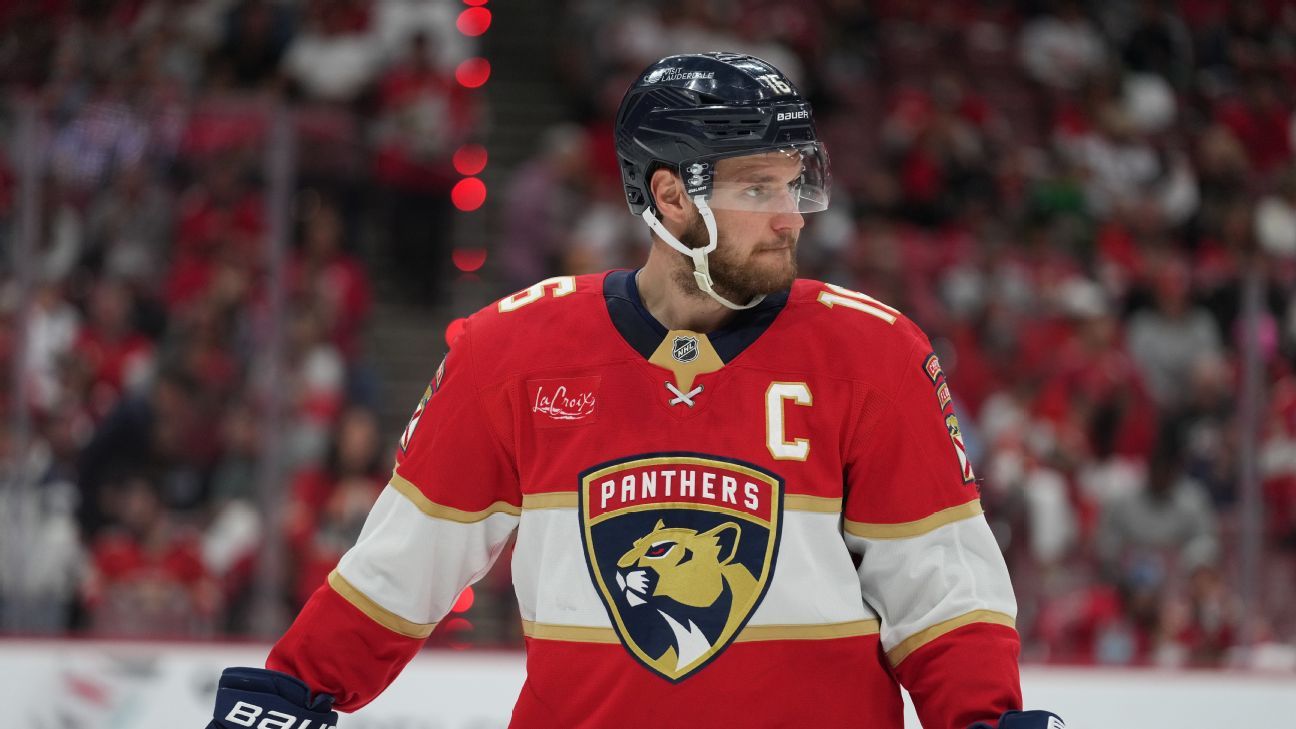
Aleksander Barkov will suit up for the Panthers' first training camp practice Thursday morning—11 months after tearing his ACL and MCL 20 minutes into last year's opener. The injury, suffered September 25, 2025, looked like it might crater Florida's 2025-26 season before it started. Instead, Barkov's medical timeline and his own psychological reset have converged to hand the Panthers their most intact roster since winning the Cup in 2024. He's healthy. He's hungry. And the market has already priced in his return as a foregone positive.
The real test isn't Barkov's availability—it's whether the Panthers can actually sustain the depth that kept them viable even without him last season. Florida missed the playoffs despite injuries that spread far beyond their captain. That tells you something important: the roster is deep enough to compete in a watered-down Eastern Conference, but it's not deep enough to survive injuries and regression from its third-line engines. Barkov returning is the floor for the 2026-27 season, not the ceiling. The ceiling is Matthew Tkachuk staying healthy, Sam Reinhart continuing to move the puck at league-best rates for a winger, and the defense—now bolstered by returning fan favorite Radko Gudas and the addition of Brady Tkachuk on the blue line—staying together. Any one of those breaks, and Florida regresses hard.
What makes Barkov's return unique for the betting market is that sportsbooks had to build a hedged forecast into their preseason totals. They couldn't assume he'd be at full health the first week of October; they had to price in a ramp-up window. Now that Barkov has already tested his knee in live action—he played for Finland at the IIHF world championship in the spring and won gold—the market's baseline assumption was that he'd arrive at camp somewhere between 85-95% of his pre-injury form. He's walking in saying he feels close to 100%. That compression of timeline means early-season Barkov props are priced against a player who may actually be ahead of schedule. His shot volume, assist rate, and ice time will likely frontload the season as he hungers to make up for lost time.
The broader Panthers implication is that their team total for October and November may be undercooked. Most preseason models built in a Barkov lag—a gradual integration back into heavy power-play minutes, maybe a reduced shift load in the first two weeks of camp. If Barkov walks in conditioned and confident, that lag evaporates. The Panthers also swapped Sergei Bobrovsky (who left for Toronto) for Jacob Markstrom in net, a lateral move in talent but potentially an upgrade in consistency. Reinhart is their most dangerous playmaker; with Barkov back to drive shot volume and retrieve pucks at the cycle, Reinhart's assist totals should expand. The Panthers' preseason over/under on wins likely sits somewhere around 52-54 (their odds to win the conference have already compressed). If Barkov's ramp-up accelerates and Markstrom plays to his career median (.915 save percentage), Florida could comfortably hit 55+ by the holidays.