NHL · injury
Avalanche's Third-Period Collapse Exposes Defensive Discipline Problem—and a Betting Pattern Worth Hunting
Colorado blew a third-period lead for the first time in 45 games; the breakdown wasn't random variance, and the market hasn't priced the structural flaw yet.
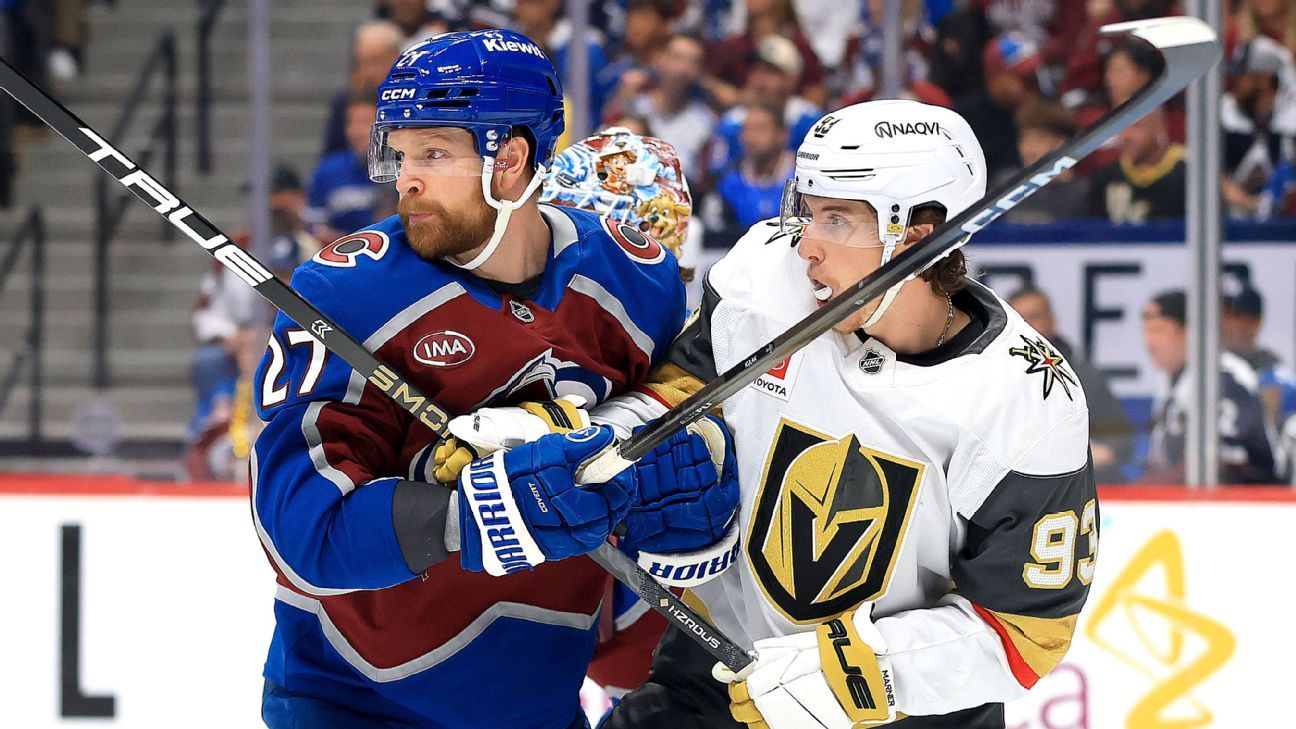
Colorado entered the third period with a 1-0 lead and left Game 2 of the Western Conference final with a 3-1 loss. Jack Eichel and Ivan Barbashev scored within two minutes of each other to flip the series 2-0 in Vegas's favor. The damage cuts deeper than a single loss: the Avalanche were 41-0 in the regular season and 4-0 in these playoffs when holding a lead into the final frame. That 45-game sample is no fluke—it's a baseline for a team built to execute under pressure. The collapse wasn't a lucky bounce or a hot goaltender. It was organizational discipline breaking down in real time.
The mechanics of the failure matter. Vegas generated seven shots in the first six minutes, forcing Scott Wedgewood into early heavy lifting. Colorado's penalties mounted throughout the night—so many that Vegas, already top-five on the power play, turned the penalty kill into a possession advantage. Clearing attempts that should have been automatic instead became turnovers, with Vegas regaining puck possession while the Avs remained pinned in their own zone. On the Mitch Marner breakaway early in the first, Wedgewood made a strong stop, but that single save exemplified the pattern: Colorado was being pushed into reactive hockey, managing threats instead of controlling them. By the third, the team was gassed and out of structure.
This is the inverse of what made the Avs dangerous in the regular season and early playoffs. Their lead-holding prowess was built on winning possession battles, limiting high-danger chances, and forcing opponents to chase them. When they went up 1-0, the expectation—backed by 45 games of evidence—was that they'd tighten defensively and execute exits. Instead, they lost the puck in their own end repeatedly, gave Vegas life on the power play, and collapsed in a two-minute window when the Golden Knights sensed an opening. The structural issue is third-period discipline and possession retention under pressure. Vegas didn't outplay them over 60 minutes; Vegas capitalized on a specific degradation of execution when it mattered most.
For prop bettors, this reframes the series outlook and Game 3 betting. The market will likely overcorrect after a 2-0 deficit, treating Colorado as either doomed or primed for a dramatic comeback narrative. Neither captures the real edge. Colorado's problem isn't talent or effort—it's puck management and penalty discipline in high-leverage moments. If they can reduce penalties and clean up neutral-zone exits, they revert to form and the goaltending (Wedgewood making key saves early) stabilizes the rest. Watch Colorado's penalty total in Game 3. If they stay under 5 penalties, shots-against should dip below 30, and Wedgewood's workload normalizes. If they creep back toward 6+, they're conceding possession, and Vegas's shot volume will spike again. The over on Vegas shots is not a simple recency play—it's a bet on Colorado's inability to suppress penalty trouble under playoff pressure. That's a persistent mechanism, not luck.
The larger takeaway: the Avalanche's third-period lead record (45-0) was always going to face a reckoning in a seven-game series. It happened in Game 2 instead of later. The question now is whether they can diagnose the breakdown—penalties, clearing execution, puck retention—or whether it becomes a signature vulnerability that Vegas exploits again. For bettors, that diagnosis happens in Game 3's first 10 minutes. Watch penalty frequency and neutral-zone success rate. The line will shift on narrative; the edge lives in process.
NHL Intelligence — Hockey intelligence beyond the scoreboard. Open NHL Intelligence →