Matthews Clears Health Hurdle With One Season to Erase Doubt
By PropBetEdge Editorial Team ·
Toronto's captain enters 2026-27 fully healthy for the first time in two years, framing a bounce-back campaign that could reshape the Leafs' goal-scoring projections.
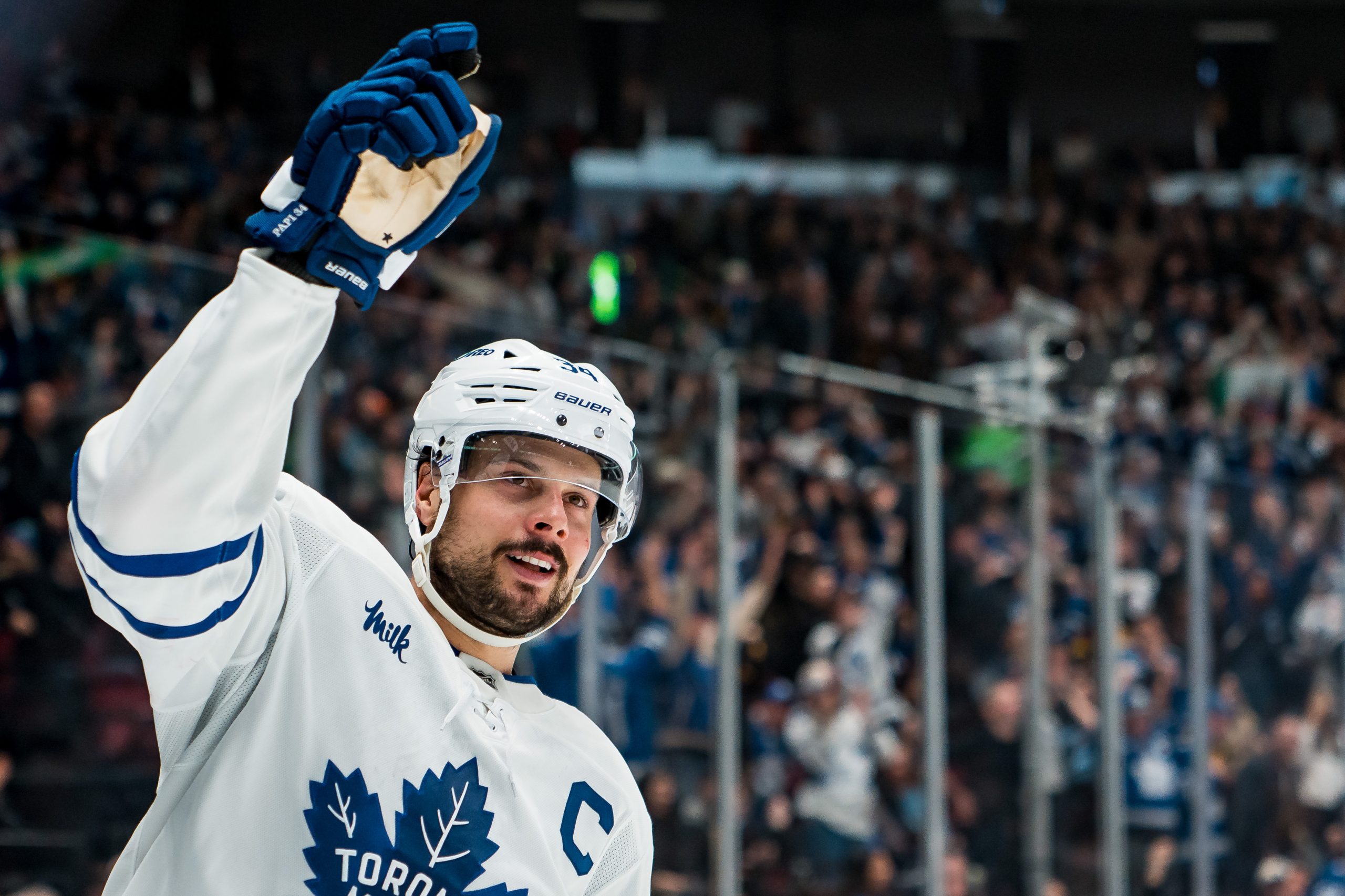
Auston Matthews claims full health heading into the 2026-27 season, declaring himself in the best physical condition he's felt in years. The Toronto captain sat down with team media this week to address a question that has shadowed his last 24 months: whether the grade 3 MCL tear that ended his 2024-25 campaign had truly healed, or whether lingering concerns might persist into the new term. Matthews answered directly—he's cleared, he's motivated, and he views the season as a chance to reclaim the elite scoring identity that defined his first six years in the league.
Context matters here. Matthews missed the 30-goal threshold last season for only the second time in his NHL career, finishing with 53 points across a season fractured by injury stints. The Leafs missed the playoffs entirely, their first postseason exclusion since Matthews' arrival. That combination—personal underperformance paired with organizational failure—has given him explicit motivation to silence a narrative that built over two years of health concerns and production dips. New GM John Chayka's offseason rebuild, which included acquiring first-overall pick Gavin McKenna, signals organizational confidence in a reset. The front office is betting on Matthews' health statement being genuine, not optimistic spin.
The betting market has already begun pricing in a Matthews rebound. Over/under lines on his season goal total, assist rate, and game-by-game shot volume will track his early performance closely. The mechanical edge here hinges on whether the market is properly discounting the two-year absence of a healthy Matthews. Bettors who wagered on his consistency in 2023-24 learned that elite scorers don't simply recover midseason; they require full offseason rehabilitation and preseason repetition to re-establish their release timing and positioning. A captain declaring himself "the best I've felt in a long time" after major knee surgery carries weight because the alternative—silent doubts about reconstructed ligaments—is what destroyed his production in the first place. If Matthews' health statement proves legitimate through October and November, his season goal and assist lines will have moved sharply upward by December, making early over positions on those props a timing play rather than a certainty.
The single-game lens also shifts. Matthews' shot volume and on-ice efficiency metrics will be critical early indicators. A player recovering from substantial knee trauma typically shows elevated variance in his first 15-20 games—some nights he'll generate 4-5 shots and look fully healthy; other nights he'll touch the puck gingerly and log 2-3. The market's line-setting algorithms don't weight that recovery volatility heavily; they default to career averages. Lean into Matthews shots-on-goal unders in his first three weeks of action if his early-season shot totals remain below 3.5 per game, acknowledging that this is recovery noise rather than a permanent downgrade. By mid-November, once his knee has absorbed 20 games of contact without setback, the true version of his scoring profile will emerge—and that's when the over becomes the sharper play. This is a single-event, high-variance angle with a short half-life; the edge collapses once his on-ice performance either validates or invalidates the health claim.