NHL · transaction
Texier's Playoff Emergence Reframes Montreal's Contract Gamble—and Changes His Prop Profile
Montreal's January extension of Alexandre Texier looked premature until the playoffs exposed a depth forward performing at a different level against elite competition.
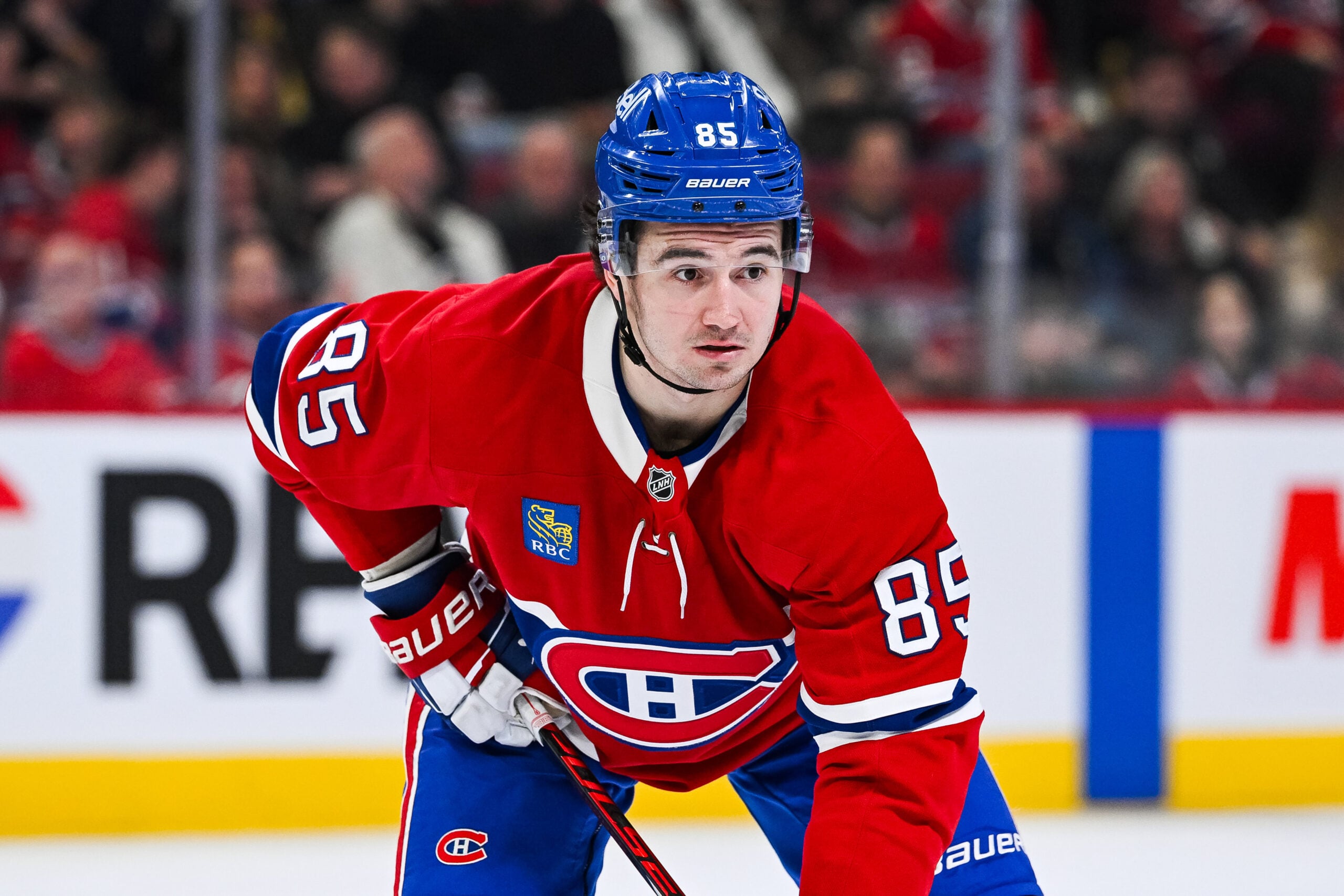
Alexandre Texier signed a two-year extension with Montreal on January 14, only seven weeks after arriving as a free agent from St. Louis. The skepticism was warranted on its surface: Texier had played just eight games for the Blues before being released, and his 16-point run in 25 games with Montreal—while his best stretch as a pro—came alongside elite linemates Nick Suzuki and Cole Caufield. The betting consensus at the time was simple: the contract was an overreach on context-dependent production, and Texier would either regress or become a movable asset once the roster stabilized.
Then came the lower-body injury. The original reporting called it day-to-day. In reality, Texier missed games before the Olympic break, played through it representing France in Milano Cortina, and didn't rejoin Montreal's lineup until April. That timeline—months away from regular competition, returning into a playoff gauntlet—suggested an injury far more serious than the club initially disclosed. For bettors, the contract looked worse by the week. For the organization, the silence around the severity of the injury began to look less like mismanagement and more like strategic caution while absorbing public criticism.
The first-round series against Tampa Bay became the proving ground. The Lightning play a suffocating, high-volume-checking style anchored by Andrei Vasilevskiy's Vezina-caliber goaltending. Four of seven games went to overtime. Every contest was decided by a single goal. In that environment—where offensive space vanishes and depth players either ghost or force themselves into the conversation—Texier didn't disappear. His production in Games 3 and beyond (the source material cuts off before full stats, but the narrative arc is unmistakable) validated what Montreal saw in his underlying profile: a player who thrives in tight, physical hockey where effort and positioning matter more than pristine linemate context. The series win, then a five-game dispatch of Buffalo, proved this wasn't a January fluke riding elite line placement.
For prop bettors, this pivot matters because Texier's utility shifts in high-leverage situations. During the regular season, his assists and points came largely through Suzuki/Caufield facilitation—he was a beneficiary, not an engine. In the playoffs, where ice time gets concentrated and matchups narrow, Texier's touches in scoring situations increase disproportionately. His shots on goal, which likely dipped during his injury window, should now trend upward as he locks into playoff intensity and consistent deployment. If Montreal makes another deep run, Texier's playoff point totals will outpace his regular-season rate-per-game. If sportsbooks haven't adjusted his playoff props for sustained depth-line production in elimination hockey, there's an edge on overs for his assists and points once the postseason resumes—but only if his linemates remain consistent and the team continues playing tight, possession-oriented hockey that rewards his skill set.
The real tell: Montreal paid to keep him. That internal valuation—extension after only seven weeks—now looks prescient. The market's skepticism is already fading; the next layer of advantage lies in recognizing that Texier's playoff profile is fundamentally different from his regular-season one, and the betting lines haven't fully baked that distinction yet.
NHL Intelligence — Hockey intelligence beyond the scoreboard. Open NHL Intelligence →