Buffalo's Goaltending Gap Cost Them Game 7—And The Blueprint For Next Season
By Ty Whitney ·
Dahlin carried the Sabres to overtime control, but Montreal's Dobes proved the difference when it mattered most, exposing a playoff-critical weakness the front office must address.
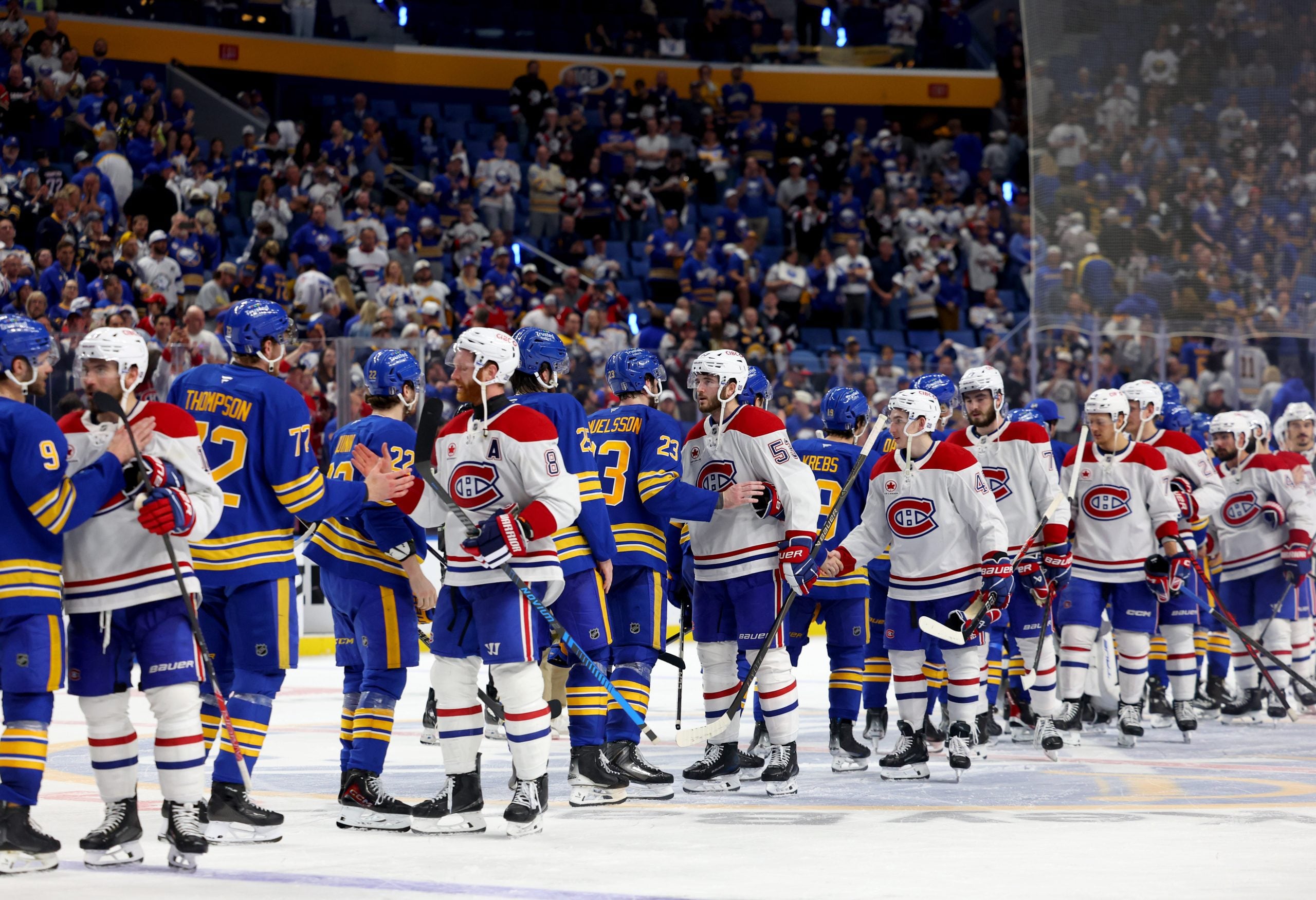
The Buffalo Sabres dominated possession for 50 minutes of Game 7 against Montreal on Monday night, controlled the neutral zone, generated a relentless forecheck, and tied the game in the third period through Rasmus Dahlin's overtime-forcing tally. Then Alex Newhook ended their season in sudden death, and the entire arc of a breakthrough year evaporated in one sequence. The final score—Montreal 3, Buffalo 2—masks the real story: the Sabres lost this series in net, not in net-front play.
Dahlin logged a game-high 33:11 in ice time, embodying the carrying load he's borne all season. The defenseman wasn't just a catalyst; he was the primary engine for sustained offensive pressure, a rare two-way force who played almost every critical situation. Yet even his 60-minute performance couldn't overcome the goaltending inequality that defined this matchup. Jakub Dobes, shelled for eight goals in Game 6, posted a 37-of-39 save performance in Game 7—the kind of championship-caliber resilience that playoff hockey demands. Ukko-Pekka Luukkonen was solid through most of the series but surrendered the deciding goal in overtime, a soft opener on a shot that may have had partial screen but looked kickable in real time. This wasn't a split-decision goaltending war; it was a gap.
Buffalo's possession edge throughout the series never translated into sufficient goal volume because Montreal's goaltending bent without breaking. The Sabres generated high-danger looks in bunches, hemmed Montreal into defensive zones repeatedly, and orchestrated sequences that should have yielded more than two goals in a winner-take-all Game 7. But structure and pressure don't score. Save percentage does. Dobes finished this series north of .920 in critical moments; Luukkonen couldn't consistently match that threshold when it mattered. Against a Montreal team that thrived on defensive tightness and transition play, shot volume became almost irrelevant.
For betting purposes, this series outcome reframes what to monitor in Buffalo's offseason moves. If the front office retains Luukkonen as their primary starter without upgrading the backup situation, expect volatility in totals and moneylines throughout next season. A team that controls 55%+ of shot attempts but plays behind a sub-.910 save-percentage goalie generates a specific market inefficiency: overs will attract heavy public money (based on possession and goal volume), but the underlying save rate will consistently disappoint. Conversely, lean unders against Buffalo when Luukkonen starts games where the opponent has legitimate offensive depth. Montreal exposed the flaw; smart books will price it accordingly within days. The real edge comes early, before public recency-bias overs on the Sabres' "exciting young team" get tested against playoff-caliber goaltending again.
The Sabres' 2025-26 season will be remembered as a franchise milestone—their first deep playoff run in years, with a resilient core that seized opportunity. Dahlin's performance alone justifies the narrative of a program turning a corner. But organizational memory should focus on why they lost, not what they accomplished. A team doesn't miss the Stanley Cup Finals because it outshot its opponent; it misses because it couldn't stop one. Buffalo's path forward runs through goalie acquisitions, not forward depth.