Colorado's First-Period Mirage: Why Early Leads Don't Survive Roster Gaps Against Vegas
By Ty Whitney ·
The Avalanche built a 3-0 cushion in 13 minutes but collapsed in two periods, revealing deeper roster dysfunction that extends beyond Cale Makar's absence.
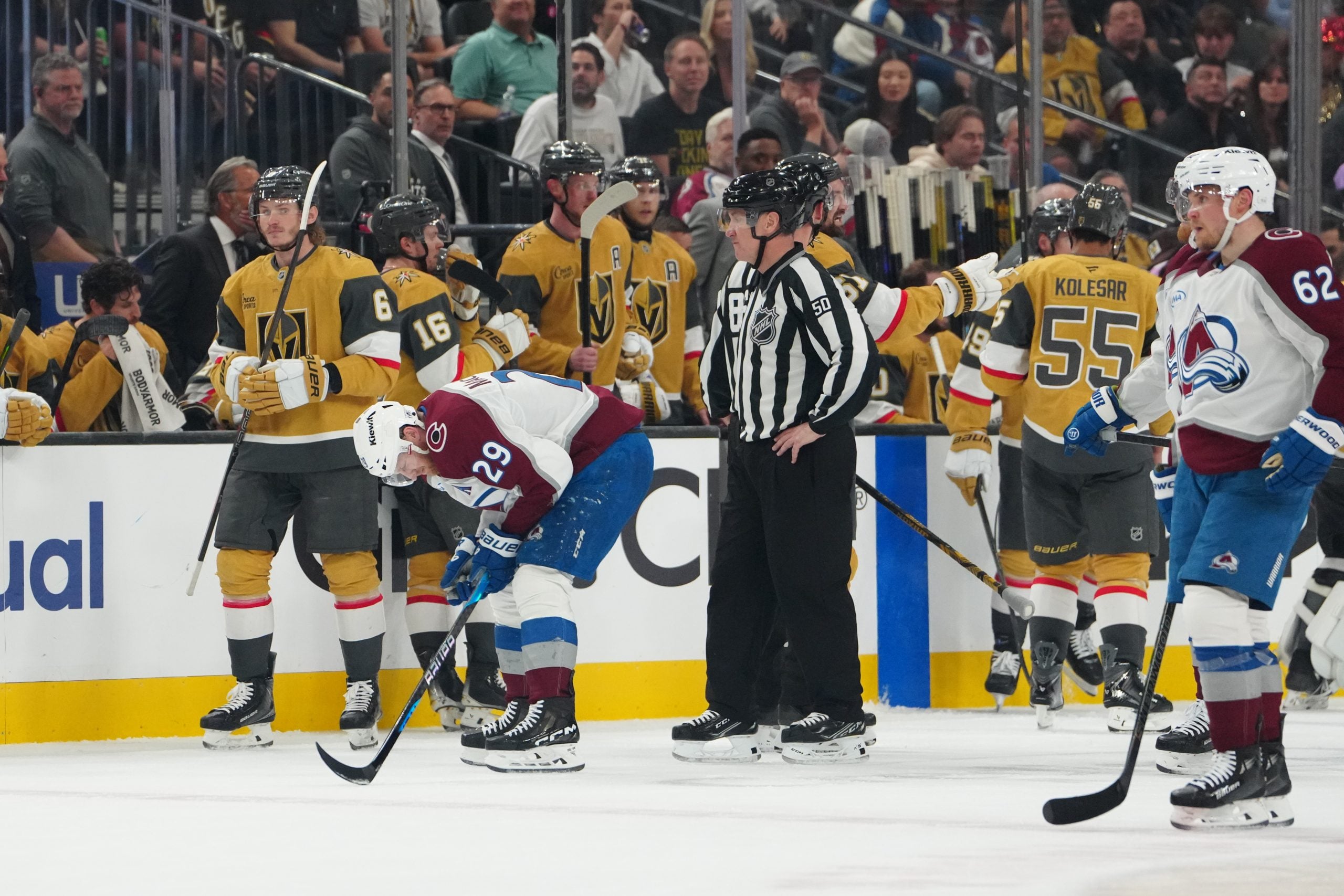
Colorado jumped to a 3-0 lead in the opening 13:15 of Game 3 against Vegas, looked faster and more coordinated than any point in the series—then played 47 minutes of deteriorating hockey. Mark Stone's power-play goal 19 seconds into the second period flipped momentum irreversibly. By the midway point of the middle frame, the Avalanche deficit had been erased and their structural advantages had evaporated. Vegas tightened defensively, increased physical contact, and executed the kind of suffocating second and third period hockey that has now carried them to a 3-0 series lead.
The collapse exposes a roster architecture problem that predates Makar's upper-body injury. Sam Malinski, the 27-year-old defenseman who displaced Sam Girard in the regular season, has regressed visibly in this series. After an upper-body issue sidelined him briefly against Minnesota, Malinski played at a minus-3 clip through the first two games and saw his minutes compress to a playoff-low 12:57 in Game 3, finishing negative again. The loss of Makar compounds Malinski's struggle—without the elite puck mover, the entire defensive unit loses positional flexibility—but it doesn't fully explain performances this poor. More revealing is the silence from Colorado's forward group. Martin Necas registered his first point of the series in Game 3. Artturi Lehkonen has gone five consecutive games without a point. Valeri Nichushkin has one goal since Game 2 against Minnesota. These are not depth-chart names; these are supposed to be carry-weight contributors in a playoff lineup.
Brock Nelson's invisibility stands as the loudest indictment. The deadline acquisition posted 33 regular-season goals and earned Selke Trophy consideration, yet through the Western Conference Final he has been a non-factor. He scored once against Minnesota but has delivered no impact against Vegas, finishing at minus-five through the first three games. That production vacuum in a series where Colorado needs secondary scoring depth to compensate for Makar's absence is not randomness—it reflects a roster that relied too heavily on individual talent rather than system redundancy.
For prop bettors, this dynamic flattens Colorado's over lines and elevates volatility on player-specific performance props. The Avalanche cannot sustain a first-period offensive surge because their secondary scoring lacks both consistency and the structural support (Makar's outlet passing, defensive zone exits) that would elevate their efficiency. Lehkonen's assists over, Necas shot totals, and Nelson's points lines all carry compressed expected value; these players are playing reduced minutes against a Vegas defense that is now executing at championship-series intensity. Any bounce-back projection assumes the injury situation stabilizes and the lineup rediscovers rhythm—neither of which is guaranteed in an elimination scenario. Colorado's team totals (currently 3.5-3.75 in a do-or-die Game 4) carry legitimate downside risk because Vegas has now proven it can neutralize this roster's primary scoring channels for 40-47 consecutive minutes. The Avalanche shot 16 times in the first period; 21 over the next two. That volume collapse under defensive pressure is the mechanism driving the over fade.