Ehlers' Fast Start Masks Carolina's Depth Problem in Stanley Cup Final Game 1
By Erik Schwartz ·
The Hurricanes' third line carried the offensive load in a 5-4 Game 1 loss, but Vegas's goaltending and pace control exposed how thin Carolina's scoring is when the second line doesn't produce.
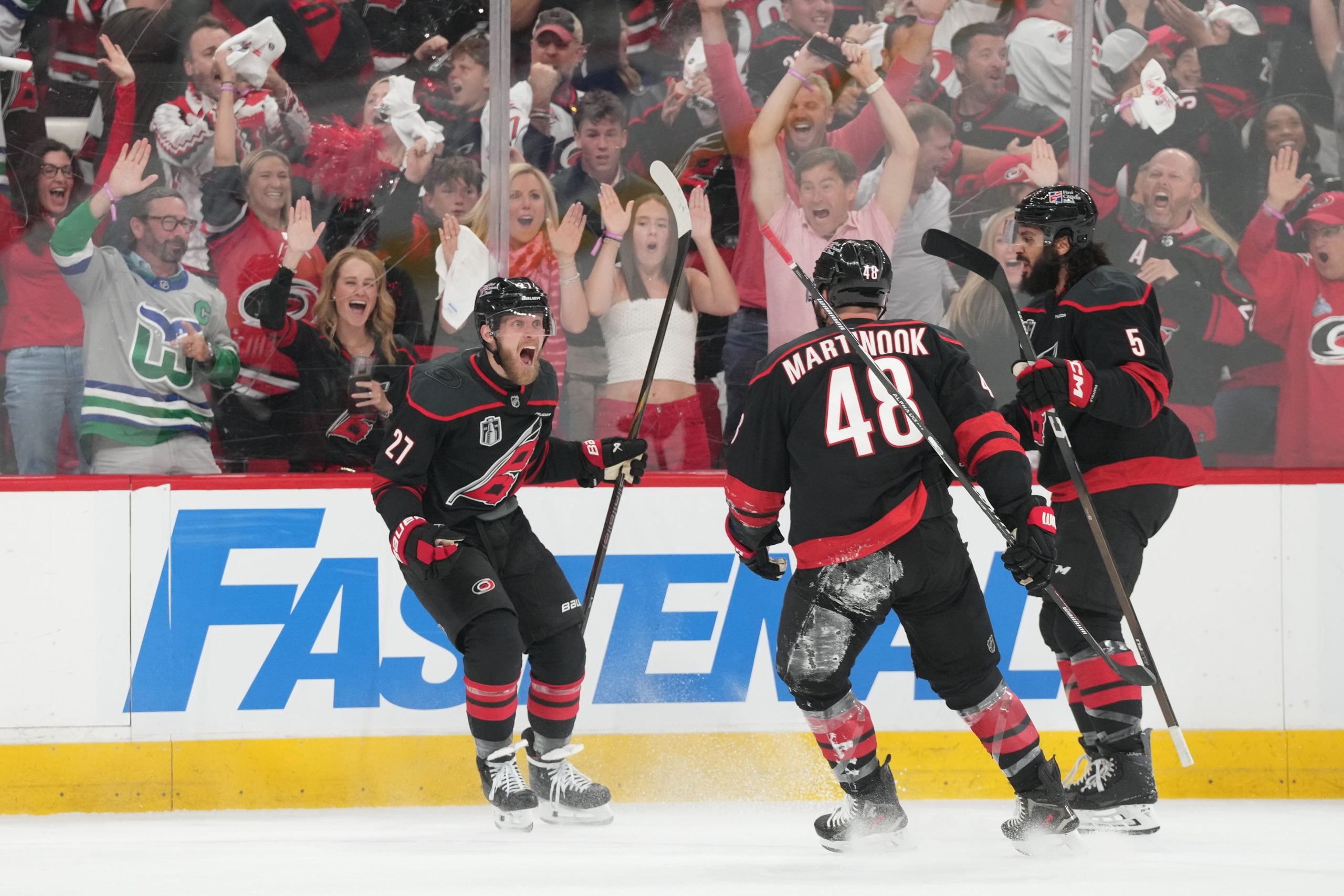
Carolina dropped Game 1 of the Stanley Cup Final 5-4 to Vegas, a one-goal loss in a series where puck possession and special teams efficiency typically separate contenders from coronations. The Hurricanes scored early—Nikolaj Ehlers netted the fastest goal to start a Cup Final since 1951, striking 25 seconds in—and built momentum through the first and second periods. By the end, though, Vegas's defensive structure and goaltending held firm enough to steal a game that looked like it belonged to Raleigh.
Ehlers himself was the story: two goals in Game 1, extending his recent tear to four goals and seven assists over his last five playoff games. He signed a six-year, $8.5 million deal in the offseason specifically to be this guy—a multipurpose left wing who can thread passes and finish in tight windows. In 13 of 14 playoff games, he has six goals and 11 points. That's elite production. But here's the mechanical problem the box score hides: Carolina needed its third line (Ehlers, Jordan Staal, Jordan Martinook) to score three of its four goals. Vegas allowed that, accepted it, and won anyway. Staal's goal was his first Cup Final marker since 2009—a 16-year gap that tells you everything about how seldom this line has been asked to carry offensive weight in a championship moment.
The real issue is concentration of risk. When Carolina's second line (typically Tage Thompson or similar anchor) goes quiet in a Finals game, the team has no internal redundancy. Ehlers performing at 1.5 points per game is excellent. Ehlers and two depth forwards being the offensive engine is fragile. Vegas goaltender Ilya Samsonov made 31 saves on 35 shots—a .886 save percentage that looks pedestrian until you realize the Golden Knights allowed Carolina to create high-danger looks and still left Raleigh one goal short. That's not luck; that's structural: Vegas runs a neutral-zone trap that forces Carolina into perimeter shooting. Ehlers scores because he hunts inside. Most of the supporting cast doesn't.
For prop players, this loss signals a market overreaction to Ehlers' individual metrics. Books will likely inflate his shots and points lines for Game 2 based on his Game 1 performance, but that's a single-event spike off a 25-second goal and two finishes—high variance, low persistence. The sharper angle is fading Carolina team total overs in the next two games at elevated numbers. Vegas's goaltending, neutral-zone structure, and ability to steal one at home sets a ceiling on Carolina's offensive output around 3.2-3.5 goals per game, even with Ehlers hot. Carolina's books have likely moved team totals from 3.2 to 3.4+ after Game 1. That overcorrection should be attacked.
Gostisbehere added a third goal in his last five games, proving he's a legitimate secondary source of offense from the blue line. But even with him producing, Carolina needed its No. 3 line to shoulder No. 1 load and still lost. That's the durability test the Finals will impose over the next 3–6 games. If Ehlers stays this hot and the second line wakes up, Carolina wins this series. If Ehlers is the only consistent finisher, Vegas's trap suffocates them.