Ducks' Shot Volume Mastery Masks Conversion Crisis—And Vegas Proved It in OT
By Ty Whitney ·
Anaheim dominated possession and generated 36 shots in Game 5 but couldn't finish, exposing a finishing-rate vulnerability that will compound if they face elimination.
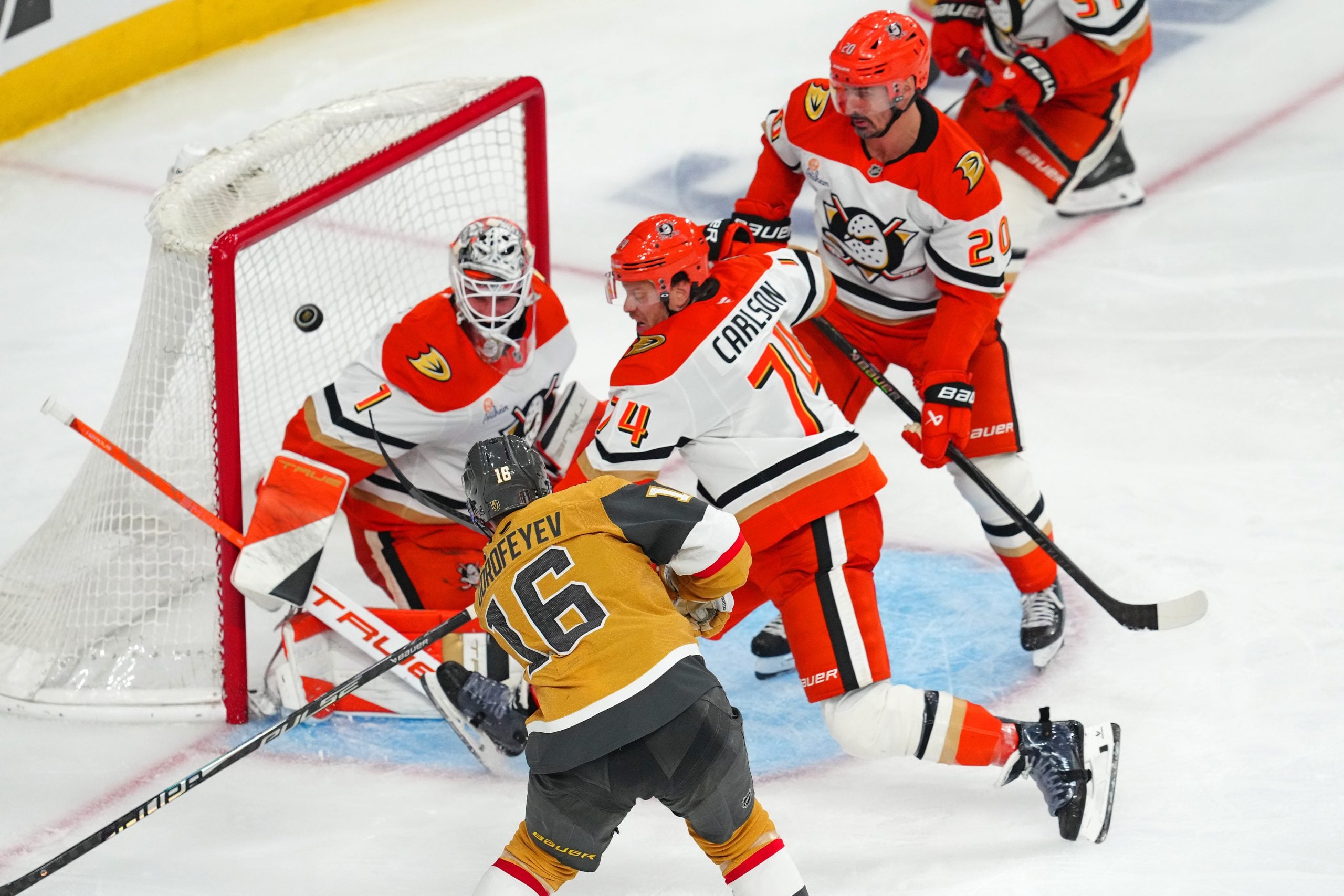
The Anaheim Ducks fired 36 shots at Carter Hart on Tuesday night and still lost 3-2 in overtime. That disconnect—territorial dominance decoupled from goal production—tells you everything about why Vegas now holds a 3-2 series lead heading into Game 6. Beckett Sennecke's early power-play goal and Olen Zellweger's late third-period tying marker kept the Ducks in it, but they left multiple scoring opportunities on the ice. Against a veteran Vegas team that converts possessions into net effects with ruthless efficiency, that margin of error doesn't exist.
The Ducks' second-period dominance was particularly stark: 17 shots generated, just 6 allowed, and the puck lived in Vegas territory for stretches. Yet Hart made the saves that mattered—the ones that kept Vegas close enough to steal the game late. This isn't a Hart-is-great story; it's a Ducks-finishing-rate story. When you're a younger team outworking an opponent over 60 minutes but still watching Pavel Dorofeyev walk out of overtime as the hero, you've failed at the one job that matters in May: converting volume into goals. The playoff stage magnifies that gap. Anaheim's young core—Cutter Gauthier, Mason McTavish, and Zellweger—played with the poise and pace you want to see from rebuilding talent. But poise without execution is a moral victory, and the Ducks can't afford those anymore.
For betting purposes, the high-shot-volume pattern matters acutely now. Anaheim has generated 32+ shots in three of five games; Vegas has won two of those three despite being outshot. The books priced Game 6 assuming the Ducks' shot generation would eventually crush Vegas in pure volume terms. What Game 5 revealed is that shot quantity and conversion rate move independently—and that Hart's ability to steal moments in a tight series changes the value of team-total unders and under-paced games. Vegas' goaltending in high-volume spots is the invisible variable the market wasn't pricing until Tuesday night. If the Ducks are forced into another elimination game, their pressure will intensify, shot volume may spike further, but their finishing percentage could actually compress under stress—a textbook recipe for unders to cash despite territorial overwhelm.
The narrative shift also affects individual props for Game 6. Gauthier (two assists) and McTavish remain offensive engines, but the context has flipped: Anaheim will chase harder, Vegas will play tighter defense, and both teams will compress the game into tighter possessions. Shots-on-goal totals for individual Ducks forwards should rise, but their conversion rates face headwinds. The value fades to the margins—lean under on Ducks forwards' point props despite elevated shot totals, because the team's net finishing rate in elimination hockey typically tightens, not loosens.