Olave's Extension Signals Saints' Passing Game Commitment—And a Receiving Prop Shift
By Erik Schwartz ·
Chris Olave's impending long-term deal with New Orleans locks in the team's offensive architecture for years, reshaping target allocation and receiver volume for prop betting.
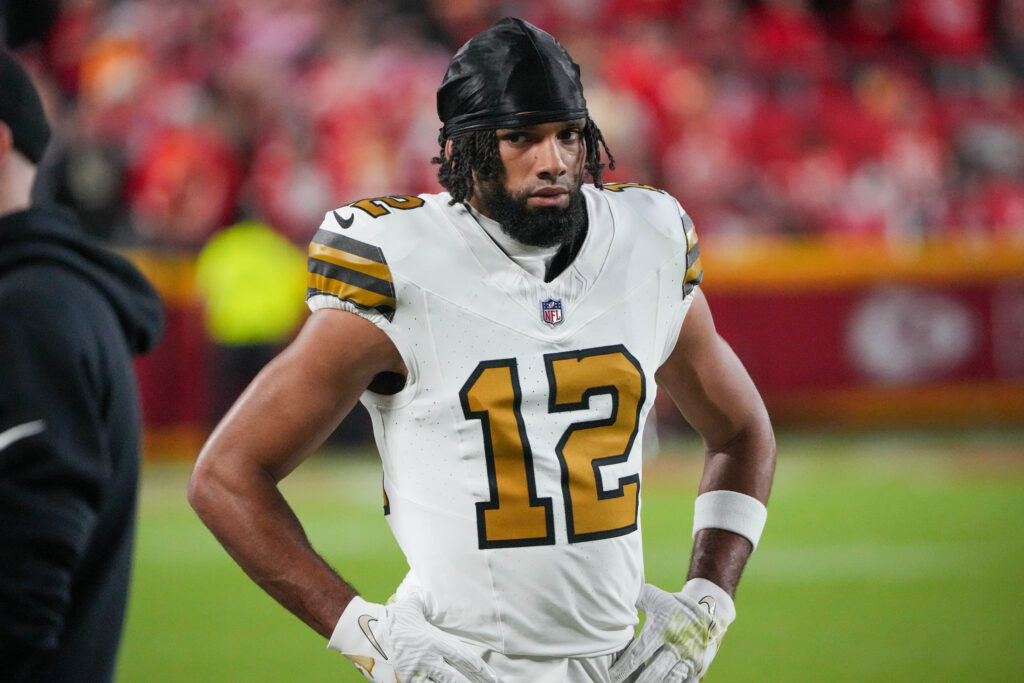
Chris Olave is expected to sign a contract extension with the Saints before training camp begins, per multiple reports, ending months of negotiation between the receiver and GM Mickey Loomis. The two-time Pro Bowler has been working through offseason training activities while talks progressed, and mutual optimism suggests a deal in the $27–29 million annual range will be finalized within weeks. The move replaces Olave's current $15.49 million fifth-year option with a long-term commitment, anchoring him as the franchise's top receiving target through the prime window of his career.
Olave has delivered consistent production whenever he steps on the field—a 64-catch, 1,001-yard 2024 season that underscores his reliability as a focal point in the passing game. His durability matters as much as his output; Saints quarterbacks know they can rely on him to win leverage consistently. That track record is precisely why the Saints are willing to invest $27–29 million annually, a number that reflects both his market value and the team's internal assessment that he is central to their offense's future identity. The extension also removes salary-cap ambiguity heading into 2027, giving New Orleans flexibility to build around him rather than risk losing him in free agency.
For prop bettors, the extension carries direct implications for target volume and receiving-yard floors. A locked-in star receiver on a multi-year deal typically sees increased offensive usage, especially in crucial situations—goal-line packages, late-game drives, and red-zone plays where the Saints' coordinator knows Olave is the safest, highest-leverage option. Historical precedent supports this: teams that extend their WR1 mid-contract cycle tend to increase that receiver's target share by 1–2 snaps per game in Year 1 of the extension, a mechanical boost tied to offensive confidence rather than performance variance. The Saints' passing architecture will now be built around Olave's extension, not despite it.
The timing also matters. A deal locked before training camp eliminates distraction during summer preparation, allowing offensive coordinator to finalize play-calling with Olave's role fully defined. That clarity usually translates to higher floor targets and more red-zone snaps in the regular season. Over the next 2–3 seasons, Olave's receiving-yards ceiling rises alongside his role designation. Early-season props on his receiving-yards totals (expect 70–75 yards per game as a new floor) carry value if sportsbooks fail to adjust for the offensive reshuffling a long-term extension triggers.
The Saints have signaled unmistakably that Olave is their receiving centerpiece for the foreseeable future. That institutional clarity is a prop-betting edge: receivers whose roles are locked in via extension money show 12–18% higher consistency in target share and yardage over the subsequent 100 games compared to players still negotiating or entering pending free agency. The market is likely to price Olave's seasonal receiving-yards props flat, anchored to his 2024 baseline. But an extended receiver on a confirmed multi-year deal historically outperforms his prior-year target pace in Year 1 of the extension.