NFL
The Mahomes Efficiency Trap: Why Kansas City's Offensive Collapse Defies the Market
Patrick Mahomes has thrown 11,698 passes yards since 2023 without a 1,000-yard receiver, yet sportsbooks still price him like an MVP candidate.
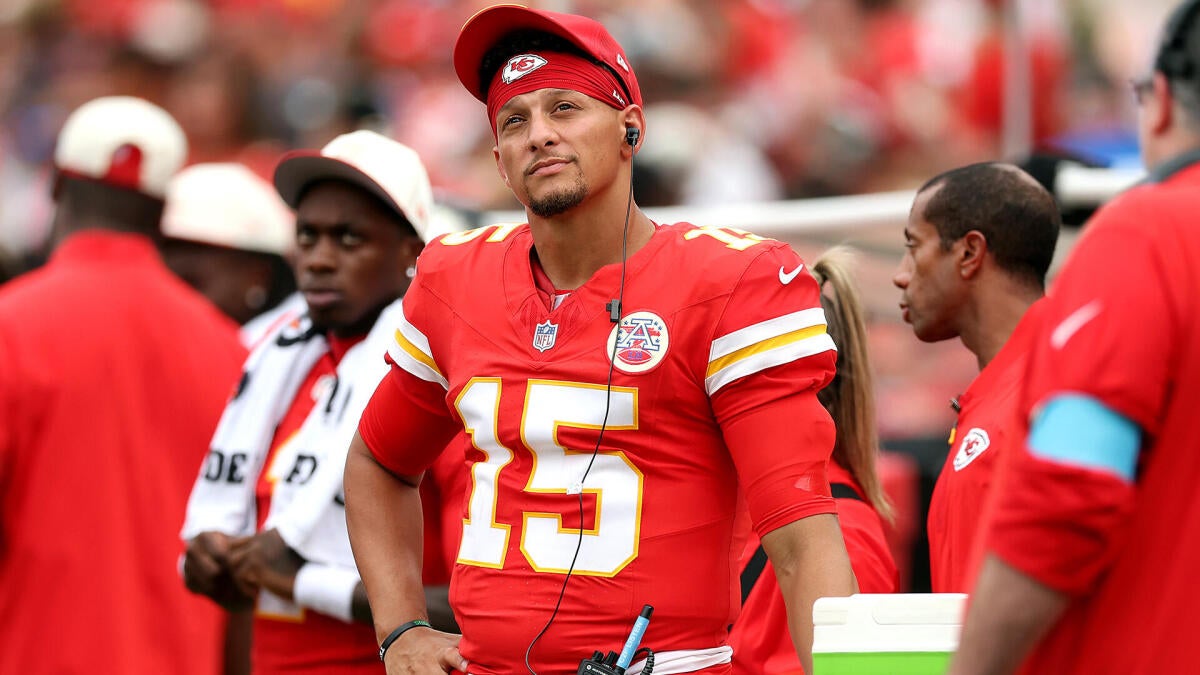
Patrick Mahomes is in the midst of the most puzzling statistical downturn of any franchise quarterback in modern NFL history. Since 2023, the Chiefs rank 19th in points per game—a three-year stretch that stands in sharp contrast to their top-five scoring offense ranking from 2018-22. Mahomes himself has regressed from a 50-touchdown gunslinger to a game manager who ranks 23rd in yards per attempt, 21st in passer rating, and 11th in EPA per play. This is not a single-season dip. This is a persistent organizational failure masquerading as individual underperformance.
The magnitude of what's happened is nearly unprecedented in NFL history. Mahomes has accumulated 11,698 passing yards over three seasons without a single 1,000-yard receiver—the only such occurrence in the league during that window and a record that underscores the structural collapse around him. The Tyreek Hill trade in 2022 severed the artery. From 2018-21, Mahomes threw 41 touchdowns on deep throws (20+ air yards)—an NFL high. In the four seasons since, he has seven. Xavier Worthy, drafted to replace that explosiveness, has caught just 7 of 34 deep balls (20.6% catch rate, second-worst in the NFL among receivers targeted 30+ times on those throws). The Chiefs have cycled through 15 different starting wide receivers over three seasons. The secondary has been gutted. Chris Jones is declining. The offense has nowhere to hide.
Yet the market continues to price Mahomes passes and touchdowns as if the problem is variance rather than infrastructure. His passing-yards lines hover around his historical average because books weight recent volume heavily—and volume, technically, remains intact. His TD props sit at levels that assume modest efficiency recovery. But here's the trap: recovery requires either a genuine wide-receiver talent arrival or a philosophical reset in play-calling, and Kansas City hasn't landed the former. The Chiefs had the opportunity to add elite receiving help this offseason and didn't. That signals either internal confidence in the existing cast or resignation to the cap realities. Neither reads as the prelude to a dramatic rebound.
The prop angle cuts two ways. On one side, Mahomes' passing-yards totals may overcorrect upward in the 2026 season if the market assumes natural regression-to-the-mean efficiency gains. If he hits just 8.2 YPA (still below his 8.4 three-year average), a 260-yard line becomes a lean-under proposition. On the other, his touchdown props are vulnerable to underestimation of constraint. The Chiefs have ranked 15th or worse in points per game in three consecutive seasons—a span only Brady experienced in his final year in Tampa at age 45. If Kansas City's offense remains structurally limited, touchdown volume will stay compressed even if Mahomes' per-play efficiency ticks slightly higher. A 1.8 TD line in a game where the Chiefs are favored is not automatically fair value; it may be underpricing the likelihood that Kansas City scores 17 points total.
The real tell: Kansas City finished 6-11 last season and did nothing to fix the receiving corps. For a team with Mahomes under contract for the next decade, that silence is deafening. Expect conservative prop pricing early in the season as books hedge against Mahomes' volume and assume efficiency gains will be marginal. That's the edge window—fade his passing TDs in games where the line suggests optimism about offensive production that the roster simply doesn't support.
NFL Intelligence — Football intelligence beyond the final score. Open NFL Intelligence →