Jonathan Taylor's Workload Squeeze: The Colts' High-Risk Bet on Durability
By Erik Schwartz ·
Indianapolis loaded Taylor with 323 carries last season and won a playoff game because of it—but the math on elite-level volume is catching up with them.
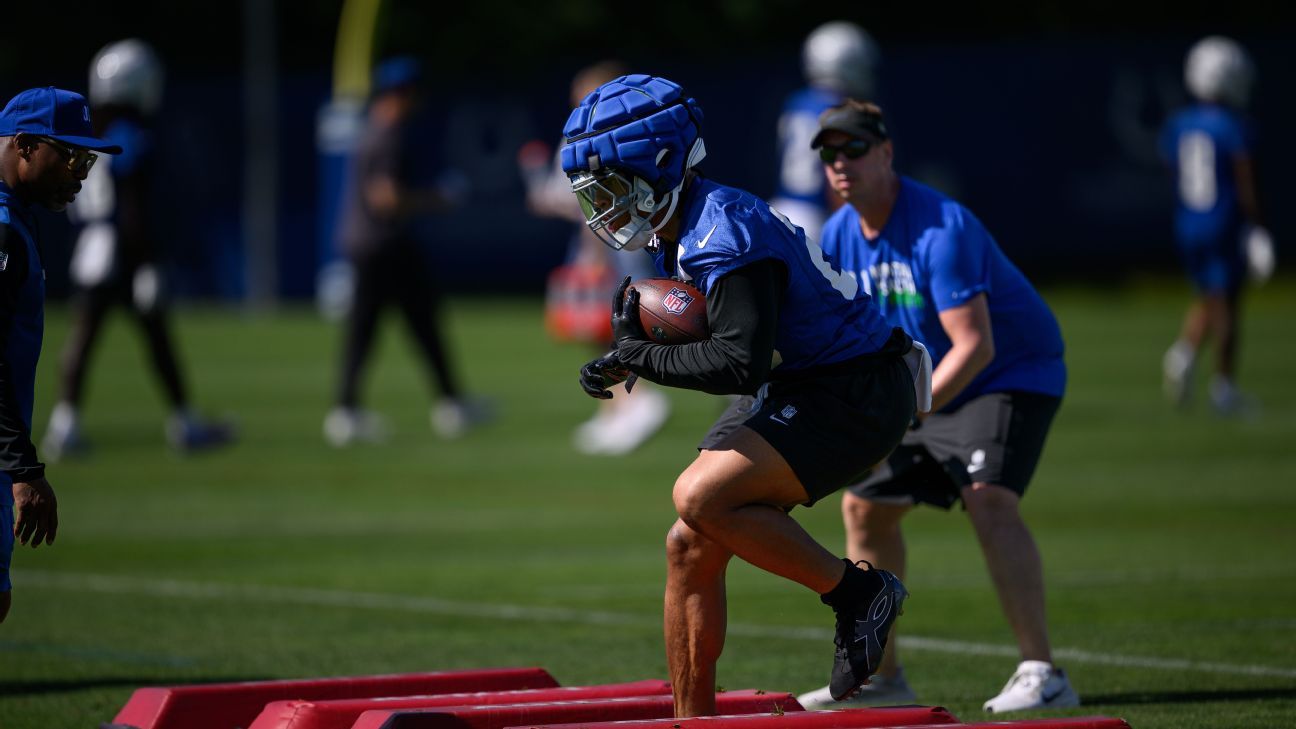
Jonathan Taylor carried the ball 32 times in the Colts' overtime thriller against Atlanta last November, capping a season-high 26-attempt showing before that decisive drive. By year's end, Taylor had absorbed a league-leading 323 rushes while posting 1,585 yards—an elite output that helped Indianapolis stay relevant in a thin AFC South. Coach Shane Steichen made no apologies for the volume: when a back is rolling, you feed him. That logic worked in 2025. The 2026 season is a different math problem.
Taylor has now recorded consecutive 1,500-yard seasons—2024 (1,431 yards) and 2025 (1,585 yards)—while shouldering workloads that place him among the NFL's most-used backs since his 2020 entry into the league. Alongside Derrick Henry, he occupies a rare tier of backs who have eclipsed 1,500 rushes in that span. The Colts publicly acknowledge what the tape and volume metrics already scream: managing Taylor's workload in 2026 has become a legitimate strategic concern. Steichen's recent comments frame the tension clearly: Taylor came out of last season healthy, but the cumulative wear is undeniable. The question isn't whether the Colts want to deploy him heavily—it's whether they can afford the injury risk if they continue at that clip.
This creates a layered prop dynamic. Taylor's rushing volume is likely to decline in 2026 simply as a matter of organizational self-preservation. If the Colts reduce his carries by 30-50 per season (a credible target for injury mitigation), his projected yardage output drops proportionally. A back averaging 4.9 yards per carry—Taylor's 2025 rate—would need only 306 carries to reach 1,500 yards. At 280 carries, he'd land around 1,372 yards. The Colts are signaling they prefer the latter scenario, even if it leaves production on the table.
For bettors, this means Taylor's season rushing yards total will likely open conservatively, then face pressure downward as Vegas prices in the usage ceiling. The earliest available lines—before market consensus hardens—may offer fading value on the over. Alternatively, a bet on Taylor's carries under the projected total becomes more attractive than a yards-over, because carries are the direct lever management is pulling. The mechanism here is organizational constraint, not declining talent or poor offensive line play. Taylor will remain elite per-attempt; the Colts simply won't risk him at 300+ carries again. Fade overs on his season yardage total if it opens above 1,500; monitor his projected carry count before week one, because that's where the real edge lives.