The Tight End Market Is Getting Younger—And That Changes How You Price Pass-Catchers
By PropBetEdge Editorial Team ·
ESPN's annual consensus rank of the league's best tight ends reveals a cohort shift toward early-career talent that reshapes target distribution and ceiling projections for 2026.
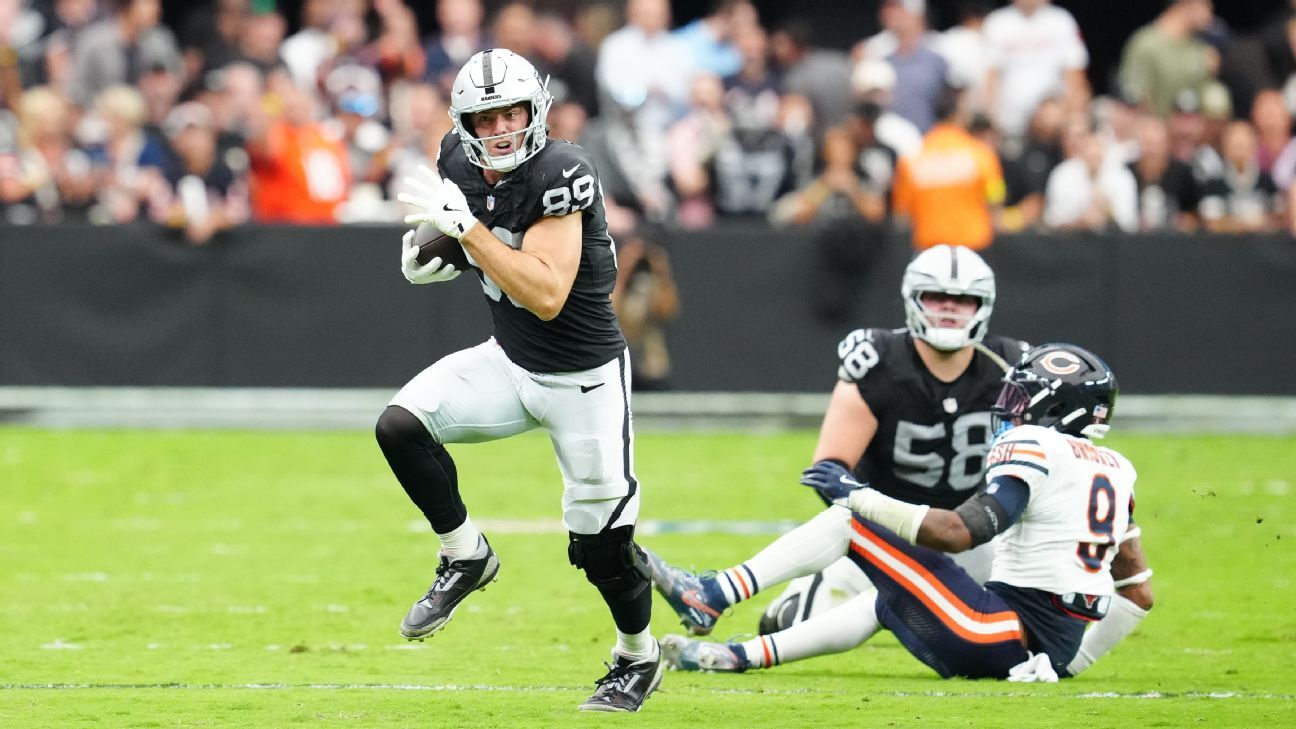
ESPN surveyed more than 70 NFL executives, coaches, and scouts to rank the league's top 10 tight ends for 2026, a methodology that has run annually for seven years and represents the closest thing to objective consensus the scouting world produces. The findings cut against a decade of veteran dominance at the position: the list is young, front-loaded with recent Day 1 and Day 2 draft picks, and reflects a strategic pivot across offensive coaching—the best teams now deploy two or three tight ends on a single play, rotating between run-heavy and pass-heavy looks rather than treating the position as a single-target solution.
This is not nostalgia-driven analysis. The market is speaking through action: Brock Bowers, George Kittle, and Trey McBride anchored the conversation at the top, but the depth of emerging talent—with the NFC North alone holding three of the ten—signals that offensive scheming has moved on from "one elite pass-catcher at TE" to "two-three productive young bodies who can flex in and out." The position has already generated back-to-back 100-catch seasons from different players, a throughput that reflects usage explosion, not individual excellence alone. Coaches and front offices are voting with their draft capital and play-calling that they want younger legs, faster recovery windows, and scheme versatility over aging reliability.
For prop betting, this reshaping matters acutely. Target concentration is diluting. When Bowers, Kittle, or McBride line up, they're no longer the lone pass-catching outlet on the field—they're one of two or three, which flattens ceiling projections and increases variance on any single week. A tight end who averaged 7.8 targets per game in 2025 on a team running a one-TE system cannot sustain that volume if the offense pivots to three-TE looks, regardless of individual talent. Conversely, teams that backfilled TE rooms with younger, less-established names should see tighter, more predictable target distributions, since coaches will rely on scheme and situational usage rather than hot-hand favoritism.
The practical edge: tight end receiving yards and receptions lines for elite names will carry elevated volatility in training camp and preseason weeks because the market has not yet fully priced the shift toward multi-TE deployment. Books will hold onto pre-2026 targets-per-game from 2025, but smart offensive coordinators have already begun carving usage among three options. For aging pass-catching specialists (particularly in systems that are not explicitly building toward a youth rotation), expect their lines to be overstated relative to the actual target distribution their offense will deploy come September. Lean lighter on those props until you see live-game evidence that the TE room hasn't fractured the target pie. For younger tight ends entering expanded roles on teams with established usage infrastructure, the inverse applies: their ceilings are being suppressed by books that see them as depth, not featuring, and that mispricing will persist until game tape rewrites the market's category assignments.