NFL
Week 4 Start-Sit Decisions: When Instinct Meets Film
The gap between what you feel and what the numbers show is where fantasy edges live—and where Week 4 lineups get made or broken.
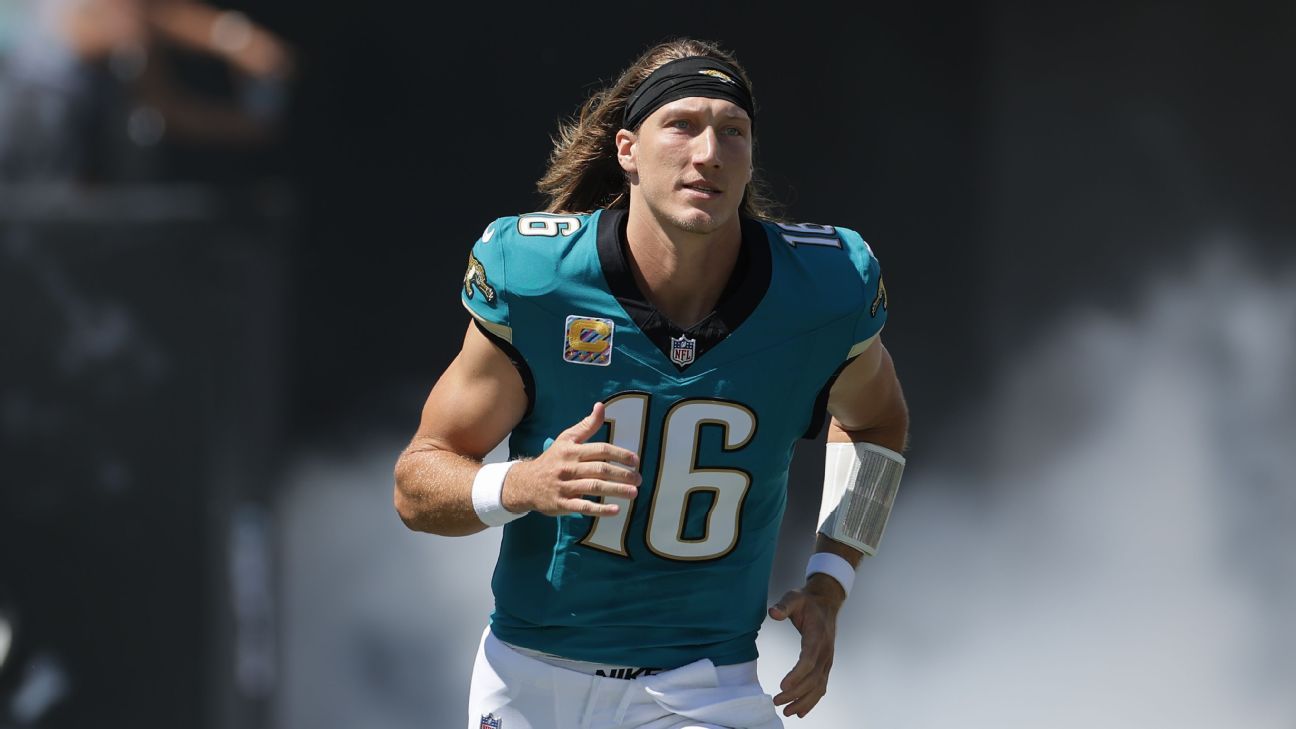
Week 4 fantasy decisions hinge on a tension ESPN's Liz Loza articulates cleanly: trust your gut, but verify it against the tape and the matchups. That instinct—the pull toward a player who bounced back after a quiet stretch, or the recoil from a name that disappointed—is rarely wrong in direction. But direction alone doesn't win leagues. The players who cash Week 4 are the ones who marry conviction to evidence.
Trevor Lawrence exemplifies the mechanic. He posted a disastrous Week 2, the kind of performance that triggers panic sells and sit-out calls. Week 3 brought a near-20-point fantasy correction. Now, conventional wisdom urges you to ride the wave: trust the rebound, slot him back in. That's feeling. The fact check asks a sharper question: what changed? Is the offensive line protection holding? Has the Jacksonville play-calling shifted back to his strengths? Does the Week 4 opponent's pass defense rank in the bottom third of the league? A rebound that's structural—rooted in offensive line health, coordinator adjustment, or opponent weakness—sustains into Week 4. A rebound that's noise (one good game after a run of bad ones, variance reasserting itself) fades by halftime.
The same discipline applies to the benching question. Sit a player because he underperformed last week, and you're playing rearview-mirror fantasy. Sit him because the Week 4 matchup features a top-five pass rush that specifically targets his offensive line's weakness, or because the defense's coverage scheme neutralizes his route tree—that's information. The NFL offense operates on three-week film cycles. By Week 4, defenses have adjusted to what beat them in Week 3. The players who weather that adjustment are the ones whose value is matchup-independent or where the matchup actually improves.
For prop betting, this distinction is critical. A wide receiver with 12 targets in Week 3 carries an air-yards ceiling next week only if his quarterback's release time and air-yard distribution are consistent week-to-week, and only if the Week 4 defense doesn't sit in two-high coverage to suppress vertical shots. Target volume alone—the feeling—is a leading indicator, but it's not predictive without mechanism. The edge is in identifying which rebounds and declines are sustainable versus which ones are single-week volatility. That requires checking snap counts, route participation rates, and opponent defensive rankings in your player's specific skill area (red-zone targets, slot routes, underneath completions).
Loza's framing is ultimately a bet against overconfidence in either direction. Don't sit your best players because they had one rough week—the market will have already adjusted the consensus ranking downward, and early contrarian fades into that crowd often pay. Conversely, don't auto-start a player because he popped for 18 points once; verify that the circumstances that created that output (the specific defense, the game script, the offensive scheme emphasis) are repeating in Week 4. The sharps are already separating these signals from noise in their projections. If your instinct contradicts the consensus, the question isn't whether to follow your gut—it's whether you can name the specific mechanism that will repeat this week.
NFL Intelligence — Football intelligence beyond the final score. Open NFL Intelligence →