Vita Vea's Trade Request Fractures Tampa Bay's Defensive Core Mid-Offseason
By Ty Whitney ·
The Buccaneers' two-time Pro Bowl tackle walks away from contract talks one week before training camp, forcing a defensive realignment with playoff implications.
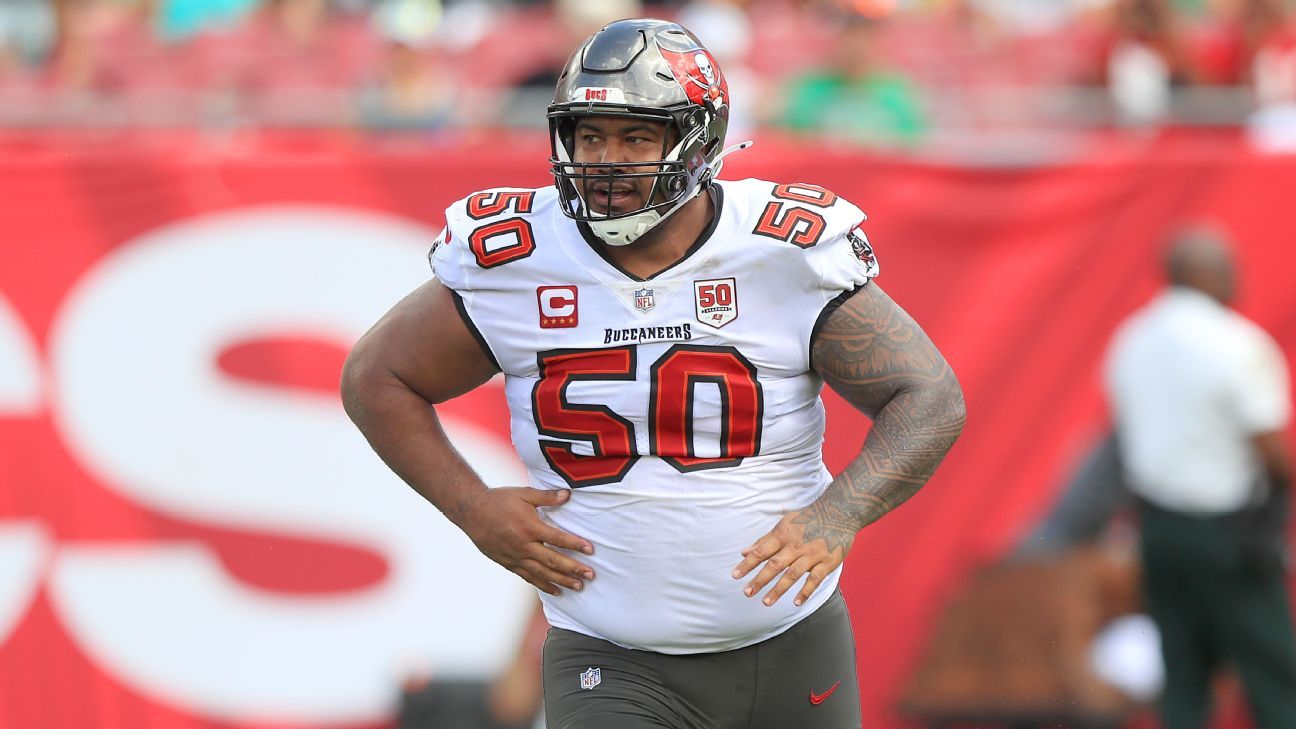
Vita Vea requested a trade from the Tampa Bay Buccaneers on Monday after extension negotiations collapsed, his agent told ESPN. The 31-year-old defensive tackle is in the final year of his four-year, $71 million deal, set to earn $17 million with zero guaranteed money and a capped $1 million per-game roster bonus. Vea held out of mandatory minicamp last month over the same dispute; Todd Bowles dismissed it as routine business. Now, with veteran camp reporting set to begin Tuesday, the impasse has hardened into an exit request.
This move exposes a fracture in Tampa Bay's cap structure and roster construction. Vea has delivered: all 17 games played last season, 4.5 sacks, 13 QB hits, 34 tackles. Over eight seasons since the 2018 first-round selection, he owns 35 career sacks and earned Pro Bowl nods in 2021 and 2024. He remains a productive interior pass-rusher in his prime years. The Buccaneers' refusal to guarantee money on a $17M salary for a 31-year-old signals they view his window as closing faster than his production suggests—a calculation Vea contests. The timing is damaging: any trade market for a veteran DT mid-summer fetches depressed compensation, and the Bucs lose flexibility on their pass rush before the season begins.
Baker Mayfield, entering the final year of his own three-year, $100 million deal, remains unsigned on an extension despite participating fully at minicamp. Mayfield has been vocal about the distance between his ask and the team's offer, refusing to negotiate once camp starts. Unlike Vea's hard exit, Mayfield's posture is a negotiating tactic—he's staying put for now. The contrast is instructive: Vea walked; Mayfield is leveraging. Together, they signal organizational strain over cost control in a tight cap year.
From a defensive wagering perspective, Vea's departure compounds Tampa Bay's front-seven deterioration. The Buccaneers ranked 18th in sacks last season (37 total); Vea's 4.5 represented 12% of that output. Any replacement—either internal depth or a trade-back acquisition—represents a downgrade in proven production. For Tampa Bay's sack line this season, expect market movement toward the under as oddsmakers digest both Vea's absence and the team's delayed defensive installation. If the Bucs address the gap via trade (cost: picks or mid-tier talent), they further weaken a secondary that already leaks. For opposing QB prop lines against Tampa Bay, the loss of interior pressure should nudge completion percentage projections upward and sack totals downward across the slate.
The Buccaneers have until Thursday to explore a trade market, though mid-season deals for veteran defensive tackles rarely yield first-round picks. Vea's $17M salary is tradeable but not attractive to cap-strapped contenders; rebuilding teams have no use for him. The team may eat the full cost or settle for a conditional late-rounder. Either way, Tampa Bay enters camp weaker on the line and deeper in contract limbo with its franchise QB.