Braden Smith's Neck Surgery Clouds Houston's Right Tackle Future
By PropBetEdge Editorial Team ·
The Texans' offseason offensive line bet hinges on Smith's recovery timeline, but his injury history and limited spring availability inject real uncertainty into their pass protection plans.
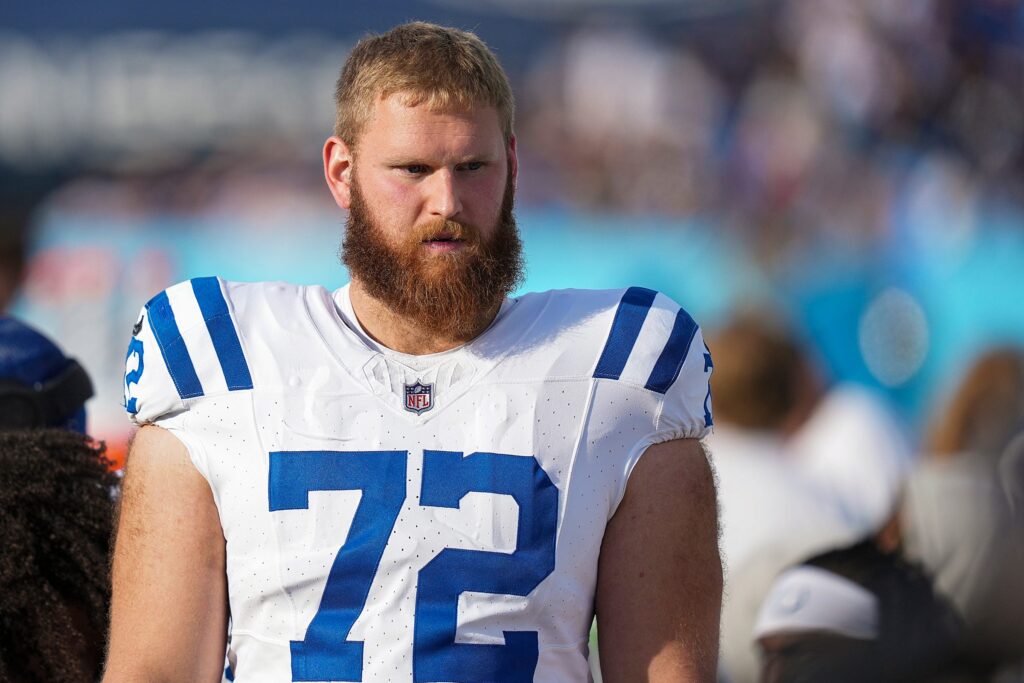
Braden Smith underwent neck surgery this offseason and is tracking toward full availability for training camp, though the Texans right tackle remains in a healing window with no guaranteed return date locked in. Smith, who signed a two-year, $25 million contract with Houston after nine seasons in Indianapolis, hit season-ending injured reserve in mid-December 2025 with neck and head injuries. The Colts offense managed only 13 appearances from him that year—his continued fragility at the position after eight years of unreliability.
The Texans knew what they were signing. Smith has started every game he's been healthy enough to play since 2019, but "full season" and "Braden Smith" remain incompatible terms. In his final Indianapolis campaign, he surrendered just one sack over those 13 games and posted a respectable 71.9 PFF pass-blocking grade. His run-blocking grade of 58.0 revealed the weakness: he's become a pass specialist whose availability doesn't justify elite compensation. Yet General Manager Nick Caserio built the entire offensive line around the assumption Smith plays—and plays well—this fall.
That gamble explains Houston's summer moves. The Texans re-signed right guard Ed Ingram (three years, $37.5M) and added veteran Wyatt Teller at guard in free agency. They also retained Trent Brown on a one-year, $7 million deal as insurance. The structure screams contingency: Brown becomes starter if Smith can't go, and Teller provides positional flexibility. Smith being limited during spring work is the real red flag—not a minor conditioning issue, but a signal that surgical recovery is still very much in progress seven weeks from camp opening. The team's own caution (spring limitations rather than full ramp) contradicts the "tracking toward full recovery" language.
For prop purposes, this creates a cascading risk across Houston's offense. If Smith can't go or plays at reduced capacity, the Texans' pass protection deteriorates, which directly compresses quarterback window and pressure rates. A compromised Smith forces more quick-game reliance, which suppresses downfield passing-yards totals and increases turnover risk from forced throws. The Texans' 2025 offense was already middle-of-the-pack; starting Trent Brown—a capable but aging tackle—as the primary right side doesn't maintain that output. Monitor Smith's actual practice participation in August, not July optimism. If he's still limited in live work, fade early-season Texans passing yards totals and quarterback sack props (expect higher pressure), and lean toward defensive upside against Houston in Week 1-3. The market will price the hope; the smart money will price the history.
Smith's injury also affects run-game trajectory. His 58.0 run-blocking grade was already a weakness; a post-surgical Smith, even if cleared, may carry reduced explosiveness in the first month. That filters into Houston's running-back workload and efficiency. C.J. Stroud's supporting cast is only as strong as its weakest link, and right now that link is recovery status, not talent.