Stroud Extension Stalled: Houston Pumps the Brakes on QB Money
By Ty Whitney ·
With training camp five weeks away, the Texans and their franchise quarterback remain deadlocked on long-term terms, signaling management skepticism about locking in nine-figure money before he proves durability.
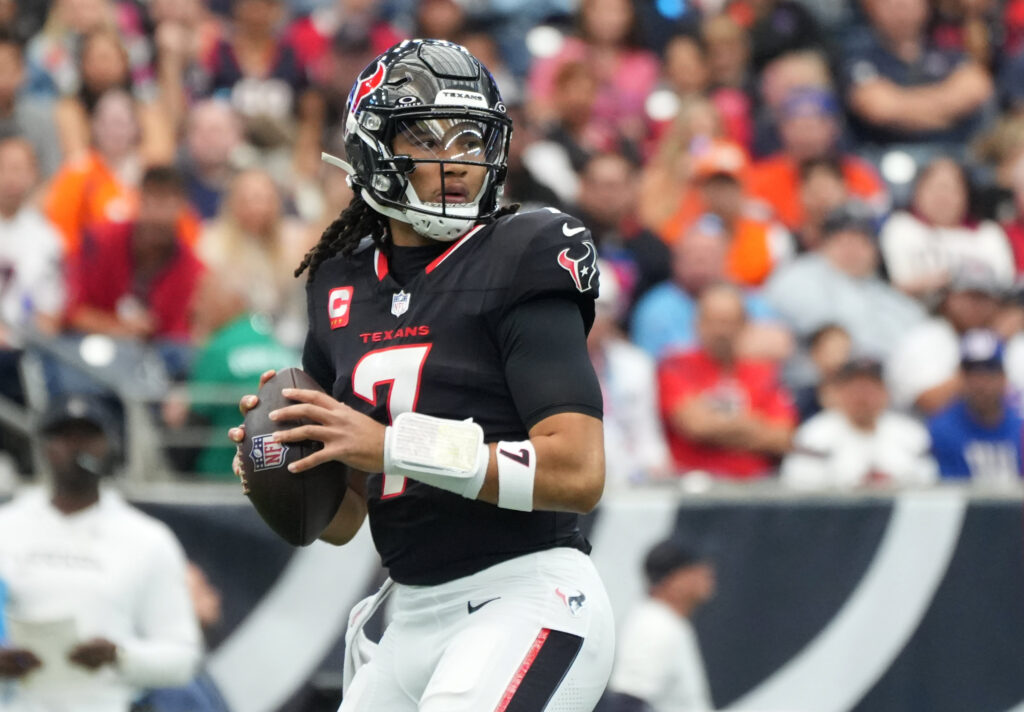
The Texans exercised C.J. Stroud's fifth-year option in April, buying themselves runway through 2027 without committing to the kind of extension deal that would reshape the franchise's salary structure. Per ESPN's DJ Bien-Aime, as training camp approaches in late July, Houston and Stroud are not close to an agreement on a long-term deal. That gap matters—it's not a negotiating posture or a deadline-driven theater. It's a structural signal that the team and player have materially different views on his market value right now.
The fifth-year option was the safe play. It gave Houston control of Stroud's salary while preserving cap flexibility, and it gave Stroud guaranteed money without forcing either side into a nine-figure commitment neither is ready to make. But the lack of extension progress suggests deeper caution. Stroud's 2025 season was competent—24 passing touchdowns, 3,942 yards—but it didn't vault him into the tier of Josh Allen or Jalen Hurts, the QBs who've commanded $55 million-plus annually. Houston sees a foundation, not a finished product. Stroud needs to demonstrate he can sustain elite efficiency, operate in high-leverage moments, and prove himself durable over a full season without injury.
For bettors, this is a secondary but real tell. Front offices that hesitate to extend young QBs often do so because they're bracing for volatility in year three or four. That caution typically manifests in two ways: either the team under-invests in supporting talent (fewer premium free agents, lower-impact trades), or it signals internal doubt about the QB's ceiling. Neither scenario inflates his passing-yards or passing-touchdown upside. A QB on a prove-it trajectory tends to operate under tighter coaching—more conservative play-calling, less downfield aggression—precisely because the organization is protecting its leverage. If an extension fails to materialize before the 2027 season, expect Houston to lean on run-game rhythm and short-range passing to de-risk Stroud's situation.
The betting angle is not on Stroud's individual game-to-game props—those respond to opponent, weather, and weekly matchup—but on his seasonal volume trajectory. If Houston doesn't extend him by mid-season 2026, expect his full-season passing-yards total to trend toward the conservative side of preseason projections. The team will game-manage him rather than feature him. That's a fade on aggressive over plays on his seasonal totals, particularly in weeks when Houston is favored and could afford to rely on its defense and run game. The lack of extension urgency is a proxy for internal confidence limits.