Steelers Land Iheanachor After Eagles Block Lemon: What It Means for Pittsburgh's Pass Protection Edge
By Erik Schwartz ·
Pittsburgh's pivot to Max Iheanachor signals a multi-year investment in offensive line stability, with immediate implications for Ben Roethlisberger's time in pocket and the team's ability to sustain drives downfield.
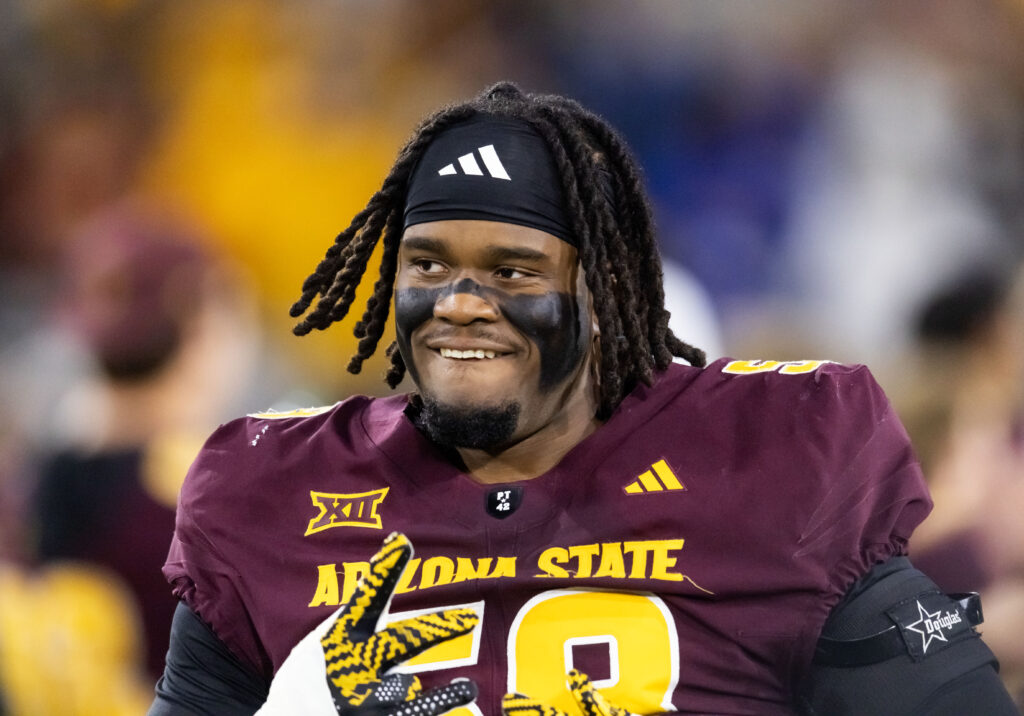
The Steelers have agreed to terms with Max Iheanachor, the 21st overall pick in the 2026 draft, locking the Arizona State right tackle into a four-year deal with $20.69 million fully guaranteed. The signing caps a scramble at the top of the draft: Pittsburgh's original target was USC wide receiver Makai Lemon, but the Eagles traded up with Dallas to snag Lemon at pick 20, forcing the Steelers to execute a swift pivot to their Plan B.
Iheanachor arrives as a foundational piece for Pittsburgh's offensive front. The 6-6, 321-pound tackle earned second-team All-Big 12 honors in 2025 and spent two-plus years as Arizona State's full-time right tackle. The Steelers view him as a long-term anchor, with the possibility he eventually shifts to left tackle if Broderick Jones departs in free agency next offseason. For now, the organization plans to develop Iheanachor on the right side, where Troy Fautanu—the team's 2024 first-rounder—already slots as the incumbent starter. The Steelers have invested heavily in offensive line talent over the past three years, and this pick underscores a philosophy: protect the quarterback early and often.
The depth chart at tackle now hinges on health and performance. If Jones's recovery from neck surgery stalls heading into the season, the Steelers may accelerate Iheanachor's timetable or lean on Dylan Cook, an undrafted option. Fautanu could slide left if needed. The team declined Jones's fifth-year option in May, a clear signal they're not banking on his return as their long-term solution at left tackle. That uncertainty creates a window for Iheanachor to graduate from developmental prospect to meaningful contributor faster than a typical rookie.
From a betting angle, Iheanachor's presence reshapes the Steelers' passing game efficiency for 2026. If the team stabilizes its left side—either through Jones's full recovery or a faster-than-expected Iheanachor transition—Roethlisberger will face fewer pressures and have more time to work progressions downfield. That translates to higher completion percentages, longer average depth of target, and more opportunities for the wide receiver corps to stretch the field. The Eagles' trade for Lemon now becomes a test: Lemon's arrival may juice Philadelphia's red-zone efficiency, but Pittsburgh's pivot to heavy offensive line investment creates a floor beneath its own QB protection. Markets initially priced the Steelers' passing attack as a question mark post-draft. With Iheanachor's contract agreement now official, the narrative shifts to offensive line continuity and downfield volume. A Steelers team with a cohesive front five can sustain drives, milk clock, and take pressure off the defense—a blueprint that favors overs on team totals and receiving volume targets for pass catchers who benefit from extended drives.
The $20.69 million fully guaranteed deal is a strong internal valuation signal: Pittsburgh isn't hedging on this kid. They're committing to him as a multi-year starter. That conviction, paired with the uncertainty at left tackle, suggests the Steelers will lean on short-area passing and screen passes early in the season, then shift to more aggressive downfield concepts as Iheanachor acclimate. Watch for elevated targets on slot receivers and running backs during September; when line chemistry settles in October, you'll see a spike in deep passing attempts and consequently higher weekly passing yard totals for the offense.