Steelers Quarterback Depth Chart: Rodgers Lock, But Backup Slot Remains Unsettled
By Erik Schwartz ·
Mason Rudolph and Will Howard will fight for Pittsburgh's backup job, but the presence of third-round rookie Drew Allar complicates the math on secondary QB usage and game script exposure.
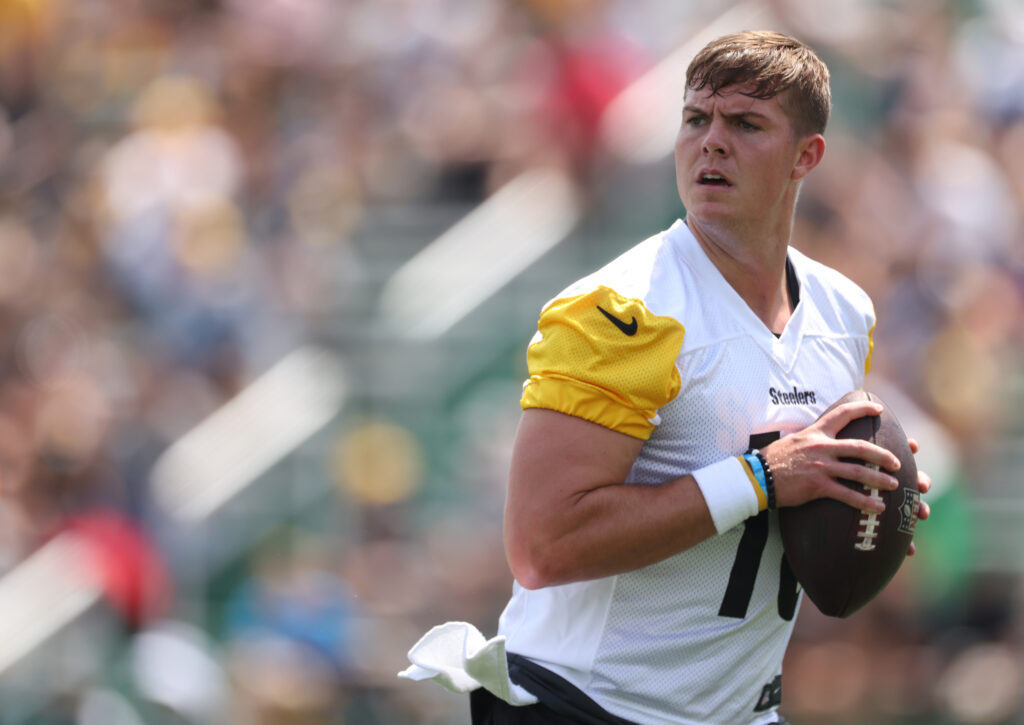
Pittsburgh enters training camp with Aaron Rodgers as its clear starter, but the backup quarterback situation remains fluid. Mason Rudolph, a veteran journeyman with NFL starting experience, will compete directly against Will Howard, a sixth-round pick from the 2025 draft class, for the second QB role. Drew Allar, selected in the third round this past April, adds a third option to an increasingly crowded picture.
The Steelers' decision to draft Allar in April signals internal confidence that the organization views the rookie as a developmental prospect worthy of roster protection—a rare investment for a team that already employs a veteran backup like Rudolph. That capital spend matters. Teams don't burn mid-round picks on quarterbacks unless they believe the player has long-term upside or fills a specific roster need the current depth chart cannot address. Allar's presence effectively shrinks the available snaps for either Rudolph or Howard, making the competition less about securing a traditional backup role and more about proving viability as a situational player or emergency third QB.
Howard's sixth-round pedigree and relative youth create obvious appeal in a developmental context, but his limited professional resume gives Rudolph a meaningful advantage in the near term. Rudolph has thrown 1,500+ career pass attempts across multiple NFL seasons; he understands situational football, quarterback communication, and the mental burden of stepping in mid-game. Howard's upside may outpace his current utility, but that doesn't guarantee he survives the final 53-man roster cut. Allar's third-round cost almost certainly locks him into a reserve role, leaving only one additional backup slot in most weeks.
From a betting lens, this depth chart uncertainty affects Steelers passing volume and game script more than single-game quarterback prop lines—Rodgers remains the offensive anchor and will draw the lion's share of offensive snaps barring injury. However, any disruption to Rodgers' availability would instantly elevate the backup into primary-play status. In that scenario, Rudolph's veteran floor (he maintains a 6.8 yards-per-attempt career mark despite limited starting opportunity) offers more predictability than Howard's volatility. The market has already priced Rudolph as the likely emergency starter; if Allar's draft capital pushes Howard out of the picture entirely, we'd expect Rudolph's air-yard assumptions to rise in any worst-case injury scenario, though such props typically remain illiquid and don't move pre-snap.
The real prop impact surfaces in Week 1 game flow and team-total passing assumptions. If all three backup QBs remain on the active roster, Pittsburgh's coaching staff gains flexibility in managing Rodgers' snap count and situational substitution packages. That structural flexibility can depress total passing yards in blowouts (team stays on ground) or inflate them in shootouts (multiple QBs see action, each adds attempts). Oddsmakers account for starter availability; the three-QB depth chart introduces minor variance that sophisticated bettors can exploit early in the preseason when lines are still settling.