Garrett to LA Reshapes Defensive Markets: Rams All-In for SoFi Crown, Browns Pivot to Youth and Capital
By PropBetEdge Editorial Team ·
The Rams traded their future for an elite pass rusher at the sport's most important position; the Browns netted $30M in relief and control. The sack and pressure-rate props just rewrote themselves.
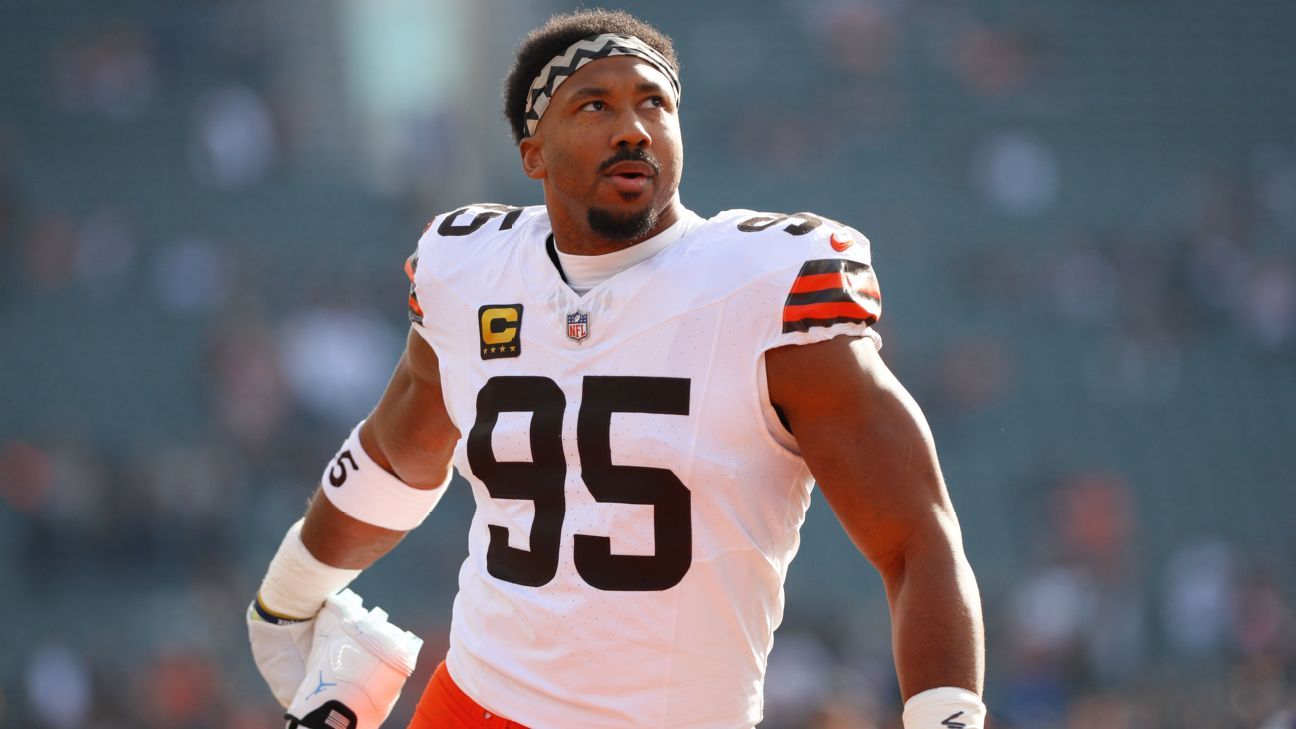
The Cleveland Browns and Los Angeles Rams have agreed to one of the NFL's largest defensive trades in modern memory: Myles Garrett to the Rams in exchange for Jared Verse, a 2027 first-rounder, a 2028 second-rounder, and a 2029 third-rounder. The Rams, preparing for Super Bowl LXI at their home stadium, are doubling down on the "F--- them picks" philosophy that earned them a championship in 2022. The Browns, meanwhile, are extracting an estimated $30 million in future cap relief while acquiring a 25-year-old pass rusher on a cheap contract.
Garrett is not a marginal piece. Since 2017, he ranks first in sacks (125.5), first in pressures (413), second in QB hits (239), and first in tackles for loss (149). His absence from Cleveland's defense creates a structural problem: a four-time Pro Bowler and two-time DPOY cannot be replaced by committee. The Rams' interest crystallized only after the Browns made a contract restructuring in March—pushing Garrett's option bonuses to late August—that inadvertently made him tradeable. The Browns resisted relocation until the Rams persisted hard enough to force Cleveland's hand on Verse. That's the tell: the Rams didn't get Garrett because the Browns wanted to rebuild. They got him because Los Angeles refused to accept "no" and offered enough draft capital to make the math impossible to decline.
For prop betting, this is a cascade of roster imbalance. The Rams' defense was already anchored by strong secondary performance; they now add a generational edge rusher to an already competent unit. Garrett logged 3.2 sacks per 16 games over his career—a rate that, when grafted onto a Rams defense with better overall personnel than the Browns provided, should translate to pressure-rate elevation league-wide for Los Angeles and a corresponding shift in passing volume and TD distribution across their secondary and pass rush. Conversely, the Browns lose their most consistent pressure generator. Even if Verse provides 12 sacks annually (his recent pace), he's a tier below Garrett's historical output. Cleveland's opposing offenses will face fewer elite first-step threats, which tilts the field toward neutral or elevated completion percentages for Browns-facing QBs.
The betting implication runs dual-direction. Back Rams pass rush prop totals (sacks, pressures, TFLs) to exceed season-long averages—Garrett's addition to a cohesive defensive scheme should push their annual sacks total north of 45, well above last year's 38. Simultaneously, Browns opponent passing yardage and completion-percentage lines should shift higher for the remainder of 2026; opposing QBs will face less institutional pressure, and game scripts may favor more passing volume when Cleveland's defense cannot generate the chaos Garrett created. This is not a short-term volatility spike—it's a multi-season structural adjustment. Teams don't trade for seven-time Pro Bowlers for a single season; they do it when they believe they have a championship window. The Rams' window is now. The Browns' defense just got older.
For bettors, the move is actionable across two horizons: immediate (Rams-friendly props open within 48 hours and are vulnerable to overpricing until the market fully absorbs the talent shift) and durable (defensive pressure metrics and pass-volume distributions for both teams should shift in measurable, persistent ways for the next 2-3 seasons). The Browns also hold two 2027 first-rounders and 11 total picks in that draft—capital that suggests defensive investment, not immediate contention. That capital allocation is a long-term fade signal on Cleveland's defensive ceiling for 2026.