Ward's $62M Extension Signals Cleveland's Defensive Commitment—and Raises Questions About Secondary Coverage
By Erik Schwartz ·
The Browns made Denzel Ward the NFL's highest-paid cornerback again, but his injury history and the team's pass-rush uncertainty create leverage for opposing offenses in 2026.
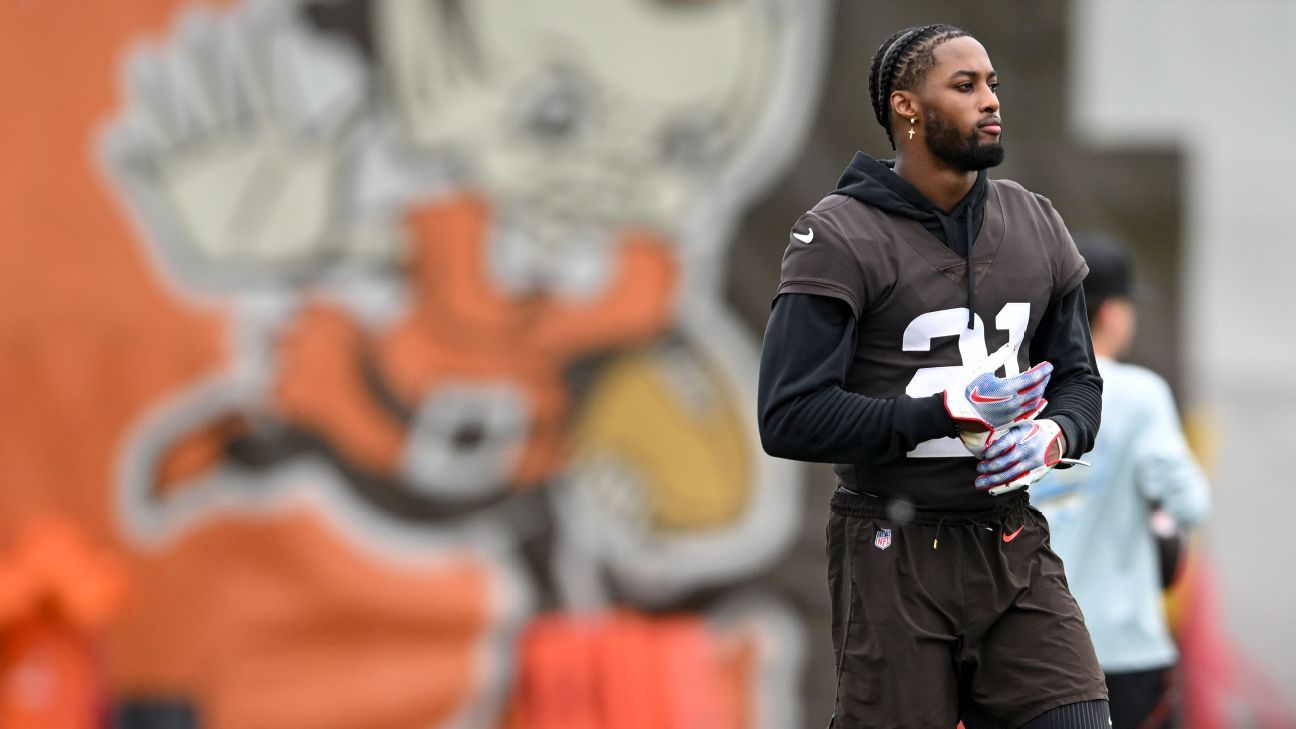
Denzel Ward is now the NFL's highest-paid defensive back for the second time in his career. The Cleveland Browns agreed to a two-year, $62.2 million extension with the five-time Pro Bowl cornerback on Monday, delivering him $31.1 million annually and $52.3 million guaranteed—a valuation that speaks directly to how the franchise views both his individual ceiling and its own secondary depth. The deal arrives five months after the Myles Garrett trade gutted Cleveland's pass-rush identity, making Ward's stability a rare anchor in what has become an unstable defensive architecture.
Ward, 29, had two years remaining on his April 2022 extension but zero guaranteed money—a structural vulnerability that gave the Browns negotiating room they ultimately chose not to use. That decision to cash him out now, rather than hold a hard line, reveals organizational anxiety: Garrett's departure created a vacuum that only compounding the secondary depth chart's fragility would worsen. Ward himself had signaled his commitment to Cleveland in the days following the Garrett trade, even as the organization's defensive identity shifted. General manager Andrew Berry's willingness to hand Ward top-dollar guarantees suggests the front office recognizes that losing another foundational piece would crater the locker room's trust after a franchise-altering trade.
The mechanics of this extension matter for secondary play. Ward logged 39 tackles and one interception in 15 games last season—solid availability but a decline in ball production that underscores a larger issue: Cleveland's cornerback group cannot afford to regress. With the Garrett trade removing a consistent interior pressure package, opposing quarterbacks will have longer to let coverage unwind downfield. Ward's 18 career interceptions over eight seasons reflects competent ball-hawking, but his tackle volume (361 total) and the nature of those tackles often indicate he's operating as a last line of defense rather than a lockdown operator. That distinction becomes critical when the pass rush becomes a liability.
For bettors, the takeaway is threefold. First, Cleveland's secondary will face higher volume—more passing attempts against the Browns defense overall as teams exploit the Garrett-shaped hole in pass pressure. Second, Ward's guaranteed money does not change his individual coverage profile; he remains capable but not elite against spread receivers or in off-coverage situations. Third, the extension's size signals organizational commitment but also budget constraint—the Browns now have limited flexibility to add premium pass-rush talent to offset the pressure timing advantage offenses will gain. Opposing quarterbacks facing Cleveland should see cleaner windows in 2026, and passing yards totals for Cleveland's opponents will likely carry value when priced as if the secondary were more self-sufficient than it actually is.
Ward's deal also serves as a cautionary marker for teams banking on cornerback reliability. The Browns are betting that individual coverage excellence can compensate for structural pass-rush deficiency—a thesis that rarely survives contact with a competent offense. When the pressure doesn't arrive, even the best corners face 3-4 extra seconds of unraveling coverage. In a division with Pittsburgh's Ben Roethlisberger successor and Baltimore's elite ground game, Cleveland's ability to stay compact on early downs will determine whether Ward's $31.1 million salary represents organizational prudence or expensive hope.