Seahawks' Horton Reveals Tibia Crack Ended Rookie Season; Reps Being Managed Entering Year Two
By Ty Whitney ·
The second-year wideout avoided the PUP list but faces a deliberate workload as Seattle weighs the durability of its breakout receiver.
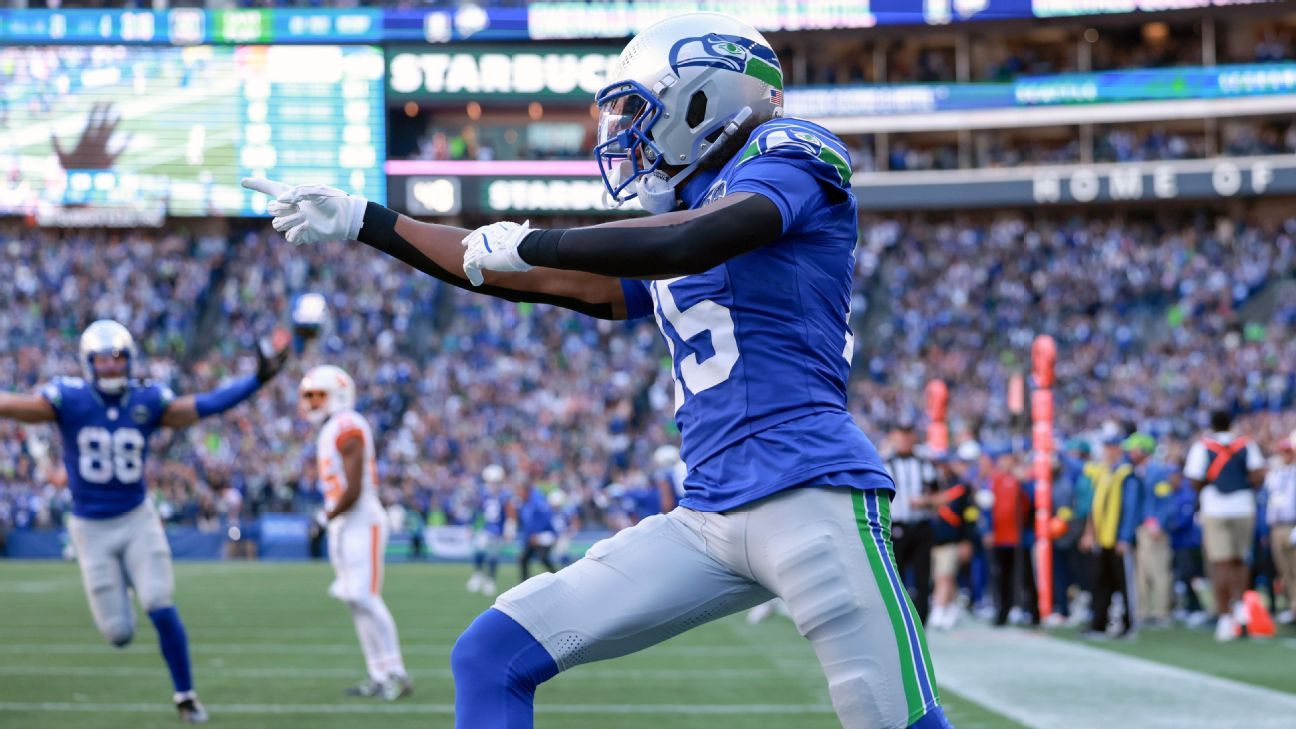
Tory Horton confirmed Friday that a cracked tibia ended his promising 2025 rookie season, shedding light on an injury the Seahawks had kept deliberately vague throughout the offseason. The fifth-round pick from Colorado State was operating at elite efficiency before the fracture derailed him—five touchdown catches on just 13 receptions through nine weeks, plus a 95-yard punt return that stood as the longest in franchise history. The injury began subtly in Week 3 with a sensation Horton described as "a little something," but he played through it for a full month before tests revealed the tibia crack after his two-touchdown performance against Washington in Week 9.
What makes Horton's timeline notable is the injury's stubbornness. He initially expected to return for the playoffs once the fracture healed, but the shin never responded adequately to conservative treatment, forcing him to miss the postseason entirely. That recalcitrance—a stress fracture that doesn't fully resolve on its own—creates a different injury profile than a clean break with a predictable rehab arc. His college career was similarly shortened by a serious leg injury, adding another layer of durability concern for a frame that's demonstrated structural fragility.
The Seahawks kept Horton off the physically unable to perform list heading into training camp, but his participation carries visible restrictions. "His reps are still being managed," the team indicated, and that language matters for understanding Seattle's internal confidence level. They're not treating him as fully available; they're monitoring load. For a player whose ceiling was already defined by explosive touchdown efficiency rather than high-volume target share, managed reps could materially suppress his receiving volume props in 2026.
From a prop lens, the managed workload and the tibia's history of incomplete healing create two distinct bets. First, fade receiving yardage and receptions totals for Horton's individual lines early in the season—the market will likely price him as a full-time performer, but Seattle's caution suggests lower snap counts and fewer routes through at least September. Second, the Seahawks' confidence in his touchdown upside (why they didn't IR him, why they're bringing him along now) suggests they still view him as a red-zone weapon, so anytime-TD props could carry value if early receiving lines overcorrect downward based on snap count concerns. The edge exists because the market will anchor to his rookie TD efficiency without fully pricing in the cautious return-to-action.
Horton's case is a reminder that incomplete fracture healing carries different risk than a typical soft-tissue injury—it doesn't resolve on a timer, and workload management becomes a permanent feature, not a temporary precaution. Seattle's measured approach is sensible, but it's also a tell that they expect load restriction to persist. That's not priced into most receiving volume props at open.