Rodgers Makes It Official: 2026 Is His Final Season—What That Means for Pittsburgh's Window
By Ty Whitney ·
Aaron Rodgers confirmed Wednesday he'll retire after this season, locking in a one-year $25 million sprint with Mike McCarthy and the Steelers that reshapes the calculus for short-term NFL futures.
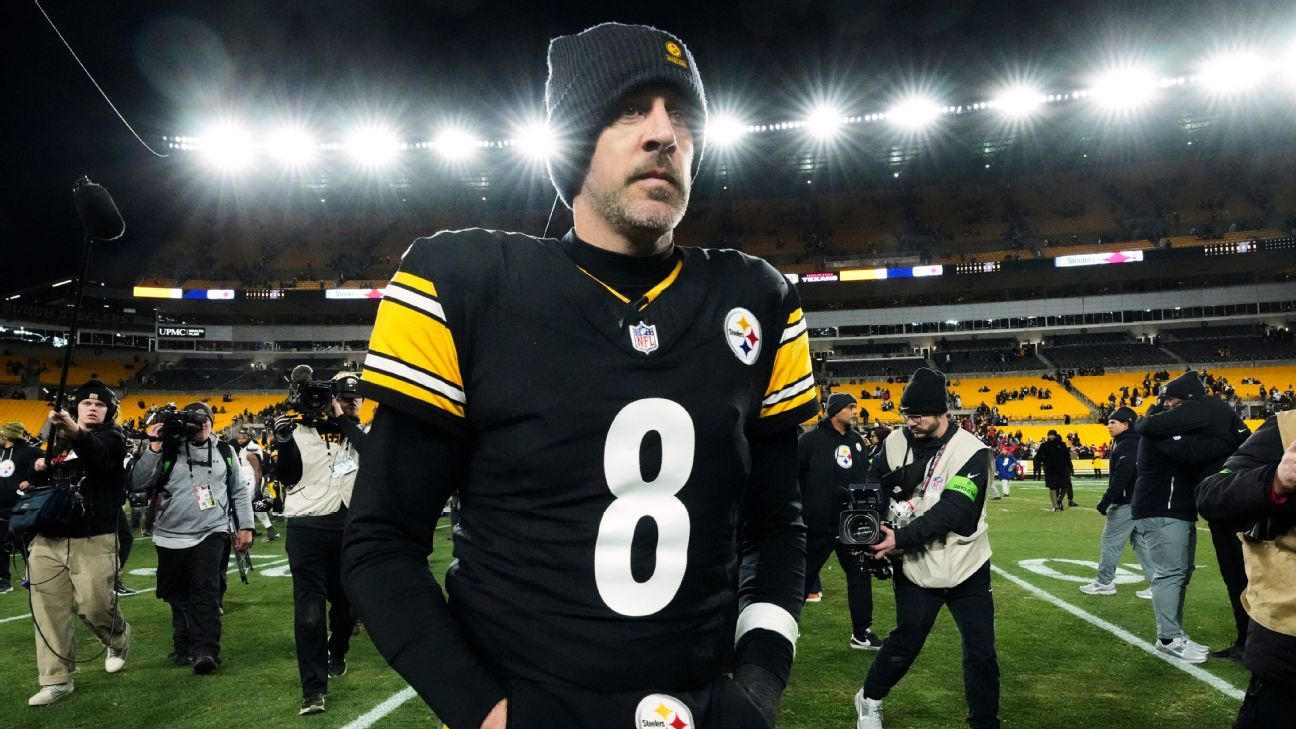
Aaron Rodgers ended months of speculation Wednesday by announcing the 2026 season will be his last. The four-time MVP, now 42, signed a one-year deal with Pittsburgh worth up to $25 million and reunited with Mike McCarthy, his coach for 13 seasons in Green Bay. Rodgers called the alignment a "full circle" moment—and for betting purposes, it crystallizes something sharper than sentiment: this is a defined-window team with maximum urgency.
The path to this decision traces through real ambivalence. Last June, Rodgers inked a $13.65 million contract with the Steelers and told Pat McAfee the 2025 season would likely be his last. But conversations with GM Omar Khan, McCarthy, and his wife shifted the calculus. After the 2025 draft, Rodgers re-committed for one more year. The compression matters because it signals clarity, not drift. Rodgers has spent his career chasing a second Super Bowl; playing for McCarthy again, in a conference where Pittsburgh has legitimate roster pieces, apparently convinced him this was worth one final run.
From a roster standpoint, Rodgers arrives at age 42 having logged 257 starts and ranking fifth in NFL history in pass yards (66,274) and fourth in touchdown passes (527). His MVP count (4) trails only Peyton Manning (5). He's a Hall of Fame lock whether this season happens or not—the announcement removes any vagueness about timeline. The Steelers, meanwhile, made the AFC Championship game last season and have invested heavily in their secondary and pass rush. McCarthy's scheme is designed for veteran decision-making and rhythm precision, both things Rodgers still owns in volume.
For prop bettors, the announcement creates two distinct edges. First, the one-year urgency breeds higher-variance outcomes. Rodgers, freed from long-term contract pressures and operating in what amounts to a legacy lap, is more likely to eat sacks early in drives (gunslinger mentality) and less likely to check down when the shot is available. This pushes his interception rate up relative to his pass-volume baseline and his yards-per-attempt higher on deep-ball attempts—classic Hall of Famer finale behavior. Early-season lines on Rodgers' passing yards and TD passes will likely reflect his age and durability concerns; but if he plays through minor injuries (which his contract structure encourages), prop ceilings hit faster than books priced. Second, the Steelers' entire offensive aggression profile changes. With Rodgers for one guaranteed season and McCarthy calling plays, expect fewer game-script adjustments. Trailing late? Pittsburgh still pushes vertical concepts instead of pivoting to short-passing schemas. This flattens the variance on their team totals and passing-yard totals across the season, making them more predictable—and thus exploitable—than typical McCarthy-coached offenses in year one.
The retirement announcement also eliminates injury-contingency betting. No longer does Rodgers' backup carry material equity; no longer is there a "what if he retires mid-season" tail risk that would have depressed his season-long prop lines. Books can now price his full 17-game slate with higher confidence. That confidence, however, underestimates how much McCarthy's play-calling accelerates Rodgers' aging curve in a one-shot season. Expect early movement on Steelers team totals and Rodgers passing-yard props upward, then correction by week 4 if durability emerges as a factor.