Richardson's Resurrection: The Colts' Backup QB Bet on Injury Insurance
By PropBetEdge Editorial Team ·
Anthony Richardson goes from trade-demand purgatory to QB2 after solid preseason work, reshaping how Indianapolis hedges Daniel Jones's fragile durability.
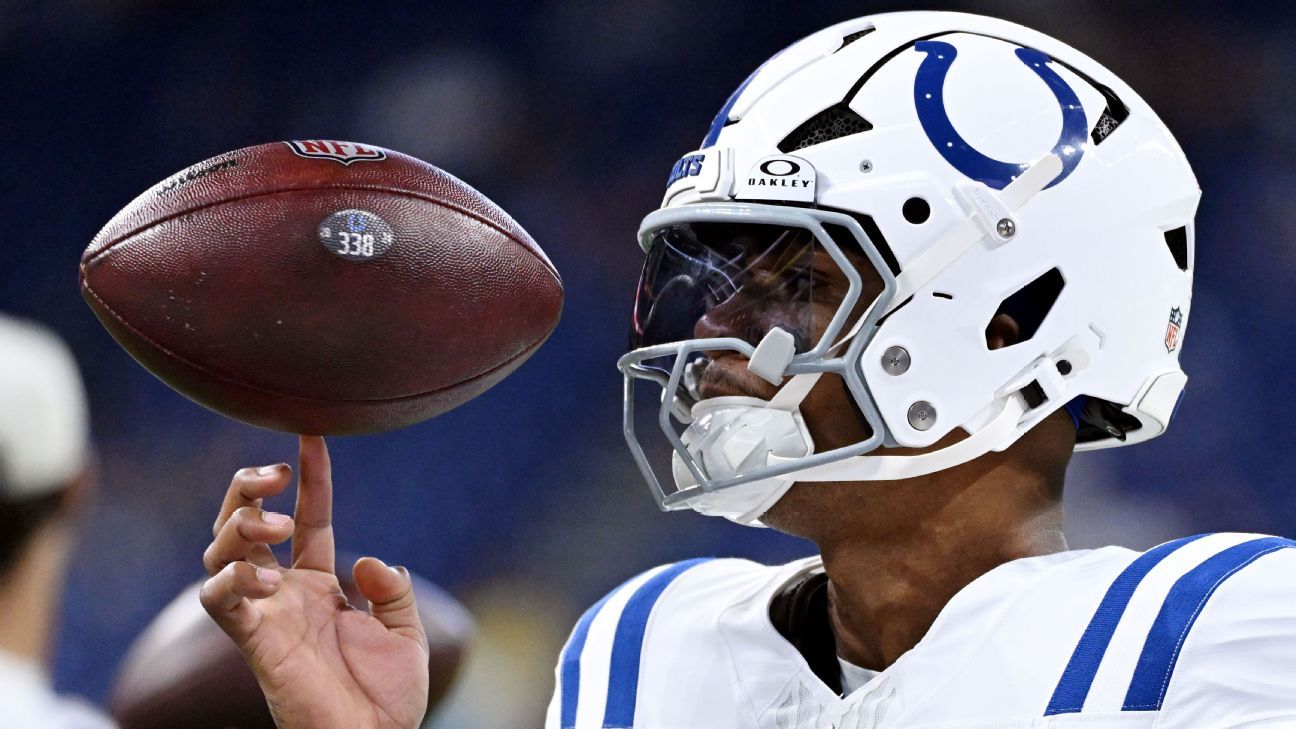
Anthony Richardson will back up Daniel Jones in Indianapolis after being named the Colts' second-string quarterback Thursday, marking a sharp reversal from the trade request he filed roughly six months prior. The 2023 fourth overall pick spent the offseason in organizational limbo—boycotting voluntary workouts, watching the Colts lock Jones into an two-year, $88 million deal, and observing rookie Riley Leonard arrive as organizational heir-apparent. But preseason execution and Leonard's corresponding struggles forced Shane Steichen's hand. Richardson is now the safety valve behind a starter whose medical file reads like a liability ledger.
Jones arrives in Indianapolis fresh off a season-ending Achilles tear suffered last December. That injury timeline—roughly nine months of recovery for one of the NFL's most unforgiving lower-body wounds—matters because Achilles tears carry documented re-injury risk, particularly in year one of return. The Colts' investment in Jones assumes he stays upright through 2026 and 2027. That's not a lock. Richardson's preseason line—21-of-33 completions (64%), 249 passing yards, one interception, plus 68 rushing yards on 10 carries—won't move the needle as a statistical line, but it was enough to clear Leonard, whose camp struggles suggest the organization views him as a developmental project rather than a plug-and-play contingency.
The backup QB slot has outsized leverage in Indianapolis's passing economy. The Colts invested heavily in receiver Keenan Allen and the infrastructure around Jones, meaning any disruption to the starter triggers a material drop in offensive ceiling. A Jones injury forces the offense to lean harder on ground game, play-action hold times, and conservative route distributions—all dynamics that compress pass-play volume and TD opportunity. Richardson proved competent enough in August to function as a replacement-level game manager if needed, which is precisely what the Colts need from a backup: competence, not heroics.
For prop bettors, Richardson's promotion has two immediate consequences. First, it increases the downside tail risk on Colts passing props if Jones goes down mid-game or mid-week. The offense doesn't morph into a spread-play showcase; it contracts into ball-control mode. Second, it validates the Colts' internal view that Richardson can execute within the system despite his tumultuous 2025 season (facial fracture, orbital damage, blurred vision mid-year). That confidence is worth monitoring as injury reports roll through September. If Jones reports any soft-tissue concern or limited practice participation, Richardson becomes an active weather system for daily lines—his preseason accuracy and dual-threat profile will be repriced upward as contingency value.
The deeper angle: monitor Colts team passing yards totals if Jones is ever deemed questionable or doubtful. A Jones-to-Richardson swap crushes that line in ways the market may not immediately reflect, especially early in the week when injury reports first surface. The market prices QB stability into team totals; backup promotion is the organization's acknowledgment that stability is conditional. Richardson's gratitude and willingness to stay engaged after nearly leaving suggests Steichen values him as more than organizational furniture—he's insurance premium with a pulse.