Nabers' Second Knee Surgery Compresses Giants' WR1 Ramp-Up Timeline
By Ty Whitney ·
A secondary procedure to clear scar tissue narrows the window between training camp availability and regular-season readiness for New York's top pass-catcher.
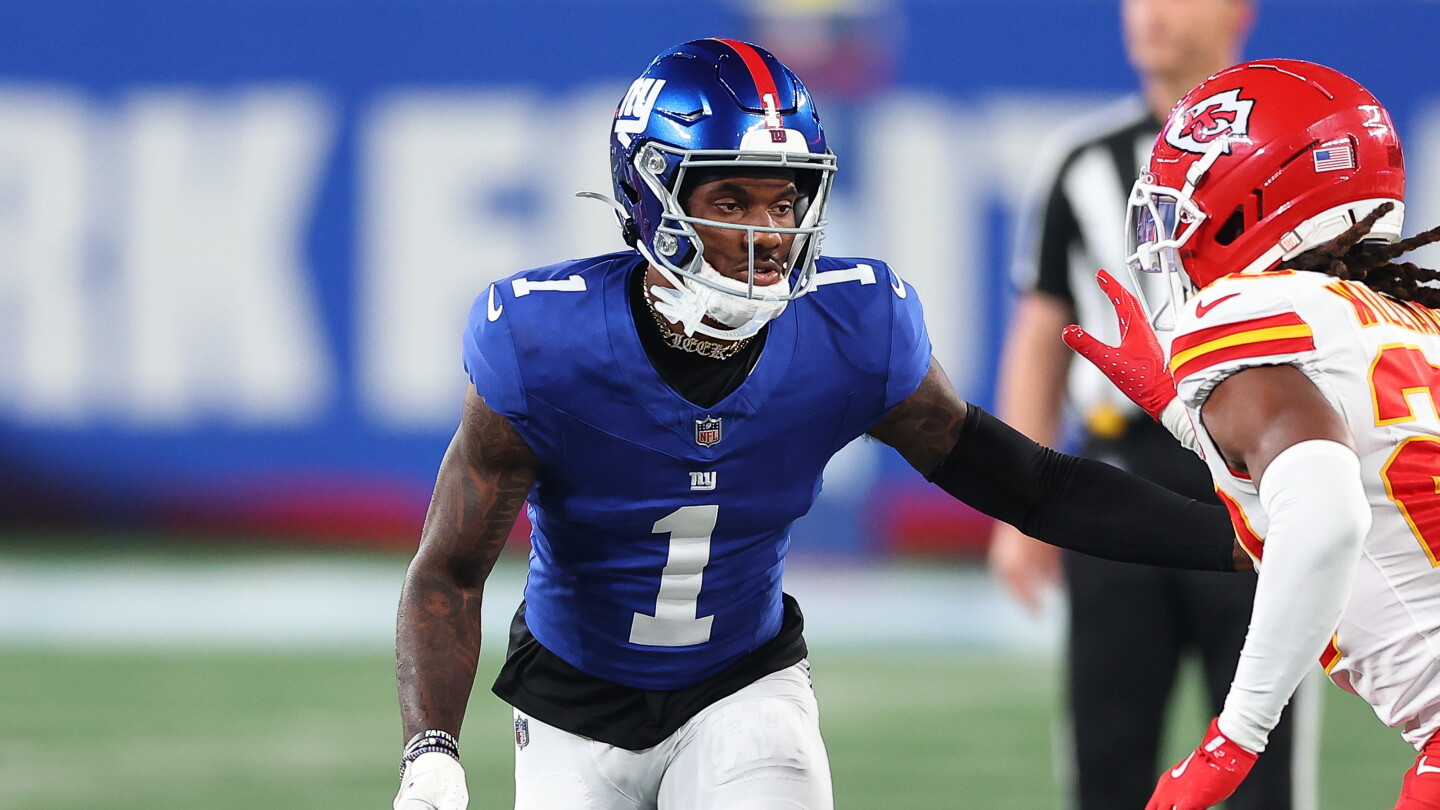
Malik Nabers underwent a second knee surgery in the weeks before the Giants' offseason program to address scar tissue buildup following his October ACL tear, per Dan Duggan of The Athletic. The procedure, undertaken after the receiver experienced post-injury stiffness, represents a complication in recovery that technically extends his full rehabilitation even as the team maintains its public timeline for training camp participation and Week 1 availability.
Secondary arthroscopic work to manage scar tissue after ACL reconstruction is not uncommon—the fibrotic response to surgery is a recognized physiological pathway—but the timing matters considerably. Nabers tore his ACL in late October 2024, underwent his primary repair shortly after, and now required a follow-up intervention roughly six months into recovery. That compresses the window between returning to field work during camp and game-ready conditioning. Head coach John Harbaugh stated in April that the team hopes to have Nabers present during training camp; the implicit goal has always been September availability. The secondary surgery doesn't alter that trajectory officially, but it does introduce a recovery-within-recovery dynamic that historically affects snap count allocation early in a season.
The Giants offense runs through Daniel Jones' arm, but Nabers was drafted second overall in 2024 specifically to anchor that passing attack. His rookie season was interrupted by injury after just three games; the offensive efficiency metrics tell the story. When Nabers played, the Giants generated 5.2 yards per passing attempt and a 42% red-zone touchdown rate. In games without him, those figures dropped to 3.8 yards per attempt and 28% in the red zone. Even accounting for opponent quality variance, the gap is material. A receiver operating at partial capacity in Week 1—present on the roster but working limited routes—functions differently in prop modeling than a full-go WR1.
For receiving-yard projection markets, the scar-tissue surgery creates a bifurcated scenario that the books may not have fully repriced. If Nabers hits Week 1 healthy and absorbs 8+ targets, his 60-yard and 70-yard receiving prop floors should track closer to his collegiate and training-camp tape (he was efficient when healthy). But if the Giants implement a conservative snap-count strategy typical of post-injury returns—rotating him in on early-down opportunities, limiting third-down and hurry-up reps—his Week 1-3 receiving totals compress significantly. The market has likely anchored to "full availability," meaning unders on his receiving yardage lines carry modest edge in Weeks 1-3, with that edge evaporating if he clears five games without setback. The passing-volume markets (his target share) also tighten; expect his target range to narrow as the Giants manage risk. This is not a fade on Nabers' talent or a long-term bearing on his season arc. It's a recognition that scar-tissue removal plus a six-month recovery clock plus a historically conservative organization equals cautious early deployment.
Watch the Giants' official injury designation in early September. If he's listed without restriction, the edge disappears and he's a standard play by Week 2. If there's any "limited participation" language or he misses one practice, the under on his receiving-yard props for the first three games becomes the sharper play.