The 2026 QB-WR Reset: Which New Pairings Actually Move the Passing Needle
By Ty Whitney ·
A franchise-altering offseason has reshuffled quarterback-receiver combinations across the NFL, but not all fresh duos carry equal leverage for volume or efficiency gains.
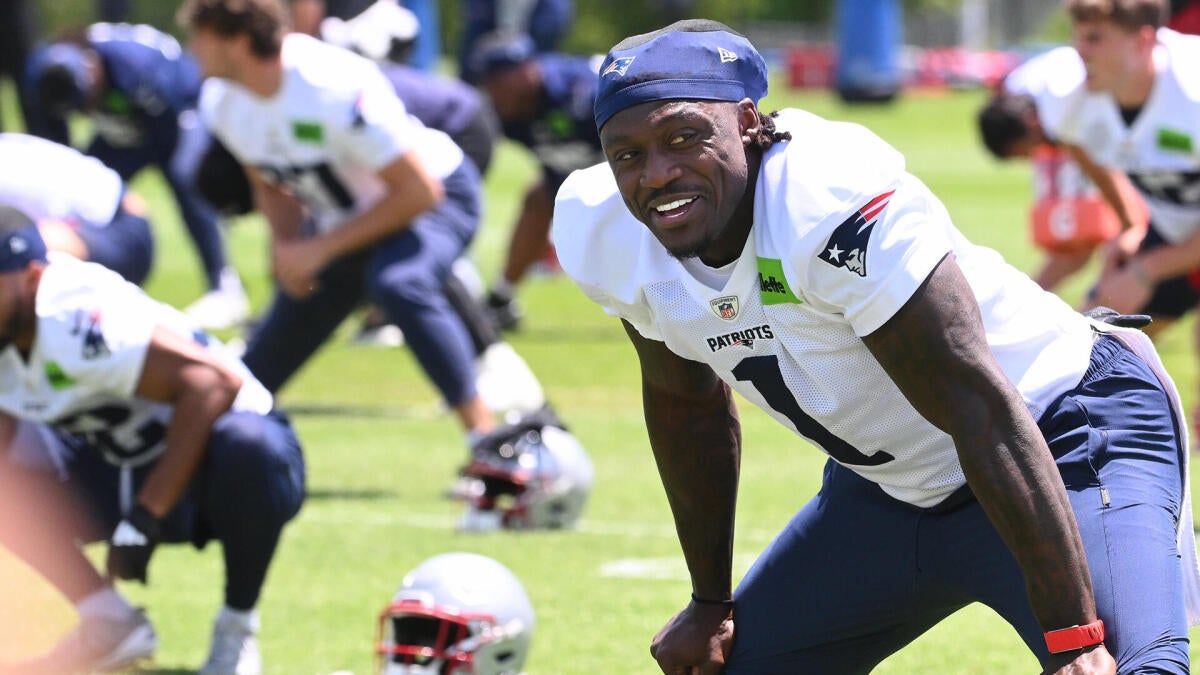
The offseason has redrawn the league's passing attack geography. The Patriots acquired A.J. Brown from Philadelphia, the Broncos added Jaylen Waddle from Miami, Buffalo took DJ Moore from Chicago, and the Eagles pivoted to USC prospect Makai Lemon with the 20th pick—a slate of moves that fundamentally rewires how four teams throw the football in 2026. The question for prop bettors is not whether these combinations exist, but which pairings actually come with structural advantages in volume, efficiency, or both.
Starting at the extremes: Las Vegas selected Indiana's Fernando Mendoza first overall after a Heisman-caliber 2025 season (41 passing touchdowns, undefeated record). Mendoza enters as an NFL rookie alongside Tre Tucker, a 2023 third-rounder who ran 22.2% go routes last season—a volume metric that signals downfield intent. In Pittsburgh, Aaron Rodgers finally receives underneath relief via Michael Pittman Jr., whose 357 catches since 2022 rank sixth in the NFL and represent exactly the intermediate-route traffic Rodgers lacked when DK Metcalf was his only reliable option. Pittman's 9 more career receptions than Davante Adams over the same span is not a coincidence; it speaks to a receiving philosophy aligned with Rodgers' pattern-read game.
Philadelphia's situation is murkier. Jalen Hurts posted a career-low 7.1 yards per attempt and 64.8% completion percentage in 2025, with ESPN reporting organizational friction at the QB level. Swapping A.J. Brown—a three-time Pro Bowl perimeter weapon—for Makai Lemon, a rookie whose calling card is yards-after-catch efficiency (502 in his final college season), represents a dramatic reset in receiving architecture. New offensive coordinator Sean Mannion, a former Packers quarterbacks coach, takes over playcalling. The Eagles are betting that a scheme shift and youth infusion stabilize Hurts; that's a structural play, not a receiver-talent upgrade.
For prop positioning, the Rodgers-Pittman pairing carries the clearest edge. Pittman's role is defined—short and intermediate routes, high-floor catch volume—and his history of 70+ receptions per season (when healthy) is durable. Target-share props on Pittman should trend toward moderate leverage given Metcalf's downfield monopoly and Rodgers' historical checkdown frequency. Conversely, Mendoza as a rookie presents high variance; his 41 college passing TDs do not predict NFL volume or efficiency, and Tucker's go-route prevalence depends on whether Las Vegas actually builds an offense around deep shots or defaults to functional mediocrity. Eagles receivers face the longest adjustment window: a new QB-to-WR chemistry under a new coordinator often requires 4-6 games to stabilize. Lemon's yards-after-catch profile may not translate to consistent target volume in Year 1, and Hurts' completion percentage suggests structural mechanics issues that a single receiver cannot solve.