The 2023 RB Class Is Rewriting Market Value—and It Changes How You Read Volume Props
By PropBetEdge Editorial Team ·
De'Von Achane's $16M AAV extension signals a historic revaluation of elite running backs, with Bijan Robinson and Jahmyr Gibbs next in line—and their contract certainty will only increase their offensive snap allocation and touch volume.
De'Von Achane just became the third-highest-paid running back in the NFL on an average annual basis, cementing a seismic shift in how franchises value the position. The Dolphins signed the 24-year-old to a four-year, $64 million extension—a deliberate statement from new GM Jon-Eric Sullivan that contradicted an earlier fire-sale offseason that shipped out Jaylen Waddle and Minkah Fitzpatrick. Achane, a third-round pick who generated 1,838 yards from scrimmage and led the league in both yards per carry (5.7) and explosive rush rate (13.4%), is no longer an afterthought in the salary-cap hierarchy. He's a foundational piece.
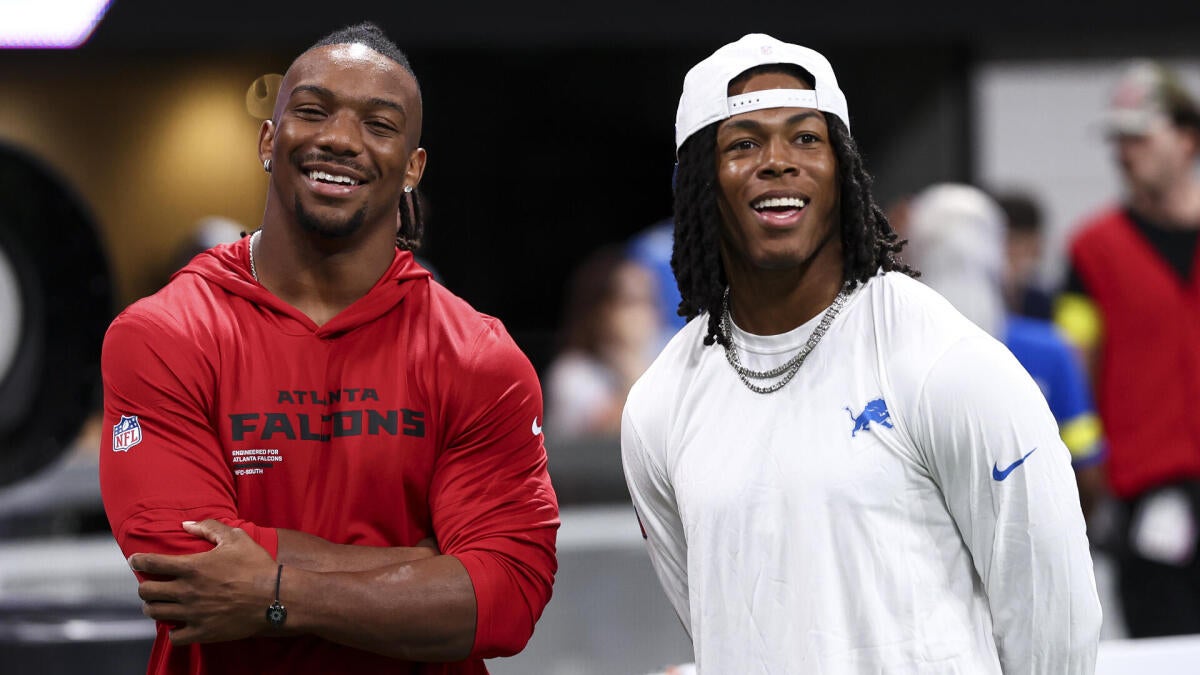
But Achane is the third musketeer of a historically productive 2023 RB class. Bijan Robinson and Jahmyr Gibbs—both first-rounders who hit superstar status faster than the market anticipated—are next. Robinson ranks first in NFL yards from scrimmage over the past two seasons; Gibbs sits third. More telling: Robinson has 202 tackles avoided since 2024, by far the league leader. Gibbs is second with 162. That's not volume inflation. That's elite yards-after-contact production that defenses cannot solve. Both players are 24 years old, entering their primes, and the Falcons and Lions respectively exercised their fifth-year options. Robinson's extension is reportedly coming this offseason. Gibbs faces cap constraints in Detroit, but the principle is identical: these are not players teams trade or let walk. They're building blocks.
The market is repricing elite RB production upward because the 2023 class proved that high-volume, high-efficiency backs drive consistent offensive output in ways that justify top-10 positional pay. Achane's $32 million guaranteed sits fourth all-time at the position—behind only Saquon Barkley, Christian McCaffrey, and Jeremiyah Love. That guarantee signals organizational commitment to short-yardage, red-zone, and full-game involvement. When front offices lock in a star back to an extension before hitting restricted free agency, snap counts and touch allocation don't contract—they cement. Robinson and Gibbs will see their workload viewed not as variable, but as organizational policy.
For prop bettors, this creates a durable information asymmetry. Market makers price volume props (rushing yards, receptions, touches) on historical carry rates and defensive matchups. They don't price in the contract signal: that the team has just declared this back untradeable and essential. The Falcons and Lions will not reduce Robinson's and Gibbs' involvement to manage the cap—that's the entire point of the extension. Over the next 12-24 months, both players' rushing-yard and receiving-total lines will face consistent upside pressure because the organizations have publicly committed to high-volume deployment. Robinson's first-in-the-league tackle-avoidance rate means his yardage is not scheme-dependent; it's talent-driven and will persist across different offensive coordinators or game scripts. Gibbs' red-zone role will only grow as Detroit tries to justify the extension. Look for both backs' season-long rushing-yard lines to trend 20-40 yards above their preseason totals by mid-season, as books adjust for the reality that volume floors have been locked in by front-office decision-making, not offense-game-flow chance.