The 2026 NFC Breakout Blueprint: Identifying Talent Inflection Points Before Market Repricing
By PropBetEdge Editorial Team ·
Offseason narratives about redemption arcs and fresh starts carry predictive weight — but only when you isolate which players have the mechanism to actually execute.
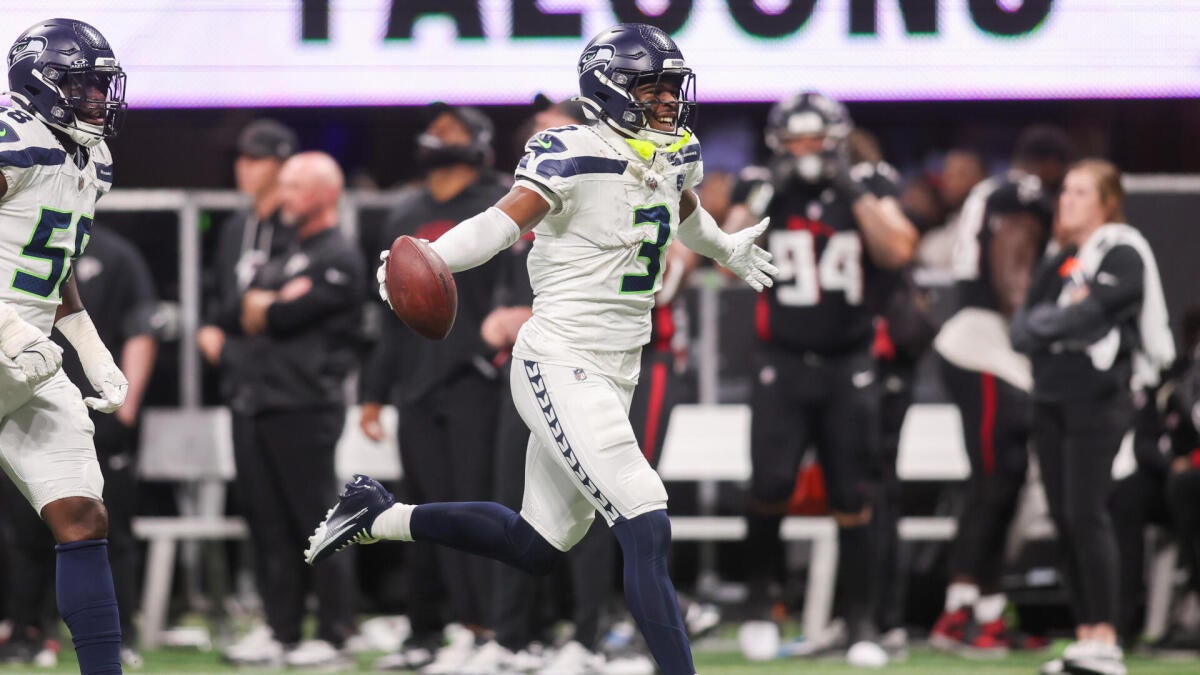
Every June arrives with the same script: injured players returning to "form," role players inheriting starter reps, young talents finally clicking in new schemes. Some of it sticks. Last year, Brian Burns recorded 16.5 sacks and All-Pro honors after joining the Giants, while offensive linemen Drew Dalman and Aaron Brewer ascended to Pro Bowl status midseason. The gap between hype and execution isn't random — it traces to specific conditions: opportunity volume, scheme fit, and health status. The NFC's 2026 slate includes several players positioned at that intersection.
Dallas linebacker DeMarvion Overshown enters the season roughly 13-14 months removed from a torn ACL, MCL, and PCL suffered late in the 2025 campaign. He missed his entire rookie year with a prior ACL tear, returned for six games last season, and despite the limited sample, posted 90 tackles, eight tackles for loss, five sacks, and a pick-six in 13 games during 2024. The injury timeline positions him as either a cautionary tale or a rebound candidate — but the proposition hinges on Dallas' linebacker workload. If the Cowboys lean on Overshown in coverage and run-stopping roles (both areas where he registered production), his tackle and TFL volume could spike. The counter: multiple lower-body ACL variants often require 12-18 months for full athletic restoration, placing the 2026 season in the marginal window. Early-season tackle prop lines on Overshown will likely undervalue him if the market assumes another slow integration; if he plays 80%+ of snaps, that edge evaporates by Week 3.
New York Giants running back Tyrone Tracy Jr. operated in a curious shadow last season: he posted 1,000-plus scrimmage yards in both his first and second NFL seasons (joining Saquon Barkley and Odell Beckham Jr. in that club), yet absorbed only 269 yards from scrimmage across two games against Green Bay and Detroit before a 159-yard outing against Dallas. Cam Skattebo held the lead role until injury. If Skattebo's recovery from his leg injury bleeds into the regular season, Tracy inherits high-volume opportunity in a system where he's shown he can execute both as a runner and receiver. His college pedigree came at wide receiver, but his 2025 rushing mechanics suggest he's improving in the downhill phase. The edge here is simple: Tracy's receiving floor remains stable (6-8 targets per game in a pass-first Giant scheme), but his rushing volume is a ceiling play tied entirely to Skattebo's status. If Skattebo remains limited or absent into September, Tracy's yards-from-scrimmage lines, built on a 2025 baseline, underestimate the workload swing. That's a multi-week edge, not a single-game spike.
Washington tight end Chig Okonkwo recorded career highs in receptions (56) and yards (560) last season in Tennessee, and arrives in a scheme that emphasizes play-action rollouts and motion — areas where his after-the-catch burst and ability to beat safeties vertically become assets. He's 26, athletic, and the Commanders' need for speed at tight end means reps. But his 2025 production (560 yards, 56 catches) yields roughly 6.5 targets per game; that number could climb if the Commanders feature him in the red zone or use him as a release option on rollouts. Early receiving-yard lines on Okonkwo will likely mirror his Tennessee baseline. If David Blough's system demands higher tight-end volume than the Titans deployed, the market reprices within four weeks. The mechanism exists (pace of play, personnel alignment, coordinator preference), but the edge is calendar-dependent — it fades as early-season data arrives.
Philadelphia cornerback Riq Woolen and Kansas City wide receiver Luther Burden III present longer-horizon opportunities. Woolen signed a one-year, $12 million deal with the Eagles; his rookie season netted six interceptions, but inconsistency and deployment have compressed that rate. A top-tier cornerback trio (with James Bradberry and Darius Slay) creates favorable coverage shells, potentially lowering his error margin and increasing his interception opportunity. Burden, meanwhile, averaged 2.71 yards per route run last season (third among 152+ route-running receivers), and new offensive coordinator Ben Johnson has publicly signaled confidence in Burden's stock. Neither player's prop markets have fully priced the scheme-fit uplift yet, but both edges hinge on execution visibility — Week 2 or Week 3 tape will move their lines significantly. The longer you wait, the less value exists.