Pickens Plays Out 2026 Tag: Dallas Signals No Extension Coming
By Ty Whitney ·
George Pickens will suit up for the Cowboys on a $27.3M franchise tender after the long-term deal deadline expired, cementing a one-year rental that reshapes Dallas' receiving depth outlook.
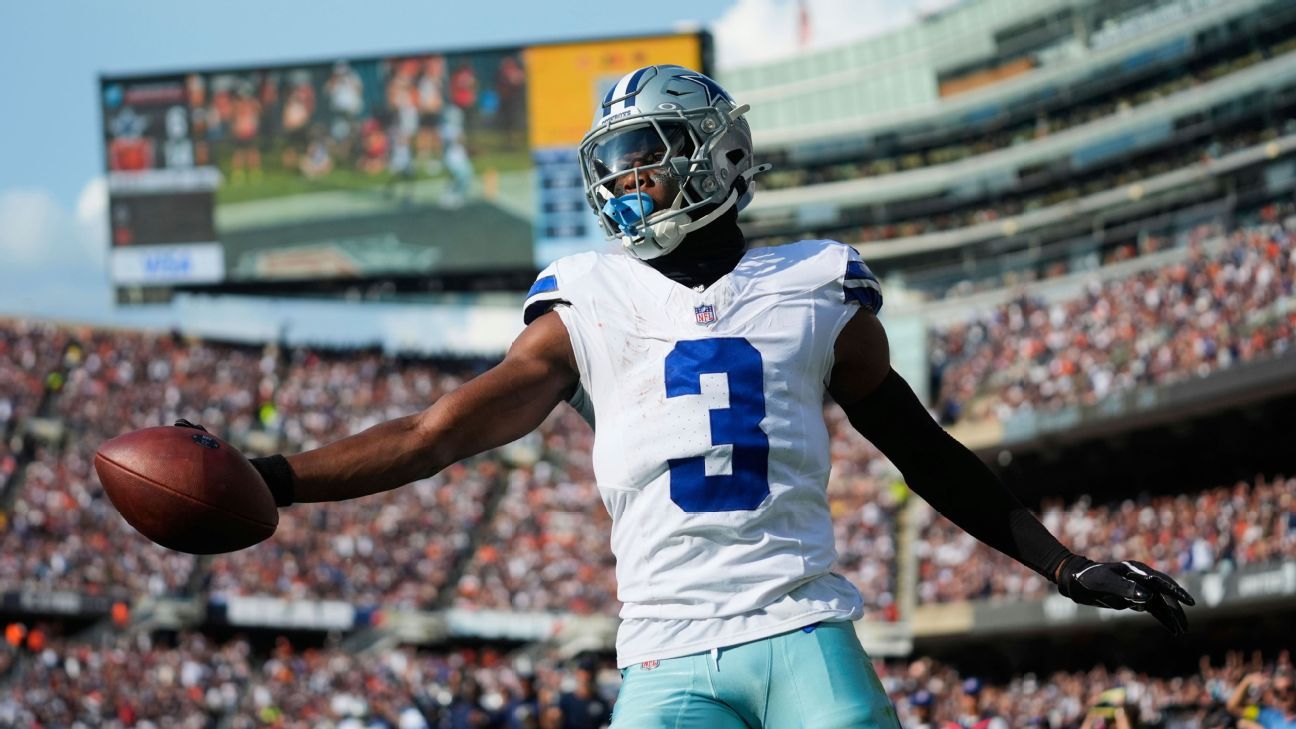
George Pickens will play the entire 2026 season on his franchise tender after Wednesday's 4 p.m. ET deadline for tagged players to ink extensions passed with no deal in place. The Cowboys made their position clear in April—before the draft—by announcing they had no intention to negotiate a long-term contract with their star receiver. Pickens signed the tender itself last month and confirmed his willingness to play the campaign under that one-year arrangement, effectively ending speculation about a holdout or trade demand.
The Cowboys' decision to let Pickens walk into the season unsigned beyond 2026 is conspicuous in an era where elite production earns guaranteed money fast. Pickens just finished his first season in Dallas with 93 catches for 1,429 yards and 9 touchdowns—career highs across all three categories. His per-game receiving average (17.0 yards) and touchdown rate (0.11 per game) position him in the NFL's top tier. Yet the organization chose the franchise tag route rather than committing to extension talks, a statement that either reflects skepticism about paying star receiver money for a player entering his age-27 season or signals internal cap constraints that force Dallas into a "prove it" year.
Context matters here. Of the four franchise-tagged players this offseason, three agreed to long-term deals well before the deadline: Daniel Jones (Colts QB, $88M over two years in March), Breece Hall (Jets RB, $43.5M over three years in May), and Kyle Pitts (Falcons TE, $54M over three years in June). Pickens' hold-out from extension negotiations stands as the exception, not the rule. The Cowboys have history with this pattern—Dak Prescott and DeMarcus Lawrence eventually signed extensions after being tagged twice, but Dalton Schultz and Tony Pollard left in free agency after one tag season. Pickens' production trajectory and age suggest he will command significant cash if he hits the market in 2027, making Dallas' current reluctance to lock him in a calculated bet that injury or regression occurs before then, or that the salary cap tightens enough to reset market expectations.
For prop bettors, Pickens' one-year status creates two divergent angles. First, incentive structures matter in September and October. A player playing out a final audition year typically absorbs targets with urgency—each catch is a negotiating point in the next offseason. Expect Pickens' target share to remain elevated, which should support receiving yards and reception counts over season-long props. The Cowboys leaned on him heavily last year (93 catches on an offense that ran 651 plays), and there is no roster reason to dial back volume. Second, the uncertainty of his 2027 status introduces variance into late-season performance. If Dallas falters in November or December, motivation can wane when free agency and a new contract are already on the horizon. This is a single-player edge with a multi-game runway—the mechanism is clear (tag-year urgency early, potential fade late), but it requires game-context reading as the season develops. Early-season receiving yards and reception props on Pickens carry an edge built on incentive alignment; late-season props after playoff positioning clarifies will revert to base production trends.