Pickens Shows Up, Cowboys Keep Him Waiting: What the Franchise Tag Standoff Means for Dallas Passing Game
By Erik Schwartz ·
George Pickens reported to mandatory minicamp without a long-term deal, signaling acceptance of a $27.3 million tag—but the Cowboys' refusal to negotiate reveals deeper questions about his role in the 2026 offense.
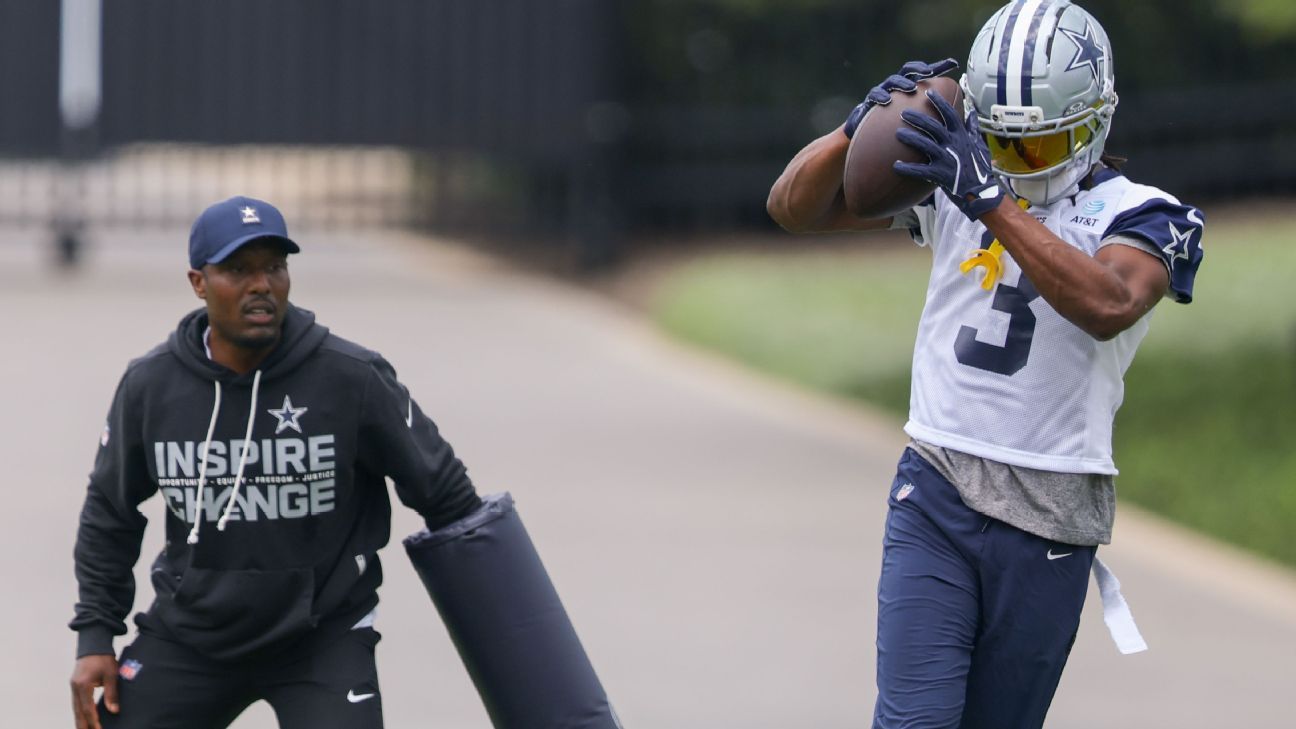
George Pickens walked into the Dallas Cowboys' mandatory minicamp on Tuesday and said the right things: he's prepared to play 2026 on the franchise tag, he skipped the voluntary portion but showed up when it mattered, and he's letting his agent handle the contract noise. The Cowboys front office, led by owner Jerry Jones and coach Brian Schottenheimer, had already made their position clear before the draft—no long-term negotiation. Pickens signed the tender, reported, and the show goes on.
But the subtext matters more than the compliance. The Cowboys explicitly told Pickens they wouldn't discuss a multi-year deal until after 2026, effectively asking their No. 1 pass-catcher to prove himself on a one-year rental. That's a statement about either confidence or doubt, depending on your read. Schottenheimer emphasized that Pickens' presence at minicamp demonstrates loyalty to his teammates—Dak Prescott, CeeDee Lamb, defensive stars Quinnen Williams and Kenny Clark—rather than any urgency to ink a deal. The coach's remarks about their Monday conversation focused on life and golf, not offensive scheme or contract leverage. That casual framing papers over a real tension: Pickens is being asked to perform at star receiver rates without star receiver certainty.
From a Dallas perspective, this delay isn't accidental. The Cowboys have constructed a passing attack that doesn't hinge entirely on any single receiver, even Pickens. Lamb operates in the slot and on the perimeter, and the offense flows through multiple alignment options and Prescott's ability to distribute. Pickens' catch rate and efficiency matter, but the volume is subject to game flow and opponent defensive structure. In 2025, he averaged 6.8 targets per game; that's solid but not the 9+ volume that typically defines a franchise-tag-level receiver. The Cowboys may be banking on Pickens' production holding without long-term guarantees, or they may be signaling that they're open to other options in future drafts.
For prop bettors, the franchise tag situation creates a single-season variance spike rather than a long-term trend shift. Pickens' receiving yardage and touchdown lines will be set based on 2025 performance—roughly 890 receiving yards and 5 TDs over a full season—but his motivation and snap count allocation are now pinned to one year of performance review. If Dallas finds itself in a competitive position early in the season, Pickens will see volume and likely hit target benchmarks. But in a close playoff race or a rebuilding year, the organization has zero incentive to elevate his role beyond his current tier. That creates an asymmetry: unders on his season receiving yardage carry edge if the Cowboys underperform early, because the team won't rush to validate Pickens or increase his touches for contract leverage purposes. Conversely, overs hold value only if Prescott stays healthy and Dallas stays in playoff contention, where volume naturally expands. The tag doesn't change his ceiling; it compresses his floor.