Christensen's Quick Rehab Pivot Signals Panthers' Depth Gamble at Tackle
By Erik Schwartz ·
Brady Christensen's swift return to Carolina after Achilles clearance reveals the Panthers' constrained offseason and raises questions about their tackle depth entering training camp.
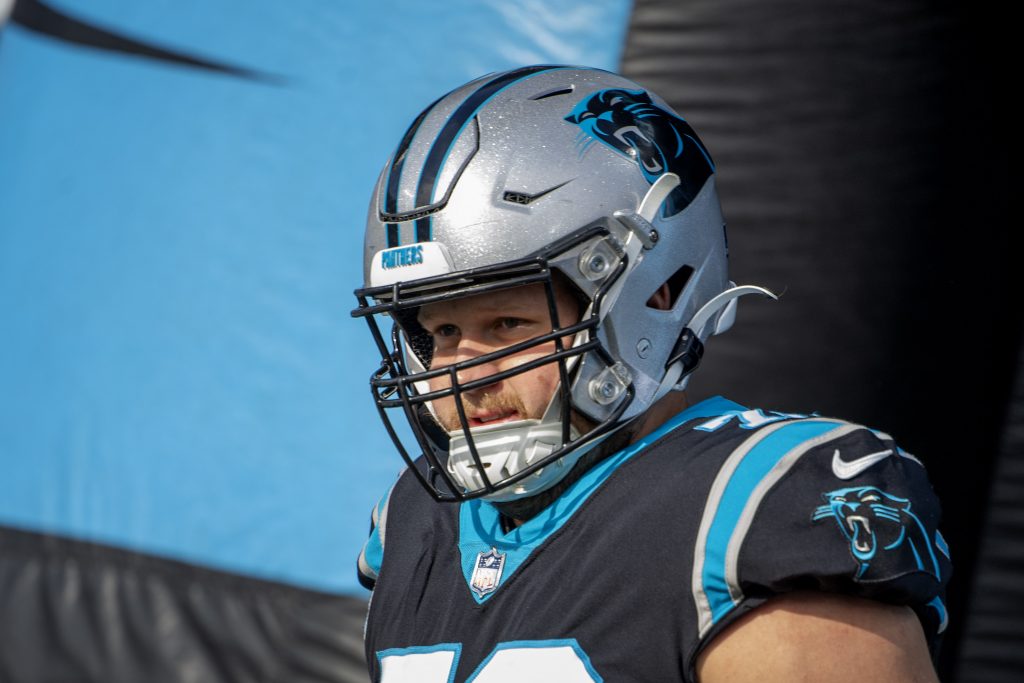
Brady Christensen is back with the Panthers on a one-year, $2.79 million deal, mere weeks after receiving full medical clearance from a torn Achilles suffered in 2025. The sixth-year veteran's rapid pivot from the open market back to Carolina—where he's spent his entire career—underscores both his familiarity in the system and the team's shallow cap picture: Carolina entered Friday with just $8.6 million in cap space, the thinnest margin in the NFL. For a team that aggressively addressed tackle this offseason by adding Rasheed Walker in free agency and selecting Monroe Freeling in the first round, Christensen's return fills a gap that wasn't explicitly exposed in the draft room but clearly felt in the budget.
The mechanics of Christensen's signing reveal the Panthers' near-term tackle situation more clearly than their public statements. Ikem Ekwonu, the 2022 first-overall pick and nominal left-tackle anchor, is returning to full strength after his own injury history. Walker and Freeling are competing to fill the starting spots—Walker as a free-agent insurance policy at left tackle, Freeling as the draft capital investment who likely projects inside or at right tackle. Christensen, now 29 and operating as depth, is expected to compete for interior backup reps during training camp. His positional versatility (he's lined up at all five O-line spots across 59 appearances) makes him a borderline-useful Swiss army knife, but his re-signing at a below-market one-year pact screams organizational caution: the team didn't have the cap flexibility to add an elite backup starter elsewhere, and Christensen's Achilles recovery timeline wasn't certain enough to commit long-term.
What the Panthers' roster construction actually signals is a bet that Ekwonu, despite injury concerns, will stay healthy and productive enough to sustain Carolina's passing offense. Through most of 2025, before the Achilles injury, Ekwonu had been serviceable—not elite, but capable of providing adequate protection for whoever the Panthers field at quarterback. The addition of Walker and Freeling suggests the team expects those two to handle the other tackle and guard spots competently. If either Ekwonu or Walker hits a snag—a re-injury, a poor early-season film review—Christensen becomes the fallback. If all stays sound, Christensen's $2.79 million is expensive depth on a roster with no financial margin for error.
For prop bettors, the Panthers' tackle picture matters most when pricing passing yards and sack totals. A healthy Ekwonu-Walker-Freeling-plus-interior line should hold up reasonably well against most defensive fronts; a fractured or injury-prone arrangement leaves the quarterback vulnerable. Christensen's presence as a known commodity—rather than a youth prospect or journeyman—may reduce the downside risk marginally, but it doesn't solve the underlying problem: Carolina's offensive line is constructed on a shoestring cap budget and has limited room for redundancy. If Ekwonu suffers a setback or Freeling struggles early in his adjustment to the NFL, the Panthers' pass protection erodes quickly, and opponent sack lines should climb. Monitor training camp film and preseason performance closely; if the tackle battles look chaotic or Ekwonu shows rust, passing yards and sack totals will reprice sharply once the offense begins live play. The re-signing of Christensen is a last-resort depth move, not a vote of confidence in Carolina's ability to absorb injuries up front.