Carolina's Cinderella Defense Faces Regression Reality: Why the Panthers Are Third-Choice NFC South Favorites
By Erik Schwartz ·
The Panthers won the division as +425 longshots in 2025, but a bottom-10 point differential and a league-leading share of double-digit upset wins signal a team due for contraction, not ascension.
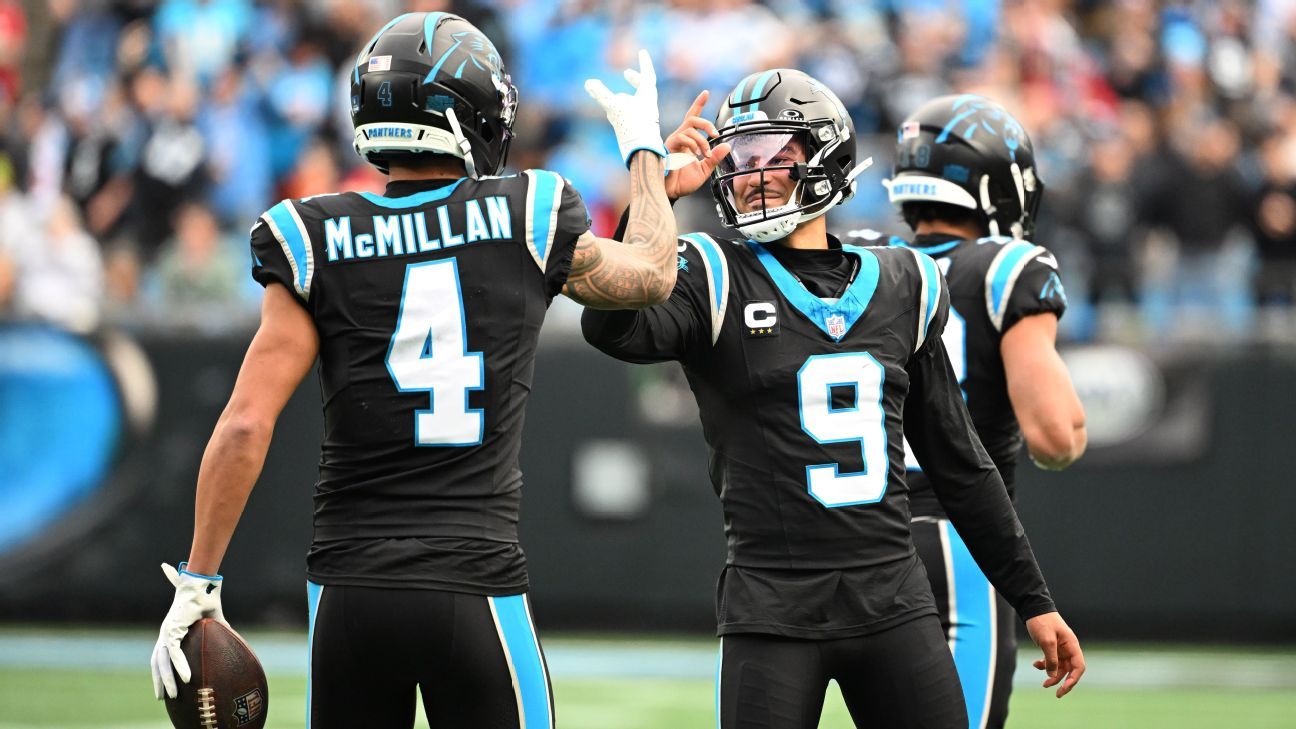
Carolina knocked off long odds last season—and the numbers prove it wasn't sustainable. The Panthers won the NFC South at +425 preseason odds, one of only five division champions to exceed +275; four others won despite even larger pregame spreads. More telling: Carolina pulled off two outright upsets as 9-plus-point underdogs in 2025. The rest of the NFL managed that once. That statistical anomaly—compressing two years of variance into one—sits beneath a surface-level record of 8-9 and a playoff berth, but underneath runs a bottom-10 point differential, the kind of gap that historically precedes either a bounce or a cliff. For 2026, the market has shifted. Carolina is now the third choice in the NFC South behind Atlanta and New Orleans, with division odds at +310. That repricing reflects both the inherent reversion risk and a genuine question: Was Ejiro Evero's defense the engine, or was last year's run a product of situational variance—close games, execution in moments that rarely repeat?
The front office is betting on sustained defensive improvement. Carolina has committed serious capital to the secondary and linebacker corps over two offseasons: Jaelan Phillips and Devin Lloyd arrived as free agents, while Tershawn Wharton (DT) and Tre'von Moehrig (S) joined before 2025. Jaycee Horn and Mike Jackson anchored a unit that performed better than the underlying roster construction would typically support. The question isn't whether the secondary is talented—it is. The question is whether spending to duplicate last year's magic will produce the same outcome, or whether 2025 simply caught an outlier window that Evero exploited and the rest of the league will gameplan around this season.
Offensively, there's a genuine development arc to monitor. Bryce Young enters Year 4, and Tetairoa McMillan is in Year 2 of what should be an ascending career. The real wild card is the backfield: Jonathon Brooks, the 2024 second-round pick, has finally achieved full health. If he takes the primary role from Chuba Hubbard, it reshapes the run game's ceiling. Hubbard managed 1,091 rushing yards last season but lost touches to Rico Dowdle late in the year; Dowdle's exit to Pittsburgh clears runway for either Brooks or Hubbard to consolidate volume. Brooks carries more home-run upside. Hubbard, steady but not explosive, has been pigeonholed into third-down work in camps where Brooks is available. That allocation suggests the coaching staff has already made a personnel decision, even if the snap count hasn't fully reflected it yet.
The rushing yards market offers the clearest edge into 2026. Chuba Hubbard's 2025 season finished at 1,091 yards. The current book has pegged his 2026 season total at 699.5 rushing yards, nearly a 36% decline from last year's actual output. On its surface, this looks like an overcorrection to Brooks' health narrative. But the mechanism is more specific: Hubbard's average per carry was 3.9 yards in 2025, and his workload compressed sharply in December as the team explored alternatives. If Brooks genuinely takes 40% or more of the backfield volume—a realistic outcome given camp reports and the sunk cost of a second-round investment—Hubbard's path to 700 yards becomes a heavy lift. He'd need 3.5+ yards per carry on 200 carries; last year he achieved that, but on a higher baseline. The market is pricing for a scenario where Hubbard transitions from a 250-carry back to a 180-190 carry back, which aligns with observable coaching intent. The under at -115 is the correct lean because it accounts for role compression, not season-long decline. Hubbard will still be productive on a per-carry basis, but the aggregate volume shrinkage is baked into Brooks' arrival and the team's stated preference for a two-back system.