Brady Christensen Cleared to Play—But Panthers May Not Get Him Back
By PropBetEdge Editorial Team ·
A veteran lineman's medical green light solves his rehab timeline but leaves his landing spot wide open.
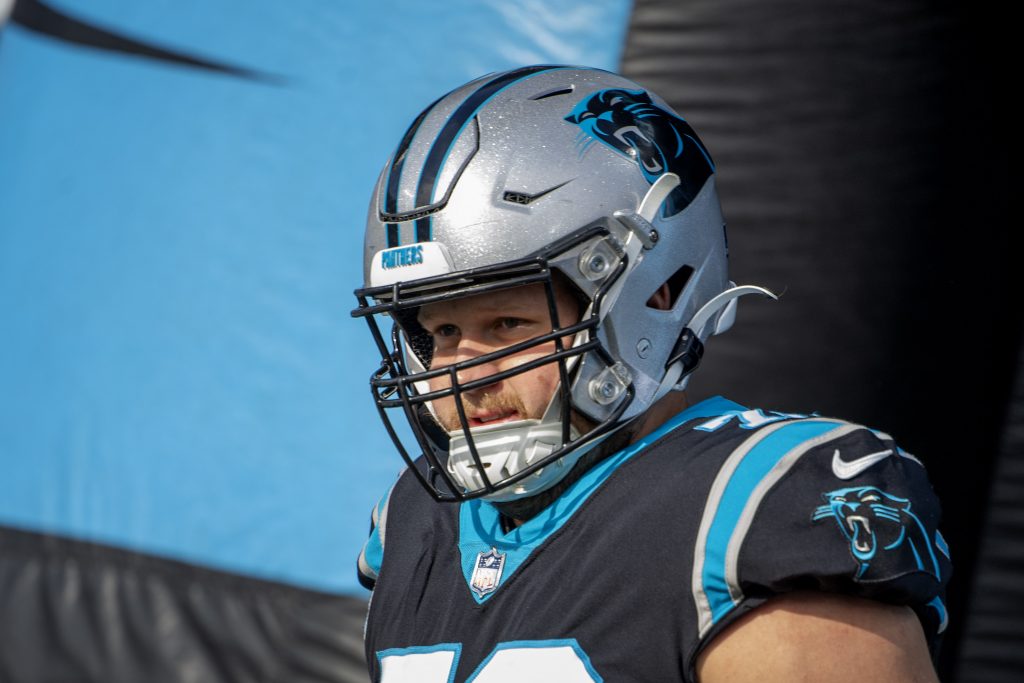
Brady Christensen received full medical clearance on Tuesday, removing the final institutional barrier to his return after missing the bulk of 2025 with an Achilles tear suffered late in the season. The five-year Panthers veteran informed the Charlotte Observer of the development, a signal that his recovery from one of the NFL's most severe soft-tissue injuries has progressed to the point where teams can now evaluate him as an active roster candidate rather than a medical question mark. Carolina remains in contact with him—the team faces genuine depth uncertainty along its interior line following the free-agency departures of Cade Mays and Austin Corbett—but Christensen has signaled openness to exploring other opportunities as well.
The clearance itself is the easy part. What matters for Carolina's offensive line construction is whether Christensen's market heats up or remains tepid. The 29-year-old has been available since the spring; the reason he wasn't signed weeks ago by any of the dozens of NFL teams constantly hunting guard depth is not primarily about surgical recovery timelines—it's about durability history and positional versatility that cuts both ways. Christensen missed all but one game in 2023. He appeared in 16 games last year before the Achilles blow. He can play all five O-line positions, a trait that clubs often code as "positional instability." Most NFL teams prefer guards who are proven anchors at one spot, not jacks-of-all-trades with injury concerns. His age (he'll be 30 in the 2026 season) compounds the risk calculus: a late-career lineman coming off a major injury is a low-expected-value signing unless the price drops to prove-it territory.
The Panthers' own construction decisions frame the broader picture. They spent their first-round pick on left tackle Monroe Freeling and later signed Rasheed Walker to compete at the same spot—an acknowledgment that they've moved on from Christensen as a blindside anchor. The team also added center Luke Fortner in free agency. If Carolina re-signs Christensen, it's as a depth swing piece, not a starter. That role should carry less leverage in negotiation than a projected opening-day starter would. Ikem Ekwonu remains in his own extended rehab process, which paradoxically both creates interior depth need and limits how aggressively Carolina might invest in a veteran guard.
From a betting angle on Carolina's offense this season, Christensen's availability matters only if the Panthers deploy him as a regular-season starter—and the roster moves above suggest that's unlikely. If he lands elsewhere, monitor that team's offensive line stability metrics and rushing-efficiency patterns. A veteran guard provides measurable protection gains on passing plays (fewer quarterback hits per game, longer time to throw) and creates rushing lanes. The mechanical benefit is largest when a team's interior already has structural continuity; plugging Christensen into an unfamiliar scheme produces smaller returns. Any team signing him at bargain rates likely views him as a rotation/emergency depth piece, which limits the week-to-week prop impact. Carolina itself becomes relevant only if Ekwonu's timetable shortens unexpectedly, forcing Christensen into starter snaps—a low-probability scenario that would show up in beat reporting months before season kickoff.