The Offensive Line Market Reset Is Coming—And It Reshapes QB Survival Odds
By Erik Schwartz ·
As edge rusher salaries spike, offensive tackles and guards are next in line for massive raises, forcing teams with young quarterbacks to either pay premium protection or accept increased sack risk.
The offensive line market is about to experience the same inflationary pressure that's already hit receivers and pass rushers. Per ESPN's Jeremy Fowler, tackles and guards are the next positions set to command substantial raises—driven by the same economic logic that has defined the league for decades: as edge rushers get paid, the tackles who block them demand matching compensation. Laremy Tunsol recently crossed $30MM annually with Washington, and Cowboys left guard Tyler Smith signed at $24MM AAV. Those numbers are no longer the ceiling; they're the floor for the next wave of negotiations.
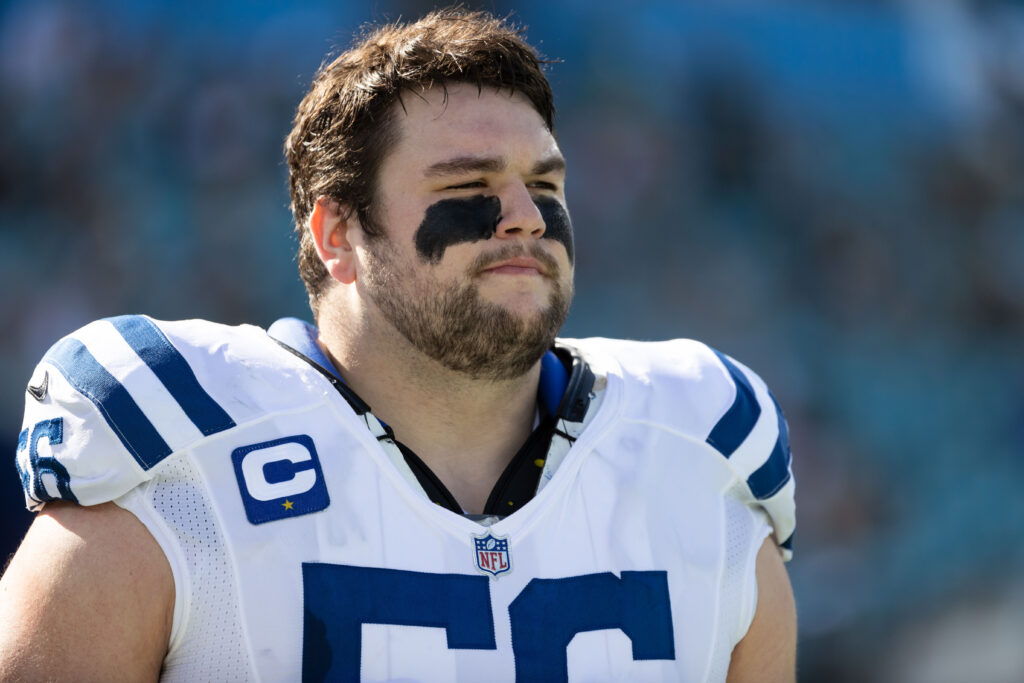
The mechanism is straightforward. When elite pass rushers reset the market at $40MM-plus per year (a threshold now commonplace), teams must justify premium protection investments to ownership. The blind-side arms race has always been indexed to edge rusher inflation—a pattern dating back to Lawrence Taylor's economic dominance. Tyler Linderbaum's fully guaranteed, $27MM center contract with Las Vegas in March established a new anchor for interior linemen. Quenton Nelson, entering his contract year with Indianapolis after eight straight Pro Bowl and All-Pro selections, is positioned to use Linderbaum's deal as leverage to demand a similar or higher figure. The Colts won't have much negotiating room; Nelson's resume is generational.
Younger tackles will follow. Joe Alt (Chargers), Olu Fashanu (Jets), and JC Latham (Titans) are all extension-eligible within the next 18 months and viewed as potential $35MM-per-year players if they continue trending upward. Darnell Wright (Bears) secured second-team All-Pro honors last season and could be next to test the market. The supply of truly elite offensive linemen remains tight, and teams drafting high in 2023-2024 classes now control players in their prime at rookie-scale salaries. That arbitrage is closing fast.
For prop betting, this market reset has a direct bearing on sack rates and quarterback survival. Teams forced to absorb $30MM+ cap hits on offensive linemen have less dry powder for edge rusher additions or secondary depth—meaning pass protection schemes will rely more heavily on scheme and incumbent talent rather than reinforcement. A second-order effect: when a team (like Las Vegas with Mendoza or New York with Rodgers) aggressively commits to premium line talent before the rest of the cap structure is built, it signals internal valuation that the quarterback's durability and time in the pocket are non-negotiable. Those teams will see measurably lower sack rates year-over-year, even controlling for QB experience. Conversely, teams that lag on line investment—operating with aging starters or mid-tier free agents—will see sack totals spike as the positional arms race leaves them behind. Watch for contrasting injury curves between well-protected and under-protected backfields; sack volume has a causal relationship to cumulative hits and injury frequency.
The bet-shaping implication: quarterback passing yards and touchdown projections for 2026 and 2027 should be heavily anchored to team-level line investment decisions being made now, not to historical QB performance. A franchise spending $28MM on a tackle extension is voting that their quarterback will stay healthy and productive in the pocket. A team rolling with its current line and allocating cap elsewhere is implicitly accepting higher variance on sack risk and injury exposure—which suppressess expected passing volume and TD upside, even if the QB talent is equivalent.