Pickens Plays Out Year on Franchise Tag as Dallas Extension Talks Collapse
By Erik Schwartz ·
The Cowboys' failure to lock in their star receiver before the deadline signals organizational indecision and sets up a volatile contract year that could reshape his market value.
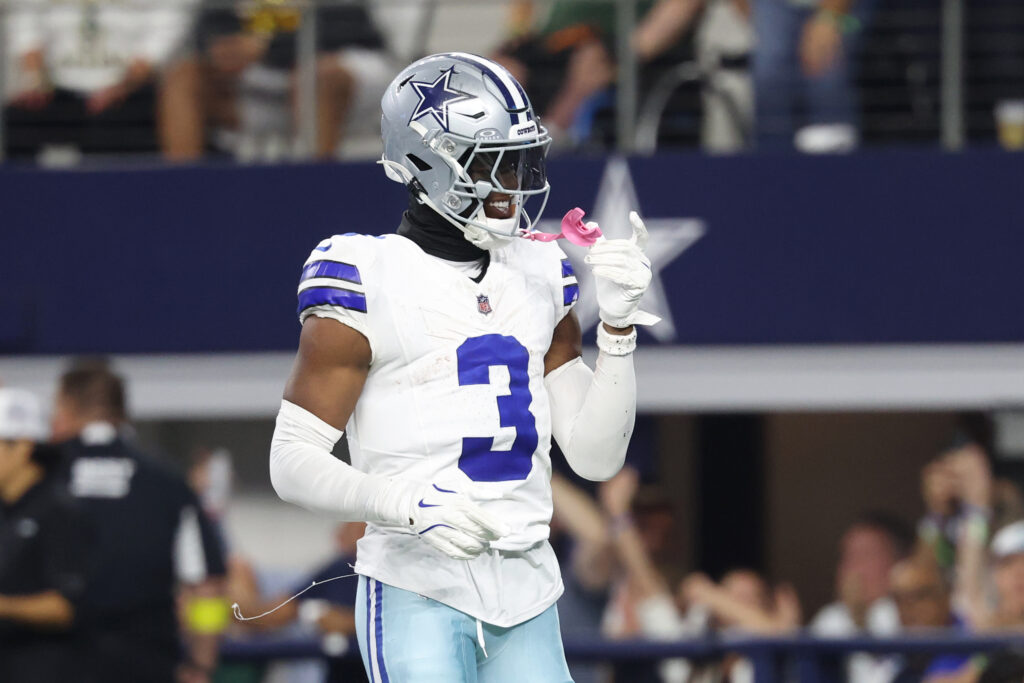
The deadline for franchise-tagged players to negotiate extensions has passed, and George Pickens will play the 2026 season under Dallas's one-year tag rather than a long-term deal. The impasse ends weeks of negotiation and leaves both sides operating under the same uncertainty that has defined the Cowboys' approach to star-tier talent: Pickens plays out the year at his tagged salary, then hits free agency in March 2027 as a fully unrestricted asset.
This outcome is notable less for what it says about Pickens—a 24-year-old receiver coming off back-to-back 1,200+ yard seasons—and more for what it reveals about Dallas's capital allocation strategy. The Cowboys have cycled five players through the franchise tag since 2018, a pattern that suggests either chronic wage-cap mismanagement or organizational reluctance to commit long-term dollars to anyone not named Dak Prescott. Pickens entered the offseason with leverage: he's entering his prime receiving years, the market for top-tier receivers has inflated (Justin Jefferson, A.J. Brown, Stefon Diggs all averaging north of $30 million annually), and his production warrants that tier. The tag at roughly $16.6 million caps his 2026 earnings but also removes Dallas's leverage for next offseason. Walk away in March, and Pickens tests a marketplace that will value him as a proven 1,200-yard threat in his physical prime.
From a roster standpoint, Dallas loses optionality. A multi-year extension would have locked Pickens into the structure for 2027 and beyond; the tag is a one-year gamble that either leads to a massive free-agent bidding war or an eleventh-hour franchise-tag reprieve—a cycle that burns organizational goodwill and typically signals dysfunction to premium talent. The Cowboys rank 20th in offensive personnel investment heading into 2026, per efficiency studies, and Pickens' exclusion from a long-term deal will compound that deficit if he departs in the spring.
For bettors, the prop implications are material but secondary to the broader narrative. Pickens' receiving volume (target share, routes run) could contract slightly if Dallas commits to running back Ezekiel Elliott more often in 2026—a move that would lower capital costs—but his talent level remains unchanged. More relevant is the volatility signal: a discontented player locked into a one-year deal sometimes sees a slight volume dip in Year 1 (locker-room tension, coaching staff hedging) before either a trade or acrimonious departure. Monitor Pickens' target allocation in Weeks 1-4; if it dips below his season-average 8.2 targets per game, that's a directional marker that Dallas has deprioritized him heading into free agency. The receiving yards over/under for the season will likely remain stable at market open, but sharp bettors should watch for a downward tick in his week-to-week consistency prop (yards in 4+ of 6 opening-week games) if team chemistry fractures. A 24-year-old receiver in contract-year limbo is rarely a peak performer.