Bengals' Defense Proves Sustainable; Two QB Injuries Rewrite AFC and NFC East Scripts
By Erik Schwartz ·
Cincinnati's Week 2 defensive dominance signals a legitimate contender shift, while injuries to Williams and Daniels create depth-chart cascades that reshape offensive prop markets across two divisions.
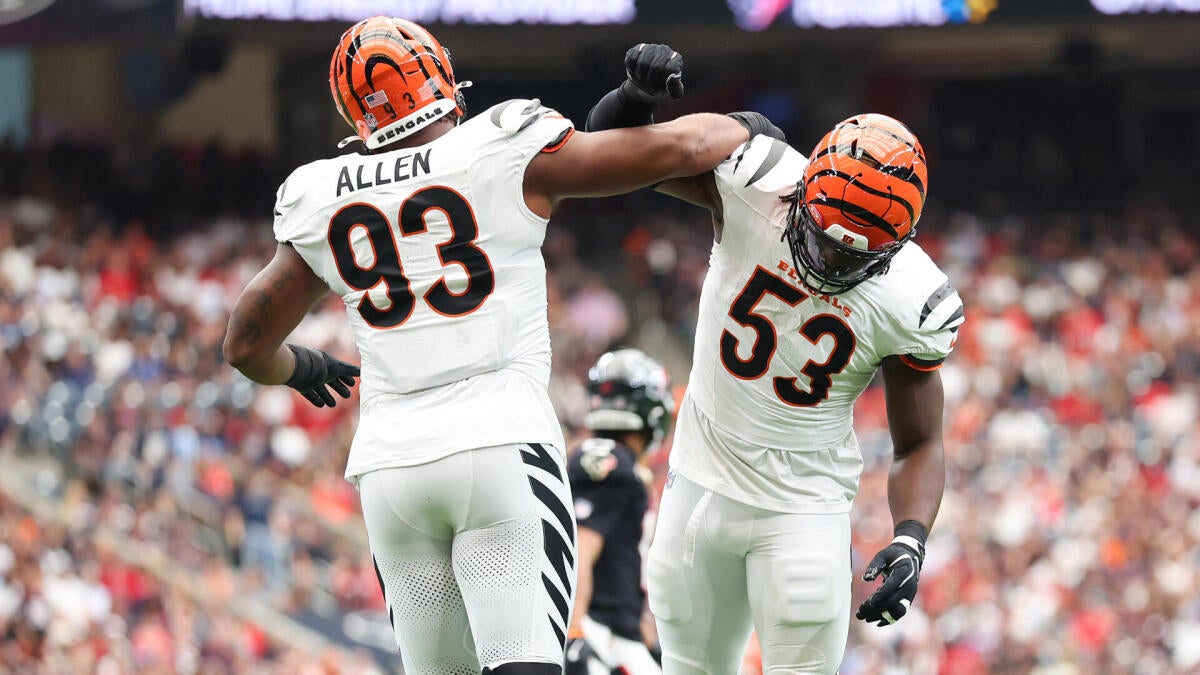
The Bengals dismantled Houston 20-6 on Sunday, holding the Texans to six points—a defensive statement that extends beyond one-week variance. New defensive faces delivered in Week 1, then Dexter Lawrence anchored a fourth-quarter stop on fourth-and-inches that preserved the shutout narrative. The defensive line generated five sacks, two arriving in the final three plays against C.J. Stroud. That's not Week 1 noise; that's a scheme taking shape. The Bengals' offense—Ja'Marr Chase with two touchdown catches, the second a catch-of-the-year candidate—hasn't surrendered production to fuel the defense. Cincinnati entered 2026 as a dark horse because its elite passing attack needed a defense that wouldn't hemorrhage points. Two games in, both are firing.
Chicago's situation deteriorated from Week 1's 59-point explosion to a 9-3 divisional loss to Minnesota, and Caleb Williams departed with a non-contact hamstring injury near the goal line. He was carted from the field during a drive that could have given the Bears a fourth-quarter lead. Washington's 0-2 start took a sharper turn when Jayden Daniels suffered his second elbow injury in two years—this one arriving late in the first half of a 37-20 loss to Dallas. Both quarterbacks are now management questions rather than roster certainties. The market priced Williams and Daniels as season cornerstones; that architecture just shifted.
For prop bettors, the Williams and Daniels absences create asymmetric risk on Chicago and Washington offensive totals through the next 1-2 weeks, pending medical clarity. If either misses extended time, backup quarterbacks inherit possession chains that were calibrated for rookie-level talent and arm strength. Chicago's backup options carry different completion percentages, average depths of target, and red-zone propensities than Williams does. Washington's passing volume could spike if the backup leans heavier on air attacks, or crater if the team shifts to game-management football. The Bears' Week 1 passing explosion (59 points suggests heavy volume through the air) collapses into Week 2's nine-point output—a 50-point swing that wasn't driven by opponent difficulty alone, but by injury exposure. Fade Chicago and Washington team passing totals until confirmed starters return or backups establish a repeatable baseline.
The Bengals angle plays in the opposite direction. Their defense generated impact on a road game against a talented opponent, and their offense maintained elite efficiency while doing it. The prop edge sits on Cincinnati's defensive efficiency lines (sacks, tackles, pressure rate) and their ability to force three-and-outs, which expands the Bengals' possession share. When Cincinnati's defense forces early stops, the offense gets cleaner opportunities and reduces negative game scripts. Chase's two-touchdown output arrived on a team that controlled line of scrimmage and dictated tempo. Over the next 2-3 games against average-to-below-average defenses, Cincinnati's passing volume and touchdown probability should hold steady or increase. The Bengals are pricing in as a contender now; Chase's receiving yardage and TD props reflect Week 1 caution, not Week 2 evidence.