Four Quarterbacks, Four Desperate Reboots: Why 2026 Separates the Salvageable From the Sunk
By PropBetEdge Editorial Team ·
Murray to Minnesota, Willis to Miami, Tagovailoa to Atlanta, and Cousins to Las Vegas form a rare cluster of veteran QB relocations where one season determines franchise direction for years.
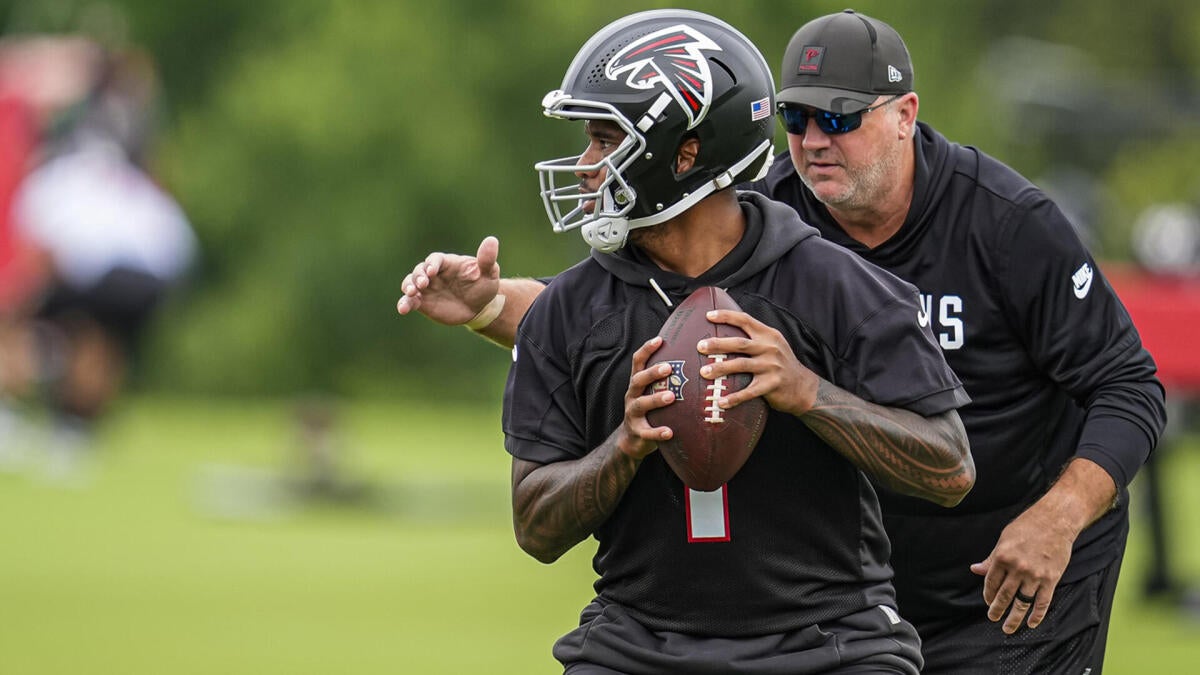
This offseason carved up a quartet of starting quarterbacks into new uniforms, each arriving under duress and deadline pressure. Kyler Murray departed Arizona after three years of institutional mismatch; Malik Willis finally escaped Tennessee's limited faith in him; Tua Tagovailoa stepped into Atlanta's quarterback gauntlet against a younger challenger; Kirk Cousins moved to Las Vegas knowing the Falcons' decision to draft Michael Penix Jr. two years ago was a referendum on his durability and long-term viability. The financial terms confirm how little their old teams believed in a reunion. Arizona and Miami are barely carrying Murray and Tagovailoa's dead cap into 2026—their new franchises got discounted talent. Willis signed for three years and $67.5 million in Miami, cheap enough that the Dolphins retain full optionality if the 2027 QB class materializes as advertised. Cousins accepted the role of elder statesman in Las Vegas while grooming Fernando Mendoza, the No. 1 pick, for succession.
What binds these four is a common denominator: none arrived as slam-dunk salvage projects. Murray's career EPA per play sits at 0.05—functionally average—yet he has been healthy for only 30 of the past 51 available games. His three years in Drew Petzing's system produced friction; Kevin O'Connell now inherits a quarterback whose entire skill set was built in shotgun-dominant schemes and must now operate under center at rates Murray has never logged. Willis remains a small-sample curiosity with genuine upside but no sustained track record of NFL execution. Tagovailoa enters the flattest situation of the bunch: his 2023 season was career-best by volume (4,694 passing yards, 29 touchdowns), yet that success came in a Miami system designed around speed and short-area geometry—not one designed to develop quarterbacks long-term. Cousins, at 36, is fighting the clock while grooming his replacement, a divided mandate that rarely produces peak performance.
The prop surface reveals the market's pragmatism. Murray's passing-yards totals in Minnesota will reflect both his mobility ceiling and O'Connell's scheme ceiling; expect opener lines in the 232-237 range, a modest decrease from his 248-yard career average but accounting for the Vikings' under-center architecture and lower overall pass volume (ranked 24th last year). Willis, arriving in a run-first Dolphins offense anchored by De'Von Achane and Jeff Wilson, will inherit a below-average passing volume profile; Miami ranked 28th in pass plays per game in 2025. Early projections should account for that, not for Willis's arm talent in isolation. Tagovailoa's touchdown passes carry hidden volatility: his 29 TDs last year benefited from short-field situations and goal-line efficiency; Atlanta's roster (Bijan Robinson, Drake London, Kyle Pitts) offers high-volume opportunity, but the organizational dysfunction that prompted the Penix Jr. draft—a public indictment of Tagovailoa's consistency—will keep TD markets compressed until he proves otherwise. Cousins' volume will be throttled by Mendoza's development timeline; the Raiders will reduce passing attempts earlier and more aggressively than teams with full-time veteran starters, a structural headwind on his prop lines.
The single largest betting edge across this cluster lies in Murray's completion percentage and explosive-play rate in O'Connell's system. Murray ranks eighth in yards per attempt on under-center plays (8.9 YPA) over the past three seasons, yet has thrown 85% of his career snaps from shotgun or no-look looks. O'Connell's offense demands precision and decision-making at the line of scrimmage—skills Murray developed in college and sharpened in Arizona's early Kingsbury years. If the Vikings lean into under-center play-action (their 45% under-center rate last year was top-five), Murray's arm efficiency should lift from his career 0.05 EPA baseline. That edge is durable—it's not a single-game bounce; it's a mechanic-environment mismatch that resolves over a full season. Back Murray's completion percentage over 64.5% if the market prices it closer to his career 63.2% mark, accounting for the system transition without factoring in his demonstrated proficiency in that very system from his earlier Cardinals tenure.