Steelers Lock In Pass Rush, Chargers Signal James Durability Bet
By PropBetEdge Editorial Team ·
Pittsburgh's four-year, $100MM commitment to Nick Herbig and Darnell Washington's four-year deal reshape the defensive and offensive timelines—and hint at how sportsbooks should price stability plays.
The Steelers made two significant roster moves on the same day, signaling confidence in a defensive rebuild anchored by young talent and a commitment to offensive infrastructure that extends well past the 2026 season. Nick Herbig, the outside linebacker who has emerged as a consistent disruptor, signed a four-year, $100MM extension with $42MM guaranteed—$21MM of that locked in at signing. Darnell Washington, the tight end, followed with a four-year, $42MM deal carrying $20.25MM in guarantees. The sequencing matters: Pittsburgh is investing heavily in both the pass rush and red-zone receiving threats, a pairing that suggests the coaching staff views this defensive core and Washington's development as franchise cornerstones rather than one-year contributors.
Herbig's deal structure reveals organizational intent. The $19.68MM signing bonus and $1.33MM 2026 base salary create a $21MM immediate capital expenditure—money the team commits whether he plays all 16 games or sits on injured reserve. The remaining guarantees are backloaded as roster bonuses in years three and four (2028-30), a hedge against aging curves but also a statement: the Steelers expect him to stay healthy enough to earn them. For Washington, the pattern repeats. A $10MM signing bonus plus $1.25MM 2026 salary constitutes the $11.25MM guaranteed at signing, with $2.5MM roster bonuses in each of years three through four. Both deals compress their guaranteed money into the present, which reduces risk for the club while rewarding immediate performance.
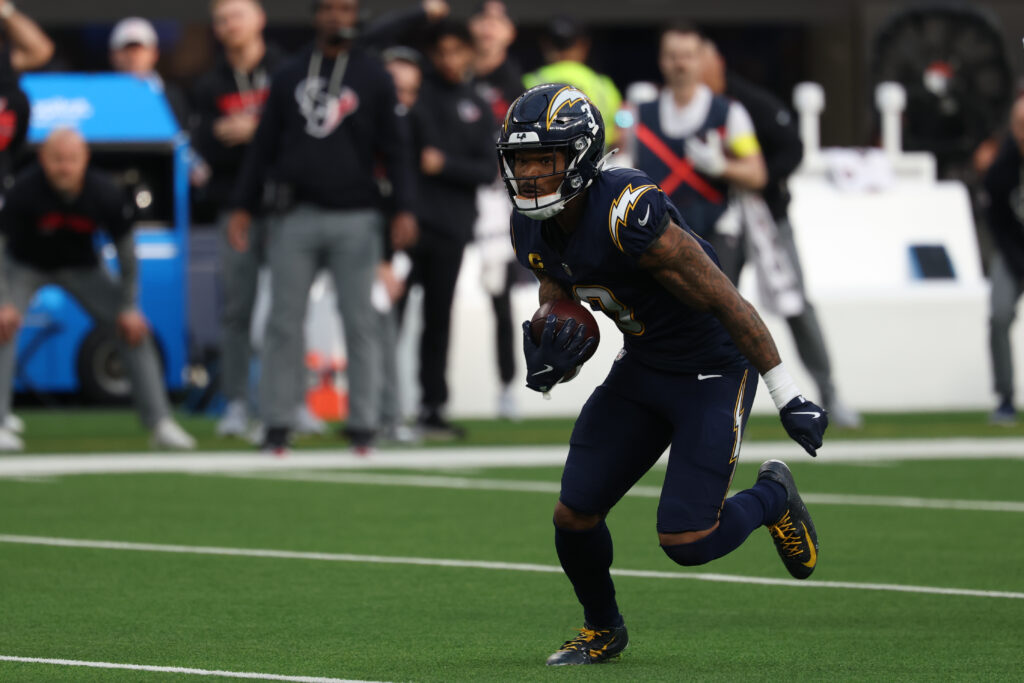
On the Chargers side, Derwin James' three-year, $75.6MM extension to remain in Los Angeles adds a $3MM roster bonus due in the final year (2029 league year opener). James is now 29 years old; this deal carries him through age 32. The structure—front-loaded guarantees, back-loaded roster bonus—is a durability calculation. The Chargers are betting James' durability holds well enough to justify three more years of capital. For sportsbooks, this is a signal. When a team ties up eight figures and structures deals with deep guarantees upfront, they're pricing in the assumption that the player will be available. Market lines on player performance props should reflect that organizational confidence; James' interception and tackle totals, for instance, carry implicit reliability that comes from this contract commitment.
For prop bettors, the real edge here lies in understanding what these commitments reveal about coaching staff priorities and resource allocation. Herbig's $100MM deal in an era of pass-rush scarcity signals that Pittsburgh values consistent pressure generation over lottery picks at the position. In weeks when the Steelers face pass-heavy offenses—particularly those that use three- and four-receiver sets—Herbig's snap count should remain elevated and his sack opportunities steady. The market may price his sack total based on historical volume (his 2025 sack rate), but fails to account for the coaching staff's embedded confidence that surfaces through guaranteed money allocation. Similarly, Washington's red-zone receiving role appears locked in; the Steelers don't guarantee $20MM+ to a tight end and then limit his target share in the touchdown zone. His anytime TD probability should reflect higher equity than raw receiving-yard projections suggest, because the contract structure itself is a usage forecast.
The Berrios signing—a one-year, $1.3MM veteran minimum deal with the Giants—operates in the opposite frame. No guarantees, no long-term commitment, no signal of strategic emphasis. This is roster filler masquerading as a receiver depth chart. Bettors should treat Berrios' touchdown and yardage props as highly volatile, dependent entirely on weekly injury circumstances rather than organizational design. When teams sign players to vet-min deals, the sportsbook's preseason projection is largely irrelevant; the true variable is whether he plays at all, not how he'll perform when healthy.