The NFC East's Defense Problem Is Getting Worse, Not Better—Here's What the Win Totals Miss
By Erik Schwartz ·
Dallas and New York are banking on defensive overhauls to carry their 2026 season, but the math on their depth chart additions doesn't close the gap they're trying to cover.
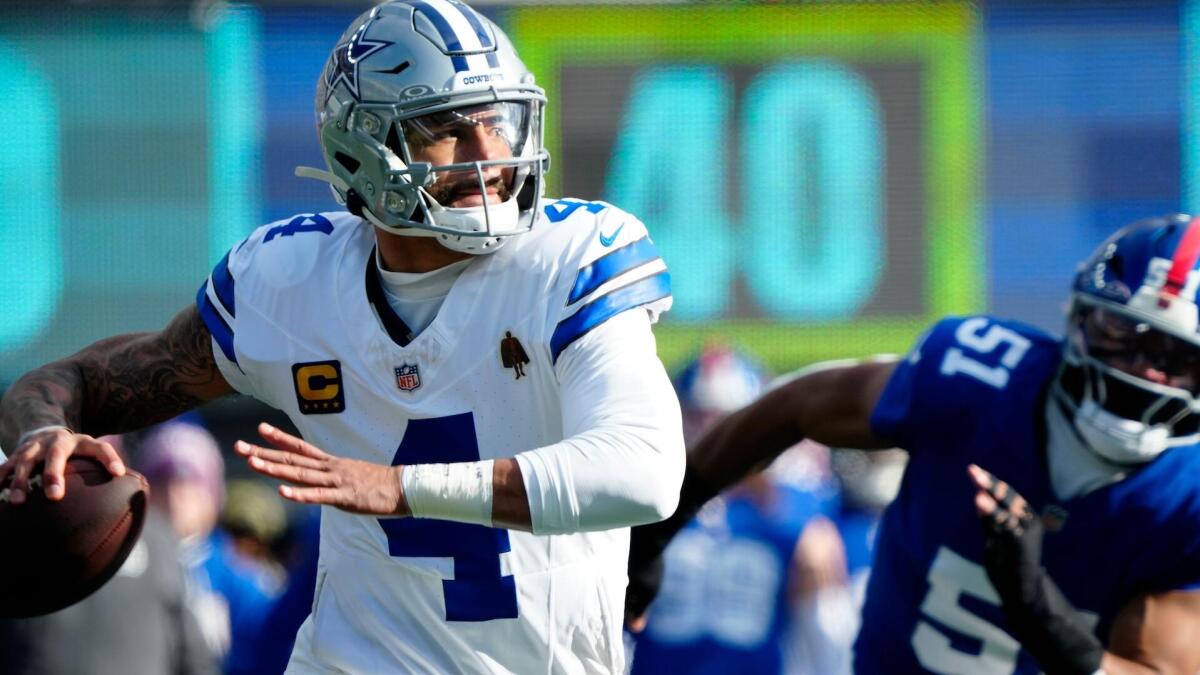
The NFC East entered 2025 as a division in freefall. Philadelphia won it anyway—11-6, a return ticket to the playoffs—then evaporated in the wild card round as a defending Super Bowl champion. The Cowboys' offense ranked second in the NFL; their defense ranked last in points allowed. Washington imploded to 5-12 after losing Jayden Daniels to injury. New York cycled through three starting quarterbacks and finished 4-13. This offseason, the division's heavyweights are banking on the premise that adding elite defensive talent cures structural problems. The numbers tell a different story.
Dallas is the case study. The Cowboys spent aggressively on the defensive side—Caleb Downs (Alabama), Rashan Gary (edge), and a supporting class of secondary upgrades. On paper, it reads as transformation. In reality, they're patching a sieve with patches. A defense that allowed 31.2 points per game doesn't recover from that hole by adding one All-American safety and an edge rusher, even a productive one. The league's best defenses build through scheme continuity and pre-existing roster depth; they don't swing from catastrophic to competent in a single offseason. The Cowboys' secondary still lacks coherence, and their front seven has structural gaps that a single draft class can't erase. They're asking their offense—which was genuinely elite last year—to carry a defense that will still be below league average.
New York's situation is more fragile. John Harbaugh's arrival carries legitimacy (Super Bowl pedigree, defensive philosophy), and the defensive line room—Abdul Carter, Brian Burns, Tremaine Edmunds—looks respectable on roster paper. But the offensive half collapses under scrutiny. Jaxson Dart crossed 247 passing yards in just one of 12 starts as a rookie; he took five concussion evaluations in ten games including preseason. Malik Nabers, their receiver2 cornerstone, tore his ACL and required a second procedure. Cam Skattebo is recovering from an ankle injury. This isn't an offense positioned to support a developing defense; it's an offense held together by duct tape and hope. The Giants have gone Under their preseason win total in eight of the last nine seasons. One new coach doesn't reverse that statistical pattern.
From a win-total perspective, the market is pricing in dramatic improvement at Dallas (9.5 over/under, favoring over at +115) and modest hope at New York (7.5, pick'em pricing). Both are overcorrecting for roster gestures while underweighting the staying power of defensive dysfunction. Defensive systems take years to solidify; free-agent/draft additions alone rarely produce measurable points-allowed improvement in year one. Dallas allowed 31.2 PPG last season; even assuming a 15% improvement (optimistic given the underlying depth chart), they're still in the 26-27 PPG range—comfortably below league average. Their 9-win pace assumes the offense sustains last year's elite efficiency while the defense merely becomes average. That's overloading the ask. New York's 7.5 is market-speak for "we hope Harbaugh magic works," but Harbaugh still has a roster with a developing, concussion-prone QB, an injured star receiver, and a backup RB nursing an ankle injury. Both teams are selling hope as schematic overhaul.
For bettors, the angle runs against the presumed momentum. The market is rewarding defensive spending in isolation, isolated from offensive capacity and the multi-year timeline required for defensive cohesion to actually produce. Dallas Under 9.5 carries edge because the offense will deteriorate as defensive schemes are still being implemented, and a top-5 offense can't sustain that production while covering a historically porous defense. New York Under 7.5 is even more direct: a rookie QB with a concussion history, a receiver2 who may not be ready for the opener, and a coaching change that will consume weeks of installation time. Seven wins is a reasonable forecast; eight-plus requires several things to break right that the injury report and developmental curve don't support.