A.J. Brown to Patriots Wasn't Impulse: How 18 Months of Pursuit Reshapes New England's Receiver Room
By PropBetEdge Editorial Team ·
The Patriots' persistence on Brown—starting in 2025 offseason, accelerated by his Eagles dissatisfaction—signals a fundamental shift in how New England deploys capital and cap flexibility.
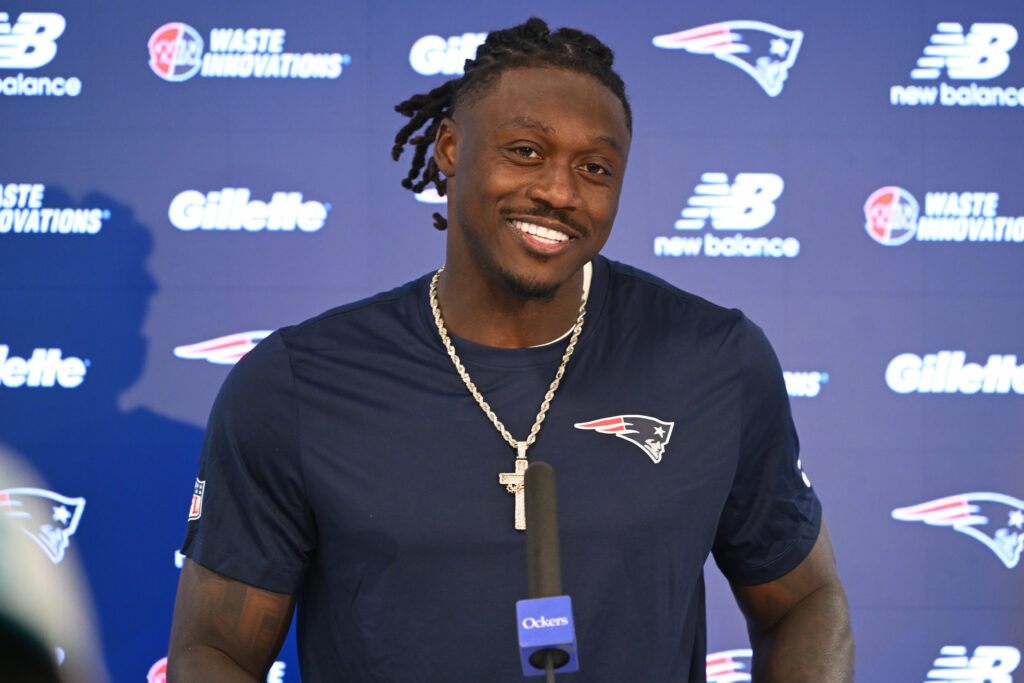
New England's trade for A.J. Brown wasn't a sudden window into the market; it was the culmination of at least 18 months of deliberate pursuit. Per Sports Illustrated's Albert Breer, the Patriots initiated contact with Philadelphia in early 2025, circled back around the trade deadline that November, and remained in the conversation until Brown's frustration with the Eagles' offense finally opened a path to a deal.
The Eagles' initial resistance is the real story here. Philadelphia had little incentive to move their star receiver, a 29-year-old in his prime producing north of 1,200 yards annually. But by spring 2026, Brown's mounting dissatisfaction with the organization—rooted in offensive constraints and institutional friction—flipped the equation. An unhappy franchise star becomes tradeable merchandise. The Patriots, armed with cap space and a clear need to accelerate their receiver talent timeline, capitalized on the moment Philadelphia had no choice but to negotiate.
For New England, Brown's arrival immediately redefines Drake Maye's second-year window. A true alpha receiver at the top of the formation lifts everyone else: play-action completions increase, tight-end and slot receiver efficiency improves through reduced coverage shells, and vertical shot-taking becomes viable again. Maye's passing volume should tick higher, and his completion percentage benefits from a receiver who wins one-on-one consistently. The Patriots moved from a wide-receiver committee approach to roster architecture anchored around a proven, high-volume target.
The prop surface responds directly: Maye's passing yards now correlate to Brown's reception volume. If New England schemes Brown into 7-10 targets per game—a reasonable expectation for a receiver of his caliber who faced constant defensive scrutiny in Philadelphia—Maye's season passing-yard floor rises measurably. Early-season unders on Maye's yardage line (set during the offseason before the Brown trade pricing) will carry hidden risk, because defenses cannot bracket Brown indefinitely while also playing light coverage on New England's thin secondary depth chart. The Patriots will be forced to operate a more vertical, higher-volume passing offense, and Maye becomes a natural beneficiary of the market correction.
Brown's receiving yards line will inevitably climb from its offseason projection—the market knew he was available for trade before it knew where he was going. Now that the destination is locked, his target share and touchdown probability have shifted upward relative to early 2026 preseason estimates. Any Patriots receiver total or Maye passing-yard projection posted before the trade agreement becomes stale immediately.