Brian Branch's December Window Reshapes Lions Secondary Depth Plans
By PropBetEdge Editorial Team ·
Dan Campbell won't guarantee the star safety back before December, signaling the Lions will operate most of 2026 without their Pro Bowl defender.
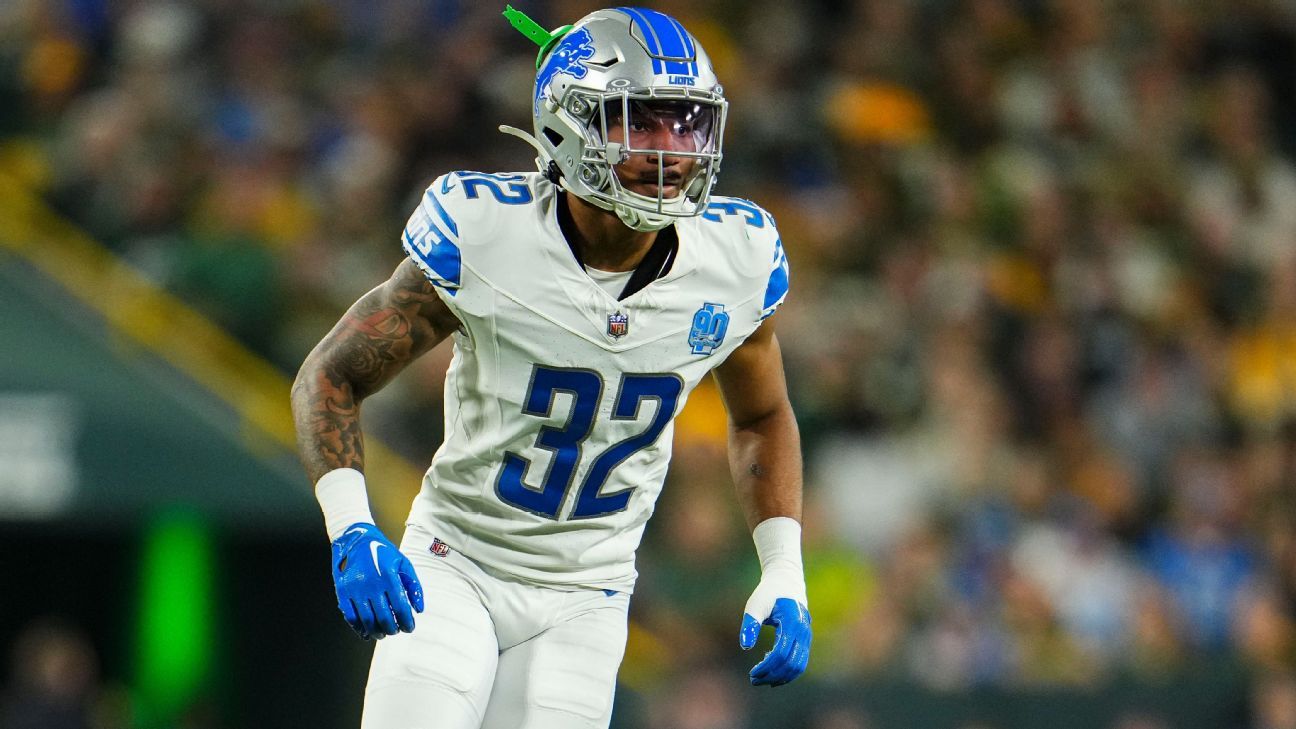
Detroit Lions head coach Dan Campbell officially widened the recovery window for safety Brian Branch on Wednesday, setting December as a realistic return target and framing anything sooner as a bonus. The 24-year-old suffered a torn Achilles in Week 14 last season—nearly seven months ago—during a pass-breakup attempt against Dallas, and underwent surgery in late December 2025. Campbell's language shift matters: instead of hedging with "mid-season possibility" talk, he's now anchoring expectations to the final month of the season, a move that telegraphs internal patience but also organizational resignation about the scope of the injury.
Branch's absence carves a crater in Detroit's secondary. As a Pro Bowl-level talent drafted in the second round of 2023, he logged 75 tackles, nine passes defended, and five quarterback hits across 12 starts last season while playing in coverage-heavy Detroit schemes. His injury forced the Lions to rely on aging and mid-tier safety depth. Campbell's comment that the team "always kind of want[s] to lean that way knowing the investment that would go into that" reveals the calculus: rushing a $28 million defensive asset back before full recovery—in an NFL where secondary injuries routinely recur—is franchise malpractice. Branch is eligible for a contract extension in 2026, another marker that ownership won't sabotage that negotiation by sending him onto the field before he's truly healed.
The 8-12 month recovery window Campbell cited in December places Branch at medical clearance sometime between late August and late December. Training camp starts in late July; Branch missing OTAs and most of camp is virtually certain. A placement on the PUP list to open the season remains possible, which would extend his return further and keep him out of the active lineup until midseason at the earliest. Detroit's secondary schemes—which rely on deep safety coverage and high-leverage corner communication—require timing and conditioning that can't be simulated in a rehab setting. Branch will need live reps to regain that rhythm, another hidden cost of a mid-to-late-season return.
For prop bettors, the strategic implication is clear: Detroit's secondary will operate without its most reliable coverage voice for the entire first half of the season, and the Lions' defensive pass-interference rates and back-end communication breakdowns should reflect that shortage. Coverage sacks will likely decline without Branch's pre-snap alignment influence. Opposing passing totals against Detroit early in the schedule—particularly against teams with vertical-passing attacks that exploit secondary miscommunication—carry edge. The Lions' secondary is not a coverage liability overall, but losing a Pro Bowl safety for six-plus games compresses the margin for error. Teams facing Detroit in Weeks 1-8 should see moderate receiving-yardage upticks from slot receivers and tight ends, who will test the communication gaps Branch would normally patrol. This isn't a season-long signal—once Branch returns, the secondary tightens back up—but for the first two-thirds of the year, opposing passing games inherit a small structural advantage.