Detroit's Left Tackle Gamble: Blake Miller and the Sewell Question
By PropBetEdge Editorial Team ·
The Lions bet $21.87M fully guaranteed on a Clemson tackle to replace Taylor Decker, but the offensive line's real value prop depends on whether Penei Sewell moves inside.
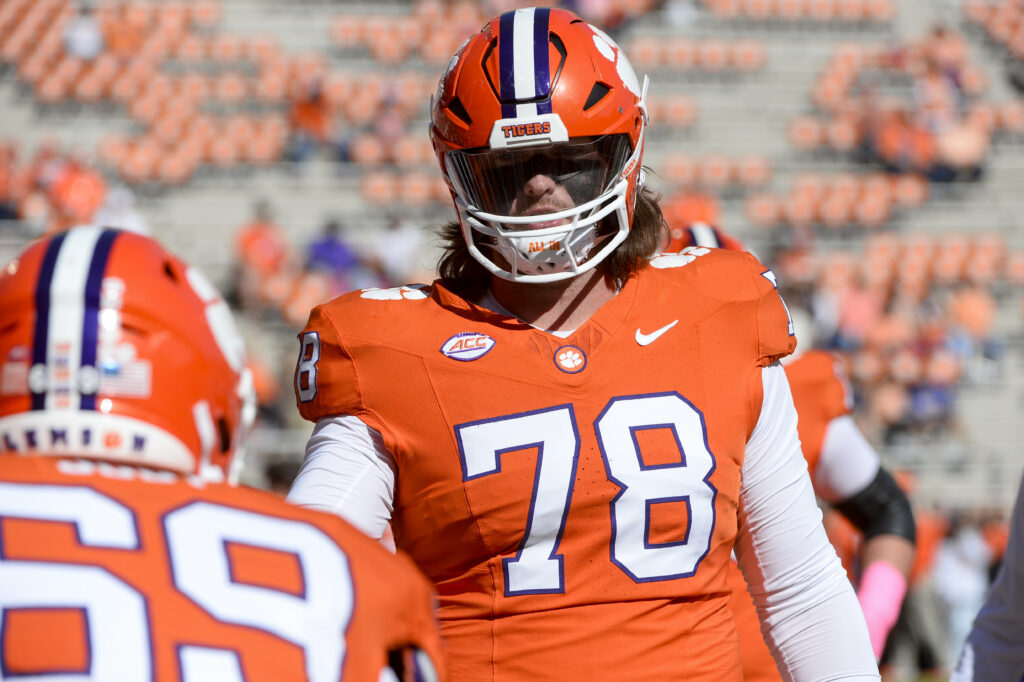
Detroit signed first-round pick Blake Miller to a four-year, fully guaranteed deal worth $21.87 million on May 12, making the 17th overall selection the latest piece in a rebuild at offensive tackle. The 6-foot-7, 317-pound blocker arrives after the Lions jettisoned 10-year starter Taylor Decker, cutting the team's longest-tenured offensive lineman to create cap space and opportunity. Miller started all 54 games for Clemson from 2022–25, including 52 snaps at right tackle, and broke the program's offensive-snaps record with 3,778 plays on the line. The Lions attempted to trade up with the Rams for the 13th pick but were rebuffed; landing Miller four picks later suggests confidence that he'd be available or that the evaluators identified him as the best fit at the position. What happens next—whether Miller starts immediately at left tackle or works his way into the lineup—hinges on an unresolved decision about all-world right tackle Penei Sewell. If Detroit moves Sewell to the left side, Miller could serve as the right-side anchor. If not, he must beat out Larry Borom, a journeyman free-agent addition with no full-time starting experience in five years, a competition Miller should win handily.
The contract structure matters for understanding Detroit's confidence level. A fully guaranteed deal at pick 17 signals conviction—the Lions aren't hedging. Miller's record-breaking snap count at Clemson and two-time All-ACC honors indicate sustained performance, not a single-season spike. That durability is worth pricing into offensive-line projections because it suggests the Lions expect immediate meaningful snaps, not a redshirt year. The team's decision to let Decker walk despite his decade-long presence also signals a philosophical shift: Detroit is resetting the line around younger, longer-contract-window talent. For betting purposes, this matters because offensive-line stability directly influences quarterback pressure rates, time-to-throw metrics, and rushing-lane consistency.
Jared Goff's passing profile stands to benefit from stability here. If Miller and Sewell form a durable tandem—with Miller at either tackle position—Goff's pocket presence should improve relative to 2025. The Lions' 2026 offense hinges partly on whether an unproven rookie (at his specific position) can function as a full-time starter against NFL edge talent. That's a variance outcome, not a lock. Miller was productive at Clemson against ACC competition; the jump to facing elite NFL pass rushers is material. If he struggles early, the Lions' passing-yard totals and TD projections could compress as opponents dial up edge pressure. If he settles in, Goff's per-game volume (yards, TDs, time-to-throw) should expand into the range the team projected during contract negotiations.
For prop bettors, the meaningful angle emerges across multiple weeks, not a single game. Miller's rookie-year assignment against the line—tackle assignment difficulty, true pressure rates, penalties—will become visible by Week 4 or 5. Early-season Goff passing props (yards, completions, TDs) should reflect uncertainty around line protection; as Miller's trajectory clarifies, those lines will shift. The edge exists in EARLY-WEEK projections where the market hasn't yet discounted the true protection picture. Once tape accumulates and Miller's capability becomes clear (dominant starter, adequate pro, or struggling rookie), the edge evaporates. The fully guaranteed contract tells you the Lions believe in the upside. The untested rookie at left tackle tells you there's real downside variance. That friction is where value lives.